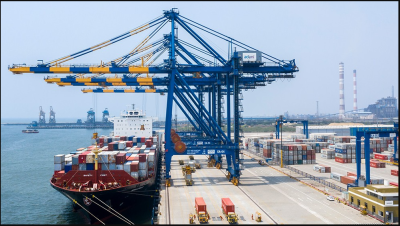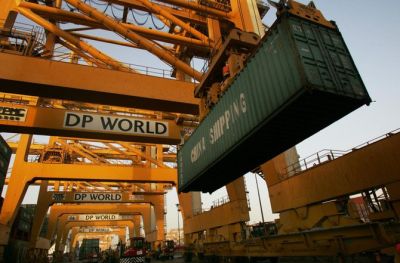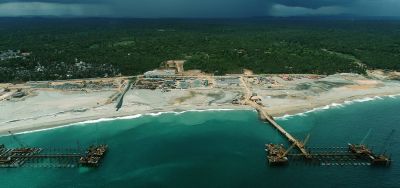
Adani Ports and SEZ's Gangavaram port in Andhra Pradesh has achieved a record single day handing of 4,392 metric tonnes of timber logs for the vessel MV Mangusta. This had come close to a record 4,206 metric tonnes a day before, surpassing the port's previous single day record of 2,900 metric tonnes by a whopping 52%.
According to the port, its success can be attributed to strategic investments made in infrastructures and among them upgraded cargo handling systems as well as improved railway facilities. It has greatly enhanced operational efficiency toward enabling a high volume cargo turnaround speed.
Adani Gangavaram Port management set out the commitment of the port to provide quality services to customers. With a focus on deep-water, modern infrastructure, the port has much to do in continually raising the operational bar in the next year.
"The success we have seen our customers experience by leveraging our efficient operations and the improved evacuation system demonstrates once again our efforts at promoting trade as well as delivering economic value to importers in India," said the company.
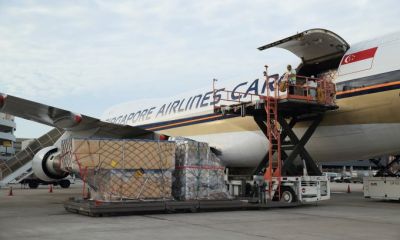
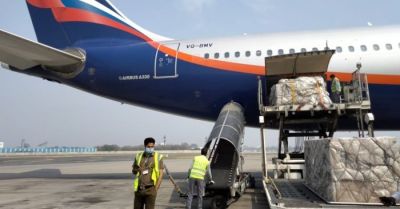
Singapore Changi Airport experienced a significant boost in air cargo volumes for the second quarter of 2024, handling 485,000 tonnes of airfreight from April to June. This represents a 16% increase compared to the same period last year. The growth is attributed to robust shipment flows between Singapore and major markets including the US and China. Changi Airport Group highlighted that the increase was seen across all cargo categories—exports, imports, and transhipments. The airport’s top five air cargo markets for the period were Australia, China, Hong Kong, India, and the United States. In the year-to-date, Changi Airport has processed a total of 960,000 tonnes of airfreight. The first quarter of 2024 also saw strong performance, with 475,000 tonnes handled, driven by high transhipment activity, particularly with China. Key sectors contributing to the cargo throughput include pharmaceuticals, perishables, e-commerce, and advanced materials like semiconductors. Notable airlines operating cargo flights at Changi include Spice Express, Tasman Cargo Airlines, Atlas Air, DHL Express, and Singapore Airlines, which collaborate on cargo operations. As of July 1, Changi Airport boasts 94 airlines operating over 6,900 weekly scheduled flights, linking Singapore to 158 cities across 50 countries and territories globally. This extensive network supports Changi’s role as a major international cargo hub. The airport’s continued growth in air cargo volumes underscores its importance as a critical logistics and transportation hub in the global supply chain.
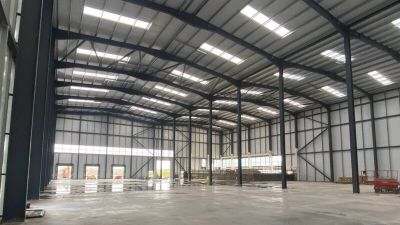
AP Moller – Maersk is strengthening its operations in Bangladesh, where it has been serving the country and its exporters connect to the global market for almost three decades. Bangladesh has been one of the most important sourcing markets for the garments and apparel industry worldwide. The garment manufacturers exporting to global markets have significantly contributed towards building the country’s economy. Despite the impressive growth of garments exports from Bangladesh, the number of warehouses in Chattogram have not increased since 2012, with the sole exception of ISATL that became operational in 2018. Optimising utilisation of available capacity assisted to an extent, however it did not scale enough to meet the trade’s requirements. The logistics ecosystem and the Chittagong Port get stretched, particularly during the peak seasons. In 2021, a fallout of this structural challenge was felt by all the stakeholders involved in EXIM trade when the Container Freight Stations (CFSs) got clogged with cargo resulting in delayed clearance, stuffing and consequently dispatch of containers to the port. Delay in offloading cargo also led to longer truck waiting time, and delay in dispatch of containers to the port, consequently resulting in lack of overall productivity. These challenges have serious consequences on the overall economy of the country given the fact that the Chittagong Port handles in excess of 90 per cent of the total containerised trade to and from Bangladesh. Recognising these challenges, Maersk Bangladesh has partnered with Ispahani Summit Alliance Terminal Limited (ISATL) to build a 200,000 sq ft custom bonded warehouse. ISATL are pioneers in constructing and operating warehouses and CFS and operate four CFS within Chattogram and the River Terminal at Dhaka. Under the scope of this partnership, ISATL will construct a brand new custom bonded warehouse within the existing premises of the facility located at Pathortoli in Chattogram. The new warehouse will double the existing capacity at ISATL and add around 8 per cent additional space to the existing ecosystem at Chattogram. The construction of the new CFS has already commenced and is expected to be completed in a phased manner by the end of 2022. Bangladesh’s exporters and their overseas buyers will be able to start using the facility from July 2022, once the first phase of construction is completed. “Maersk’s commitment to connect and simplify our customers’ supply chains means that we look at long term solutions for problems such as the longstanding congestion within the ecosystem. We tackled the situation in 2021 by deploying an additional vessel for evacuating export loaded containers,” said Angshuman Mustafi, Managing Director, Maersk Bangladesh. “The solutions provided immediate relief to the ecosystem, but there was a need for a comprehensive solution to optimise ocean shipping, port handling and inland logistics that would benefit trade in the long term. By partnering with ISALT, we are establishing a facility that has the potential to partially decongest the system from the landside and streamline the flow of cargo in and out of Bangladesh.” Apart from adding capacity, the facility will offer several other benefits to Bangladesh’s exports. Amongst others, the new facility is being built by benchmarking international best practices when it comes to safety and other compliance guidelines. It will be modern multi-storeyed facility in Chattogram which will have storage at G+2 levels, thus making optimal use of available space to maximise the capacity. There will be an option to offer pallets for all operations, thereby improving the overall operational efficiency. Maersk will also offer customers Garment on Hanger facility, sorting, product audit, labelling, bar code and RFID scanning amongst others. “We are proud to partner with Maersk on this exciting long term project where ISATL’s extensive local experience combined with Maersk’s international best practices will allow us to create a truly world-class facility that will help raise the standards for the entire industry,” said Yasser Rizvi, Managing Director, ISATL.
Indian importers and exporters are grappling with significant cargo delays at Mundra Port, the country’s leading container trade hub. Local trade sources have voiced serious concerns about the worsening congestion at Mundra’s container terminals in recent weeks. "The terminals at Mundra now seem to be hugely congested, and the pendency has increased to levels affecting the normal movement of boxes between CFSs and terminals," stated the Container Freight Station Association Mundra in a complaint. The association added, "All the efforts put in by CFSs are not witnessing any improvement, but are rather finding that the situation is deteriorating further." A recent change in the process of issuing port entry permits for freight vehicles by the port authority has been identified as a major source of frustration. According to freight station owners, truckers are experiencing longer waits to move containers due to difficulties in securing entry permits promptly. "Vehicles are stranded on the road for hours together because of this. A corrective measure needs to be discussed with our members and worked out so as to ensure that movement continues without any hassles," explained the CFS association. The congestion has also frustrated container rail operators, as ICD (inland container depot) volumes constitute a significant portion of Mundra’s trade. The Association of Container Train Operators (ACTO) noted in a trade advisory, "There has been increased congestion at Mundra Port due to delays in effectively evacuating import containers in FIFO [first-in, first-out] sequence on time, despite trains being provided for clearance by container train operators [CTOs]." ACTO indicated that Indian Railways has restricted double-stack loading to expedite train evacuation from the port, resulting in additional ground rent charges for traders. Mundra, Adani Ports’ flagship entity, managed 7.4 million TEUs in the fiscal year 2023-24, marking a 15% increase over Nhava Sheva Port. With volumes rapidly expanding, the Adani Group is considering further investment to enhance capacity. "We continue to invest heavily in the business to drive growth, particularly in the logistics segment," stated Adani in a recent announcement.
Lufthansa Cargo has recently expanded its offerings, providing customers with new belly capacities on several attractive routes. Since the start of June, passengers and cargo alike can benefit from direct connections to various destinations, enhancing global connectivity and trade opportunities. Direct flights to North America, including routes from Frankfurt to Minneapolis (MSP) and Raleigh-Durham (RDU) with Lufthansa Airlines, are now available for booking. Additionally, from the Lufthansa Cargo hub in Munich, new connections to Seattle (SEA) three times a week, and daily capacity to Toronto (YYZ) and Vancouver (YVR) are being offered. Austrian Airlines has also introduced a new route, connecting Vienna with Los Angeles (LAX). Discover Airlines has expanded its services from Frankfurt to Halifax (YHZ) and Anchorage (ANC), further widening the reach of cargo transportation. Moreover, Lufthansa Cargo has introduced freighter capacity to Dubai World Central (DWC), providing customers with additional options for handling larger cargo items or special freight. This new service complements the existing belly service from Dubai International Airport (DXB) and offers enhanced flexibility and efficiency in cargo transportation. With a commitment to enhancing global connectivity and trade facilitation, Lufthansa Cargo continues to innovate and expand its service offerings. These new routes and increased capacities underscore Lufthansa Cargo's dedication to meeting the evolving needs of its customers in a rapidly changing global market.
26 airlines and forwarders have been working with CHAMP Cargosystems to review the company’s new air cargo insights service, MarketAnalytics. Rather than using monthly accounting updates or files, MarketAnalytics uses systems integration to get daily updates from across the air cargo supply chain. With that transformational approach, it offers more detailed information and potentially greater coverage than traditional services and can help clients to respond to market developments more quickly. CHAMP’s MarketAnalytics service provides market data and dashboards across key air cargo metrics to spot changes and opportunities. The ability to look at information by commodity and type of handling, in particular, is proving to be very popular. Insights are delivered as daily files, which carriers and forwarders can embed in their own data warehouses. The service also has Power BI dashboards which help managers to drill into data and to get alerts for their areas of interest. “MarketAnalytics is as transformational for air cargo intelligence as streaming was to music distribution,” says Christopher Shawdon, Head of Business Development at CHAMP Cargosystems. “Our new service offers much greater information and insights updated daily, and at much lower costs than traditional services.” Information shared into the service from trialists already creates market data on over 250 routes, each with over 10 tonnes per year and based on data from at least 3 participating carriers, none of whom has more than 60% share by weight.



trackNOW, a leading Gujarat-based women-led fleet management and advanced telematic tracking solution company has recently raised an extended seed fund of an undisclosed amount. The funding round was led by Yohan Poonawalla, Chairman of the Poonawalla Engineering Group, and Michelle Poonawalla, Managing Director of the Poonawalla Engineering Companies. The company had previously secured seed funding in FY24, led by GI Ventures and BluSmart co-founder Anmol Jaggi, which successfully led the company to accelerate its business growth plans. The latest investment from the Poonawalla Group will enable trackNOW to expand its R&D and boost operational efficiency, which will further solidify its position in the Indian logistics market. Founded in 2016 by Pooja Khemka and Suyash Khemka, trackNOW has emerged as a leader in delivering cutting-edge solutions to streamline fleet management and tracking processes. Known for its focus on minimising turnaround times and reducing operational costs across various industries, trackNOW has garnered immense recognition for its intelligent, technology-driven innovations. “Investing in promising startups like trackNOW is not just about financial returns,” said Yohan Poonawalla, Chairman of Poonawalla Engineering Group. “It’s about mentoring and empowering young, visionary entrepreneurs by providing them with the resources and support needed to succeed. We believe in the transformative power of innovation and are committed to fostering an environment where groundbreaking ideas can flourish.” Michelle Poonawalla, Managing Director of the Poonawalla Engineering Companies, added, “We are thrilled to partner with trackNOW and support their growth journey. This investment reflects our commitment to empowering Indian entrepreneurs. The partnership has the potential to unlock significant value for both trackNOW and the broader Indian economy by driving job creation, enhancing operational efficiencies across sectors, and strengthening India's position in the global logistics market.” Commenting on the investment, Pooja S. Khemka, Co-founder, trackNOW said, “The investment from the Poonawalla Group is a significant endorsement of our vision and a testament to the hard work and dedication of our team. We are honored to receive the support of such a respected group. This partnership will not only provide us with the capital required to scale operations but also invaluable mentorship and industry expertise.”



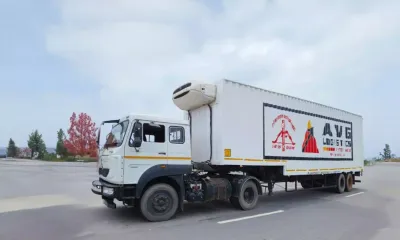
Shadowfax, a leading player in India’s logistics sector, has acquired CriticaLog, a specialised firm delivering critical logistics solutions, for an undisclosed amount. This strategic acquisition aims to bolster Shadowfax’s capabilities by offering comprehensive and customisable delivery services for high-value items such as electronics, automobile spares, jewelry, and pharmaceuticals. With over 400 clients, including multinational corporations, CriticaLog's expertise will integrate into Shadowfax’s expansive network that covers 2,500 cities and 18,000 pin codes across India. This merger is poised to enhance Shadowfax’s sector-wide reach by blending bespoke logistics solutions with its existing offerings. Shadowfax’s services already include quality check-based reverse logistics, same-day delivery under its "Prime" initiative, quick commerce 10-minute delivery, and hand-to-hand doorstep exchanges. The company recorded significant growth last fiscal year, with operational revenue rising to ₹1,884.8 crore from ₹1,415 crore in FY23, as per data intelligence platform TheKredible. By uniting its expansive infrastructure with CriticaLog’s high-value delivery expertise, Shadowfax aims to set new benchmarks in the logistics industry while meeting the nuanced demands of both e-commerce and D2C clients.


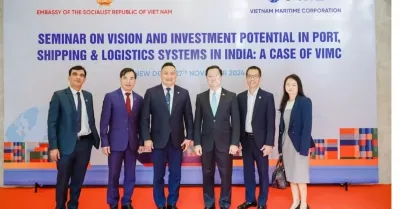
A workshop on “Vision and Investment Potential in the Port System, Maritime Transport, and Logistics in India” was hosted in collaboration with Vietnam National Shipping Lines (VIMC) and the Vietnamese Embassy in India. The event highlighted opportunities for VIMC to expand its market share in India while fostering stronger economic ties between the two nations. With India’s foreign trade turnover at $776 billion in 2023 and projected to reach $2,000 billion by 2030, the logistics sector presents significant growth potential. VIMC sees this as a chance to create efficient supply chains, connecting Vietnam directly to India’s 1.4 billion consumers. Le Quang Trung, VIMC’s Deputy General Director, emphasised the organisation's vision to build a comprehensive logistics ecosystem by strengthening maritime routes and investing in port infrastructure with Indian partners. VIMC aims to enhance trade between the countries by developing new shipping routes and establishing “Vietnam House” logistics facilities in India to offer integrated storage, delivery, and freight transport services. The workshop also revisited VIMC’s direct container lines connecting Cua Lo, Kolkata, and Hai Phong in 2021-2022, which reduced transit times and stabilised supply chains. With a target of $20 billion in bilateral trade, the collaboration marks a step toward achieving long-term maritime and logistics synergies.