Since 2015, the government has constantly been mounting the Digital India initiative. It improved the programme's outlay by 23 per cent to Rs 3,958 crores for 2020-21. COVID-19 has been the definitive assessment of all digital systems and infrastructure. And Indian leadership has started to recognise the potential to change India into a real technology frontrunner.
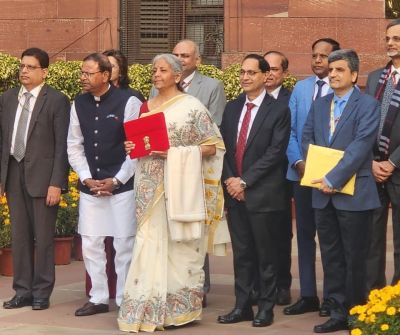
As the world headed in the direction of absolute digitalisation in the post-COVID age, Nirmala Sitharaman, Finance Minister, India, presented a ‘Made in India’ tablet substituting the traditional briefcase before presenting Budget 2021, making it India's first Digital Budget that targets to support the ambitious Digital India undertaking. In truth, some of the main highlights for furthering tech and digital initiatives in the Union Budget 2021-22 were—India to have the first-ever digital census and the government proposing to build a top-notch fintech hub at GIFT City, Gandhinagar.
With market qualms and reduced cash flows due to the coronavirus pandemic, there were some digitally progressive firms that brought about the true meaning to the Digital India initiative for a healthier 2021. Digitisation has established being an enabler and an opportunity to survive even for those who were not prepared for it.
Interestingly, this shift also coincides with India preparing itself to be a beneficiary of the global decoupling from China. With the ongoing pandemic, the world is experiencing two simultaneous transformations: the building of an alternate supply chain and the creation of a new, cutting-edge industrial process called digital manufacturing.
India’s digital factory
Adoption of analytics is said to be one of the greatest drivers of digital transformation, as businesses seek greater data-driven insights. Data acts as a source of truth that helps teams focus on the critical factors that determine business resilience. Today, businesses are acutely aware that they must become more resilient by using technology.
In a remote part of Odisha, stands one of the world’s most advanced manufacturing plants. Tata Steel in Kalinganagar, is one among 44 global elite facilities on the World Economic Forum’s Lighthouse Network of companies that have successfully combined digitisation with the manufacturing process. This makes Tata Steel India’s only company be ready for the new era of manufacturing that has dawned, largely unnoticed—one that conjoins manufacturing and digitisation to make the industry more agile, creative and efficient.
The multinationals in India, too, are looking for a place on the Lighthouse list, especially the local subsidiaries of companies like Schneider and Siemens whose parent companies are already Lighthouse Network players. For instance, France’s Schneider Electric aims to bring its Bangalore and Hyderabad facilities on to the network. In Hyderabad, it uses automation hardware and software in its industrial operations. This has already saved 30 per cent in annual electricity costs, among other benefits. These processes will soon be upgraded.
The remaking of the manufacturing process could have not come at a better time for India. With very few exceptions, the country has never developed a competitive manufacturing base. Manufacturing adds just 16 per cent of value to India’s GDP and at US$390 billion in revenues. This accounts for just 2 per cent of global manufacturing compared to 18 per cent for the US, 20 per cent for China, 10 per cent for Japan and 7 per cent for Germany.
The ecosystem for digital manufacturing in India is now visible and four elements of this are in place: the digital infrastructure, government schemes, academic learning, and a burst of start-ups.
Progression of domestic infrastructure
To capture this nascent and promising trend, the government has moved swiftly. November 2020 saw a $20 billion incentive scheme for 13 competitive sectors of manufacturing to create domestic self-sufficiency, says a Gateway House research study. In addition, a serious effort is underway to create supporting institutions for manufacturing and for the micro, small and medium enterprises (MSMEs), which comprises over 90 per cent of Indian business. Nitin Gadkari, India’s infrastructure and MSME minister said on December 15, 2020 that he expects MSMEs to create 50 million new jobs over the next five years, and contribute 40 per cent to India’s GDP, up from the present 30 per cent.
To make this happen, new initiatives like Smart Advanced Manufacturing and Rapid Transformation Hub (SAMARTH) by the Ministry of Heavy Industries have begun. One such government initiative in Pune is the Centre for Industry 4.0 (C4i4), which provides a transformation road map for its customers, both MSMEs and MNCs. C4i4 offers coaching and consulting specifically for manufacturing MSMEs that are looking to digitise. During the pandemic, demand for its services has grown by 30 per cent, not just from small businesses but big exporters too.
The government, surprisingly, is ahead of India Inc in this effort. While most start-ups like Chizel are small, self-financed ventures, some have found a generous funder in the many new government programmes like SAMARTH, Startup India and Digital India, as well as through the Department of Science and Technology. The latter has funded several incubation spaces like Mumbai’s Centre for Incubation and Business Acceleration, an affordable, modern workplace for start-ups.
Still awaits definitive efforts
In general, all of these are exemplary efforts and in the right direction, but in practical, they must accelerate. To receive investments and build an advanced industrial base that includes the SME sector, India must develop new skills, processes and products and most importantly, upgrade its academic, research and vocational sectors accordingly. India is already half-way there; its global IT services sector, while currently export-focussed, can use its talents domestically to develop data analytics models—the most difficult part of digital manufacturing—converging machines with digital tools to analyse data.
None of these have been put to work on digital manufacturing, mostly because companies lack an understanding of manufacturing processes and the digital manufacturing domain.
Tata Steel has not used its IT-export affiliate TCS; instead its in-house engineers with varied backgrounds, including mining and electronics—to develop the company’s manufacturing, digital and data analytics. Firms without such in-house bench strength are reaching out to Indian cloud-based tech start-ups like Chizel and Clairviz.
Logistics with digi-hosting capabilities
COVID-19 has accelerated the impact of several trends that are likely to transform how we live and work, compressing years into months. And this transformation shows no signs of stopping.
Brownfield facilities traditionally relied on heavy capital investment for upgrading infrastructure—essential replacement of operational but vintage assets. The existing pandemic has shrunk operating budgets and capital. But industry 4.0 technologies have made it possible to operate disparate factory assets by digitally linking new generation hardware and software systems at a fraction of the cost.
The logistics services required for the emerging e-commerce business models now depend on technology-driven agility and information. Information sharing is the new norm, along with trusted networks of partners.
Modern information systems allied to advanced communications technology are the central nervous systems of supply chains. The explosion in e-commerce will require the capacity of these technology services to grow rapidly. Thanks to the general availability of cloud-based information systems, this is no longer an onerous and expensive proposition. Many of the functional applications (e.g. OMS, IMS, WMS, TMS, etc.) that operated within discrete silos are now being replaced or embedded into systems that can model and monitor operational process flows across a logistics operating network.
Companies are using Industrial Internet of Things (IIoT) to their advantage to securely connect and collect data from diverse remote assets, channelling information to advanced operational applications and closing the loop by feeding key business applications. This helps to enable optimisation, asset management, enhanced analytics and modelling/simulation, thus improving business efficiency.
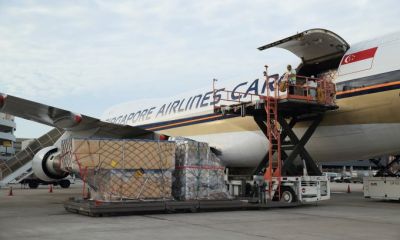
Singapore Changi Airport experienced a significant boost in air cargo volumes for the second quarter of 2024, handling 485,000 tonnes of airfreight from April to June. This represents a 16% increase compared to the same period last year. The growth is attributed to robust shipment flows between Singapore and major markets including the US and China. Changi Airport Group highlighted that the increase was seen across all cargo categories—exports, imports, and transhipments. The airport’s top five air cargo markets for the period were Australia, China, Hong Kong, India, and the United States. In the year-to-date, Changi Airport has processed a total of 960,000 tonnes of airfreight. The first quarter of 2024 also saw strong performance, with 475,000 tonnes handled, driven by high transhipment activity, particularly with China. Key sectors contributing to the cargo throughput include pharmaceuticals, perishables, e-commerce, and advanced materials like semiconductors. Notable airlines operating cargo flights at Changi include Spice Express, Tasman Cargo Airlines, Atlas Air, DHL Express, and Singapore Airlines, which collaborate on cargo operations. As of July 1, Changi Airport boasts 94 airlines operating over 6,900 weekly scheduled flights, linking Singapore to 158 cities across 50 countries and territories globally. This extensive network supports Changi’s role as a major international cargo hub. The airport’s continued growth in air cargo volumes underscores its importance as a critical logistics and transportation hub in the global supply chain.
AP Moller – Maersk is strengthening its operations in Bangladesh, where it has been serving the country and its exporters connect to the global market for almost three decades. Bangladesh has been one of the most important sourcing markets for the garments and apparel industry worldwide. The garment manufacturers exporting to global markets have significantly contributed towards building the country’s economy. Despite the impressive growth of garments exports from Bangladesh, the number of warehouses in Chattogram have not increased since 2012, with the sole exception of ISATL that became operational in 2018. Optimising utilisation of available capacity assisted to an extent, however it did not scale enough to meet the trade’s requirements. The logistics ecosystem and the Chittagong Port get stretched, particularly during the peak seasons. In 2021, a fallout of this structural challenge was felt by all the stakeholders involved in EXIM trade when the Container Freight Stations (CFSs) got clogged with cargo resulting in delayed clearance, stuffing and consequently dispatch of containers to the port. Delay in offloading cargo also led to longer truck waiting time, and delay in dispatch of containers to the port, consequently resulting in lack of overall productivity. These challenges have serious consequences on the overall economy of the country given the fact that the Chittagong Port handles in excess of 90 per cent of the total containerised trade to and from Bangladesh. Recognising these challenges, Maersk Bangladesh has partnered with Ispahani Summit Alliance Terminal Limited (ISATL) to build a 200,000 sq ft custom bonded warehouse. ISATL are pioneers in constructing and operating warehouses and CFS and operate four CFS within Chattogram and the River Terminal at Dhaka. Under the scope of this partnership, ISATL will construct a brand new custom bonded warehouse within the existing premises of the facility located at Pathortoli in Chattogram. The new warehouse will double the existing capacity at ISATL and add around 8 per cent additional space to the existing ecosystem at Chattogram. The construction of the new CFS has already commenced and is expected to be completed in a phased manner by the end of 2022. Bangladesh’s exporters and their overseas buyers will be able to start using the facility from July 2022, once the first phase of construction is completed. “Maersk’s commitment to connect and simplify our customers’ supply chains means that we look at long term solutions for problems such as the longstanding congestion within the ecosystem. We tackled the situation in 2021 by deploying an additional vessel for evacuating export loaded containers,” said Angshuman Mustafi, Managing Director, Maersk Bangladesh. “The solutions provided immediate relief to the ecosystem, but there was a need for a comprehensive solution to optimise ocean shipping, port handling and inland logistics that would benefit trade in the long term. By partnering with ISALT, we are establishing a facility that has the potential to partially decongest the system from the landside and streamline the flow of cargo in and out of Bangladesh.” Apart from adding capacity, the facility will offer several other benefits to Bangladesh’s exports. Amongst others, the new facility is being built by benchmarking international best practices when it comes to safety and other compliance guidelines. It will be modern multi-storeyed facility in Chattogram which will have storage at G+2 levels, thus making optimal use of available space to maximise the capacity. There will be an option to offer pallets for all operations, thereby improving the overall operational efficiency. Maersk will also offer customers Garment on Hanger facility, sorting, product audit, labelling, bar code and RFID scanning amongst others. “We are proud to partner with Maersk on this exciting long term project where ISATL’s extensive local experience combined with Maersk’s international best practices will allow us to create a truly world-class facility that will help raise the standards for the entire industry,” said Yasser Rizvi, Managing Director, ISATL.
Indian importers and exporters are grappling with significant cargo delays at Mundra Port, the country’s leading container trade hub. Local trade sources have voiced serious concerns about the worsening congestion at Mundra’s container terminals in recent weeks. "The terminals at Mundra now seem to be hugely congested, and the pendency has increased to levels affecting the normal movement of boxes between CFSs and terminals," stated the Container Freight Station Association Mundra in a complaint. The association added, "All the efforts put in by CFSs are not witnessing any improvement, but are rather finding that the situation is deteriorating further." A recent change in the process of issuing port entry permits for freight vehicles by the port authority has been identified as a major source of frustration. According to freight station owners, truckers are experiencing longer waits to move containers due to difficulties in securing entry permits promptly. "Vehicles are stranded on the road for hours together because of this. A corrective measure needs to be discussed with our members and worked out so as to ensure that movement continues without any hassles," explained the CFS association. The congestion has also frustrated container rail operators, as ICD (inland container depot) volumes constitute a significant portion of Mundra’s trade. The Association of Container Train Operators (ACTO) noted in a trade advisory, "There has been increased congestion at Mundra Port due to delays in effectively evacuating import containers in FIFO [first-in, first-out] sequence on time, despite trains being provided for clearance by container train operators [CTOs]." ACTO indicated that Indian Railways has restricted double-stack loading to expedite train evacuation from the port, resulting in additional ground rent charges for traders. Mundra, Adani Ports’ flagship entity, managed 7.4 million TEUs in the fiscal year 2023-24, marking a 15% increase over Nhava Sheva Port. With volumes rapidly expanding, the Adani Group is considering further investment to enhance capacity. "We continue to invest heavily in the business to drive growth, particularly in the logistics segment," stated Adani in a recent announcement.
Lufthansa Cargo has recently expanded its offerings, providing customers with new belly capacities on several attractive routes. Since the start of June, passengers and cargo alike can benefit from direct connections to various destinations, enhancing global connectivity and trade opportunities. Direct flights to North America, including routes from Frankfurt to Minneapolis (MSP) and Raleigh-Durham (RDU) with Lufthansa Airlines, are now available for booking. Additionally, from the Lufthansa Cargo hub in Munich, new connections to Seattle (SEA) three times a week, and daily capacity to Toronto (YYZ) and Vancouver (YVR) are being offered. Austrian Airlines has also introduced a new route, connecting Vienna with Los Angeles (LAX). Discover Airlines has expanded its services from Frankfurt to Halifax (YHZ) and Anchorage (ANC), further widening the reach of cargo transportation. Moreover, Lufthansa Cargo has introduced freighter capacity to Dubai World Central (DWC), providing customers with additional options for handling larger cargo items or special freight. This new service complements the existing belly service from Dubai International Airport (DXB) and offers enhanced flexibility and efficiency in cargo transportation. With a commitment to enhancing global connectivity and trade facilitation, Lufthansa Cargo continues to innovate and expand its service offerings. These new routes and increased capacities underscore Lufthansa Cargo's dedication to meeting the evolving needs of its customers in a rapidly changing global market.
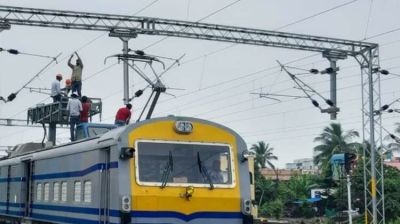
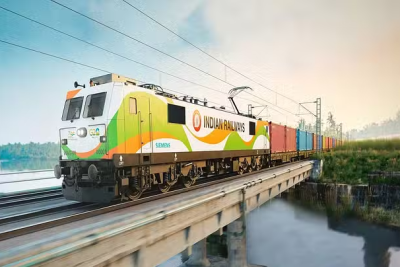
In a momentous event today, PM Modi inaugurated a 77-kilometer-long section of the Western Dedicated Freight Corridor (WDFC), marking a significant milestone in India's ambitious infrastructure development efforts. The inauguration ceremony, held in the presence of key dignitaries and government officials, showcased the country's commitment to enhancing its transportation network. The Western Dedicated Freight Corridor is a game-changing project that aims to revolutionize India's freight transportation sector. The newly inaugurated 77-kilometer section connects key industrial regions, providing a dedicated pathway for the efficient movement of goods. With this achievement, India takes a major step towards reducing logistics costs, boosting manufacturing, and improving the overall economy. PM Modi, while addressing the audience, emphasized the importance of this project in promoting economic growth, generating employment, and reducing the carbon footprint. He noted, "The Western Dedicated Freight Corridor is a testament to India's vision for a modern and efficient transportation system. It will not only enhance our connectivity but also make us a global logistics hub." The event was attended by several Union Ministers and top officials from the Ministry of Railways, underscoring the government's commitment to accelerating infrastructure development in the country.



In a momentous event today, PM Modi inaugurated a 77-kilometer-long section of the Western Dedicated Freight Corridor (WDFC), marking a significant milestone in India's ambitious infrastructure development efforts. The inauguration ceremony, held in the presence of key dignitaries and government officials, showcased the country's commitment to enhancing its transportation network. The Western Dedicated Freight Corridor is a game-changing project that aims to revolutionize India's freight transportation sector. The newly inaugurated 77-kilometer section connects key industrial regions, providing a dedicated pathway for the efficient movement of goods. With this achievement, India takes a major step towards reducing logistics costs, boosting manufacturing, and improving the overall economy. PM Modi, while addressing the audience, emphasized the importance of this project in promoting economic growth, generating employment, and reducing the carbon footprint. He noted, "The Western Dedicated Freight Corridor is a testament to India's vision for a modern and efficient transportation system. It will not only enhance our connectivity but also make us a global logistics hub." The event was attended by several Union Ministers and top officials from the Ministry of Railways, underscoring the government's commitment to accelerating infrastructure development in the country.


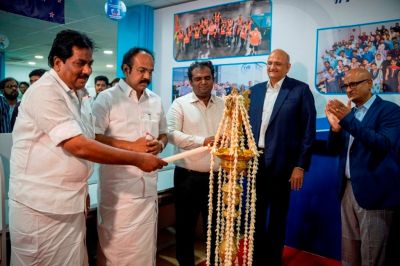
TVS Supply Chain Solutions (TVS SCS) announced the expansion of its Centre of Excellence (CoE) by inaugurating a new technology centre in Madurai. The CoE, a core unit of the company's global operations, strengthens TVS SCS' leadership as a technology-led global supply chain player and acts as an important pillar of the company's growth strategy. The company looks to tap into the rich talent available in the region to build on its competitive advantage and aims to double its employees' strength in two years from its current level of 300. The new wing will have a total work area of around 13,000 sq ft and would provide advanced services such as technology product development and deployment; analytics and business intelligence support; and business process outsourcing for its global operations. Thangam Thennarasu, Minister for Industries, Investment Promotion and Commerce, Government of Tamil Nadu; P Moorthy, Minister for Commercial Taxes, Registration and Stamp Law, Government of Tamil Nadu; and Dr S Aneesh Sekhar, IAS, District Collector, Madurai inaugurated the new centre. Commenting on the CoE's expansion, R Dinesh, Executive Vice Chairman, TVS SCS said, "I am happy that we are expanding our operations in Madurai through our Centre of Excellence, which provides specialised services, using technology and data analytics, to our global operations. Being a home-grown organisation, we always wanted to provide opportunities to the local talent here and that's when we started our Centre of Excellence in 2017 with 5 employees. Going forward, CoE will be the hub for all technology developments for our operations globally besides being the back-office capital for TVS SCS." Ravi Viswanathan, Managing Director, TVS SCS said, "The expansion of the CoE facility is a testimony to the value it drives to our operations both in India and globally and helps in being an agile and responsive partner to our customers globally. The CoE today boasts of deep domain depth combined with the latest technology capabilities serving our global customer clientele. Our expansion in Madurai is based on the underlying belief in the rich talent available in the region and be a key driver in realising our vision of being a global leader in the Supply Chain Solutions space." The new technology facility is an ISO 27001:2013 certified and has implemented required information systems, management systems, policies, and procedures to maintain industry standard best practices and applicable controls. TVS SCS' Centre of Excellence in Madurai, established in 2017, has now completed five years and employs over 300 strong workforce of supply chain experts and technology professionals.
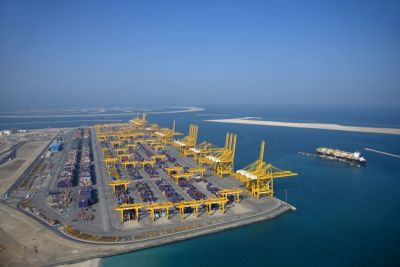
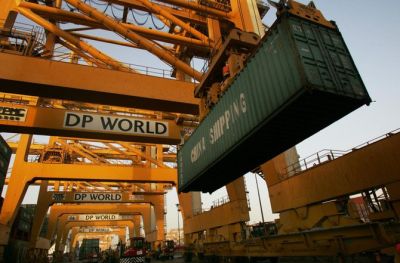
Dubai-based DP World and CDPQ, the Canadian global investment group, announced a joint investment of US$5 billion in three flagship UAE assets controlled by DP World. "CDPQ will invest US$2.5 billion in Jebel Ali Port, Jebel Ali Free Zone, and National Industries Park through a new joint venture in which it will hold a stake of approximately 22 per cent (through a sub-concession of up to 35 years) with the remainder of the transaction being financed by debt," according to an official statement from DP World. "Other long-term investors will have the opportunity to acquire an additional stake of up to US$3 billion. The transaction implies a total enterprise value of approximately US$23 billion for the three assets." "The Jebel Ali Port, Free Zone and National Industries Park together form a world-class integrated ecosystem for the supply and logistics chains of over 8,700 companies from around the world, serving more than 3.5 billion people globally. The three assets generated pro-forma 2021 revenue of US$1.9 billion, the statement said. The three assets will remain fully consolidated businesses within the DP World Group, and day-to-day operations, customers, service providers and employees will not be affected," it added. According to the DP Word statement, "Tranche 1 (US$5 billion) of the transaction is expected to close in the second or third quarter of 2022, and tranche 2 (up to US$3 billion) is expected to close during the fourth quarter of 2022." "We are delighted to announce the broadening of our partnership with CDPQ," says Sultan Ahmed Bin Sulayem, Group Chairman and CEO, DP World. "The DP World and CDPQ co-investments have been very successful, thanks to our complementary expertise and long-term investment horizon. We believe this new partnership will enhance our assets and allow us to capture the significant growth potential of the wider region. The transaction also achieves our objective of reducing DP World's net leverage to below 4x Net Debt to EBITDA and this has been achieved despite the challenges of the pandemic and recent global economic conditions." Emmanuel Jaclot, Executive Vice-President and Head of Infrastructure, CDPQ adds, "This investment in Jebel Ali is another great illustration of the partnership between CDPQ and DP World, which now spans four continents and eighteen terminals. Today, we are pleased to deepen our long-standing relationship with a world-class logistics and supply chain operator by investing in this strategic trade infrastructure, one that will play a pivotal role in the evolution of the global economy." "DP World is well positioned to provide innovative solutions to their customers worldwide, and we welcome this opportunity to invest in a best-in-class group of infrastructure that provides CDPQ with exposure to new fast-growing markets and trade routes in Africa and South Asia."