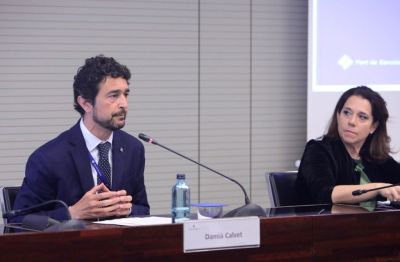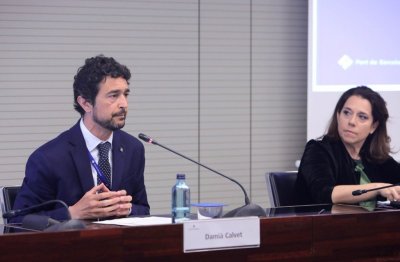
The Port of Barcelona has launched its Innovation Plan to coordinate the advancement, under the same umbrella, of the various projects that are transforming the way the Port is offering its services, as they place it at the forefront of economic and social growth. The Innovation Plan was unveiled on May 13 by Damià Calvet, President of the Port of Barcelona and Emma Cobos, Director of Innovation and Business Strategy, Port of Barcelona.
For the Port, innovation means turning new ideas into value for the Port Community, its customers and society at large. The Innovation Plan, which develops the proposals specified in the Fourth Strategic Plan, establishes its own innovation model based on the smart port concept and therefore considers that innovation must be sustainable, open, collaborative, demand-driven, aligned with the Port’s strategy and have a strong technological base.
“With the Port of Barcelona’s Innovation Plan, the city’s innovation will look out to sea,” said Damià Calvet
The Plan defines three main objectives: strengthening the Port of Barcelona’s role as a driver of economic growth and recovery; driving innovation and digitisation of the logistics ecosystem; and fostering synergies with the city in this area.
The Innovation Plan is structured around four lines of action:
Developing nimble and cross-cutting management tools involving the Port Community of Barcelona.
Forging alliances with the innovative environment of Barcelona.
Stimulating sectoral innovation.
Disseminating the Port’s innovative activity.
Within this scope, Damià Calvet explained that the Port of Barcelona has always been at the forefront of the Spanish port system and also of the Mediterranean and European ports when it comes to proposing, designing and putting into service innovative solutions in areas as diverse as logistics (Logistics Activities Area), the networked port and the inland terminals (Zaragoza Maritime Terminal), the port-city (Port Vell), the participation of the port community (Steering Council of the Port Community of Barcelona, Telematic Forum), training (European School of Intermodal Transport), telematics (Portic), inter alia.
The Port President explained that Barcelona is today one of Europe’s tech capitals, highlighting its commitment to developing mobility and energy model solutions that facilitate the transition to a sustainable city model that takes particular care of people and the environment.
Consequently, the Innovation Plan, Calvet says, proposes a new model of participation, which must be collaborative and open, and which requires the active involvement of Barcelona Port Community and the innovative ecosystem of the city” through strategic alliances with the agents of the city’s innovative ecosystem, such as 22@, Consortium of the Free Trade Zone of Barcelona, Barcelona Tech City, Mobile World Capital, etc. and that of the Port.
“We have set ourselves the goal that all of this powerful technological and innovative ecosystem that is being developed in Barcelona will look out to sea,” he added.
Acceleration of technological projects
Emma Cobos stressed on the importance of having a structure that is more nimble than the Port Authority and able to promote new initiatives quickly and efficiently.
"For this reason, the Innovation Plan provides for the creation of the BCN Port Innovation Foundation, which will facilitate the management of innovative initiatives and the acceleration of technological, environmental and energy transition projects that must facilitate the transformation of Barcelona and its Port,” she said.
BCN Port Innovation is a private foundation with a prominent participation of companies from the Port Logistics Community as partners and the Port of Barcelona together with two technology companies, Ackcent and Aggity as founding patrons, which Ms. Cobos says will provide a dynamic and external vision to the port maritime sector.
The BCN Port Innovation Foundation will be the meeting and debate forum in which port companies will discuss the increasing challenges being generated by international transport and logistics, and in which technology companies will offer disruptive solutions.
Cobos explained that there can be no open innovation without alliances and collaboration.
"In this connection, and to facilitate the development of the Innovation Plan, there are plans to promote the Blue District, a forum for sectorial innovation located mainly in the Port Vell area, where facilities are already set up, such as Pier01, the Barcelona Nautical Faculty, or the D·Factory of the Free Trade Zone Consortium. Lines of collaboration are already being maintained with such facilities."
The Port will provide a definitive boost to the Blue District with the creation of the Blue Tech Port, the new blue economy innovation centre, which will be located on the Sant Bertran pier and will host start-ups, international maritime institutions, innovation centres for large companies linked to logistics, transport, port activity and training centres such as the Barcelona Logistics Institute, which will open its doors in the 2022-2023 academic year at the World Trade Center Barcelona and will then be set up at the Blue Tech Port.
"One example of the activity being generated within the Innovation Plan is the holding of the TechTour Maritime, Trade & Logistics on May 31 and June 01 at the Port of Barcelona to coincide with the International Logistics Fair. TechTour Maritime, Trade & Logistics will bring to Barcelona the most advanced solutions from more than 30 start-ups pre-selected in the maritime and logistics field, as well as more than 30 top international investors for the first time," Cobos further went to explain.
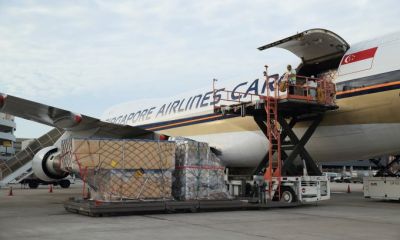
Singapore Changi Airport experienced a significant boost in air cargo volumes for the second quarter of 2024, handling 485,000 tonnes of airfreight from April to June. This represents a 16% increase compared to the same period last year. The growth is attributed to robust shipment flows between Singapore and major markets including the US and China. Changi Airport Group highlighted that the increase was seen across all cargo categories—exports, imports, and transhipments. The airport’s top five air cargo markets for the period were Australia, China, Hong Kong, India, and the United States. In the year-to-date, Changi Airport has processed a total of 960,000 tonnes of airfreight. The first quarter of 2024 also saw strong performance, with 475,000 tonnes handled, driven by high transhipment activity, particularly with China. Key sectors contributing to the cargo throughput include pharmaceuticals, perishables, e-commerce, and advanced materials like semiconductors. Notable airlines operating cargo flights at Changi include Spice Express, Tasman Cargo Airlines, Atlas Air, DHL Express, and Singapore Airlines, which collaborate on cargo operations. As of July 1, Changi Airport boasts 94 airlines operating over 6,900 weekly scheduled flights, linking Singapore to 158 cities across 50 countries and territories globally. This extensive network supports Changi’s role as a major international cargo hub. The airport’s continued growth in air cargo volumes underscores its importance as a critical logistics and transportation hub in the global supply chain.
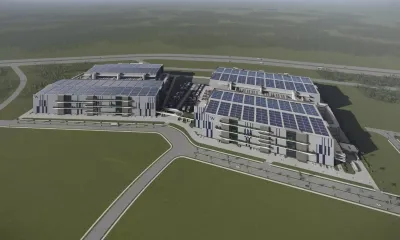
AP Moller – Maersk is strengthening its operations in Bangladesh, where it has been serving the country and its exporters connect to the global market for almost three decades. Bangladesh has been one of the most important sourcing markets for the garments and apparel industry worldwide. The garment manufacturers exporting to global markets have significantly contributed towards building the country’s economy. Despite the impressive growth of garments exports from Bangladesh, the number of warehouses in Chattogram have not increased since 2012, with the sole exception of ISATL that became operational in 2018. Optimising utilisation of available capacity assisted to an extent, however it did not scale enough to meet the trade’s requirements. The logistics ecosystem and the Chittagong Port get stretched, particularly during the peak seasons. In 2021, a fallout of this structural challenge was felt by all the stakeholders involved in EXIM trade when the Container Freight Stations (CFSs) got clogged with cargo resulting in delayed clearance, stuffing and consequently dispatch of containers to the port. Delay in offloading cargo also led to longer truck waiting time, and delay in dispatch of containers to the port, consequently resulting in lack of overall productivity. These challenges have serious consequences on the overall economy of the country given the fact that the Chittagong Port handles in excess of 90 per cent of the total containerised trade to and from Bangladesh. Recognising these challenges, Maersk Bangladesh has partnered with Ispahani Summit Alliance Terminal Limited (ISATL) to build a 200,000 sq ft custom bonded warehouse. ISATL are pioneers in constructing and operating warehouses and CFS and operate four CFS within Chattogram and the River Terminal at Dhaka. Under the scope of this partnership, ISATL will construct a brand new custom bonded warehouse within the existing premises of the facility located at Pathortoli in Chattogram. The new warehouse will double the existing capacity at ISATL and add around 8 per cent additional space to the existing ecosystem at Chattogram. The construction of the new CFS has already commenced and is expected to be completed in a phased manner by the end of 2022. Bangladesh’s exporters and their overseas buyers will be able to start using the facility from July 2022, once the first phase of construction is completed. “Maersk’s commitment to connect and simplify our customers’ supply chains means that we look at long term solutions for problems such as the longstanding congestion within the ecosystem. We tackled the situation in 2021 by deploying an additional vessel for evacuating export loaded containers,” said Angshuman Mustafi, Managing Director, Maersk Bangladesh. “The solutions provided immediate relief to the ecosystem, but there was a need for a comprehensive solution to optimise ocean shipping, port handling and inland logistics that would benefit trade in the long term. By partnering with ISALT, we are establishing a facility that has the potential to partially decongest the system from the landside and streamline the flow of cargo in and out of Bangladesh.” Apart from adding capacity, the facility will offer several other benefits to Bangladesh’s exports. Amongst others, the new facility is being built by benchmarking international best practices when it comes to safety and other compliance guidelines. It will be modern multi-storeyed facility in Chattogram which will have storage at G+2 levels, thus making optimal use of available space to maximise the capacity. There will be an option to offer pallets for all operations, thereby improving the overall operational efficiency. Maersk will also offer customers Garment on Hanger facility, sorting, product audit, labelling, bar code and RFID scanning amongst others. “We are proud to partner with Maersk on this exciting long term project where ISATL’s extensive local experience combined with Maersk’s international best practices will allow us to create a truly world-class facility that will help raise the standards for the entire industry,” said Yasser Rizvi, Managing Director, ISATL.
Indian importers and exporters are grappling with significant cargo delays at Mundra Port, the country’s leading container trade hub. Local trade sources have voiced serious concerns about the worsening congestion at Mundra’s container terminals in recent weeks. "The terminals at Mundra now seem to be hugely congested, and the pendency has increased to levels affecting the normal movement of boxes between CFSs and terminals," stated the Container Freight Station Association Mundra in a complaint. The association added, "All the efforts put in by CFSs are not witnessing any improvement, but are rather finding that the situation is deteriorating further." A recent change in the process of issuing port entry permits for freight vehicles by the port authority has been identified as a major source of frustration. According to freight station owners, truckers are experiencing longer waits to move containers due to difficulties in securing entry permits promptly. "Vehicles are stranded on the road for hours together because of this. A corrective measure needs to be discussed with our members and worked out so as to ensure that movement continues without any hassles," explained the CFS association. The congestion has also frustrated container rail operators, as ICD (inland container depot) volumes constitute a significant portion of Mundra’s trade. The Association of Container Train Operators (ACTO) noted in a trade advisory, "There has been increased congestion at Mundra Port due to delays in effectively evacuating import containers in FIFO [first-in, first-out] sequence on time, despite trains being provided for clearance by container train operators [CTOs]." ACTO indicated that Indian Railways has restricted double-stack loading to expedite train evacuation from the port, resulting in additional ground rent charges for traders. Mundra, Adani Ports’ flagship entity, managed 7.4 million TEUs in the fiscal year 2023-24, marking a 15% increase over Nhava Sheva Port. With volumes rapidly expanding, the Adani Group is considering further investment to enhance capacity. "We continue to invest heavily in the business to drive growth, particularly in the logistics segment," stated Adani in a recent announcement.
Lufthansa Cargo has recently expanded its offerings, providing customers with new belly capacities on several attractive routes. Since the start of June, passengers and cargo alike can benefit from direct connections to various destinations, enhancing global connectivity and trade opportunities. Direct flights to North America, including routes from Frankfurt to Minneapolis (MSP) and Raleigh-Durham (RDU) with Lufthansa Airlines, are now available for booking. Additionally, from the Lufthansa Cargo hub in Munich, new connections to Seattle (SEA) three times a week, and daily capacity to Toronto (YYZ) and Vancouver (YVR) are being offered. Austrian Airlines has also introduced a new route, connecting Vienna with Los Angeles (LAX). Discover Airlines has expanded its services from Frankfurt to Halifax (YHZ) and Anchorage (ANC), further widening the reach of cargo transportation. Moreover, Lufthansa Cargo has introduced freighter capacity to Dubai World Central (DWC), providing customers with additional options for handling larger cargo items or special freight. This new service complements the existing belly service from Dubai International Airport (DXB) and offers enhanced flexibility and efficiency in cargo transportation. With a commitment to enhancing global connectivity and trade facilitation, Lufthansa Cargo continues to innovate and expand its service offerings. These new routes and increased capacities underscore Lufthansa Cargo's dedication to meeting the evolving needs of its customers in a rapidly changing global market.
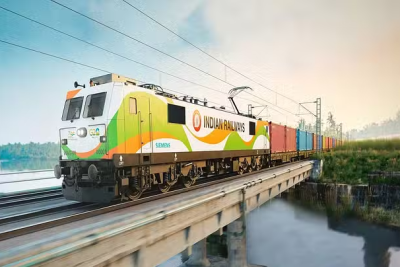
In a momentous event today, PM Modi inaugurated a 77-kilometer-long section of the Western Dedicated Freight Corridor (WDFC), marking a significant milestone in India's ambitious infrastructure development efforts. The inauguration ceremony, held in the presence of key dignitaries and government officials, showcased the country's commitment to enhancing its transportation network. The Western Dedicated Freight Corridor is a game-changing project that aims to revolutionize India's freight transportation sector. The newly inaugurated 77-kilometer section connects key industrial regions, providing a dedicated pathway for the efficient movement of goods. With this achievement, India takes a major step towards reducing logistics costs, boosting manufacturing, and improving the overall economy. PM Modi, while addressing the audience, emphasized the importance of this project in promoting economic growth, generating employment, and reducing the carbon footprint. He noted, "The Western Dedicated Freight Corridor is a testament to India's vision for a modern and efficient transportation system. It will not only enhance our connectivity but also make us a global logistics hub." The event was attended by several Union Ministers and top officials from the Ministry of Railways, underscoring the government's commitment to accelerating infrastructure development in the country.



In a momentous event today, PM Modi inaugurated a 77-kilometer-long section of the Western Dedicated Freight Corridor (WDFC), marking a significant milestone in India's ambitious infrastructure development efforts. The inauguration ceremony, held in the presence of key dignitaries and government officials, showcased the country's commitment to enhancing its transportation network. The Western Dedicated Freight Corridor is a game-changing project that aims to revolutionize India's freight transportation sector. The newly inaugurated 77-kilometer section connects key industrial regions, providing a dedicated pathway for the efficient movement of goods. With this achievement, India takes a major step towards reducing logistics costs, boosting manufacturing, and improving the overall economy. PM Modi, while addressing the audience, emphasized the importance of this project in promoting economic growth, generating employment, and reducing the carbon footprint. He noted, "The Western Dedicated Freight Corridor is a testament to India's vision for a modern and efficient transportation system. It will not only enhance our connectivity but also make us a global logistics hub." The event was attended by several Union Ministers and top officials from the Ministry of Railways, underscoring the government's commitment to accelerating infrastructure development in the country.


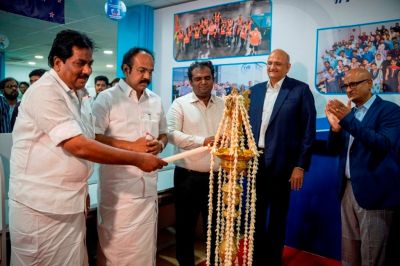
TVS Supply Chain Solutions (TVS SCS) announced the expansion of its Centre of Excellence (CoE) by inaugurating a new technology centre in Madurai. The CoE, a core unit of the company's global operations, strengthens TVS SCS' leadership as a technology-led global supply chain player and acts as an important pillar of the company's growth strategy. The company looks to tap into the rich talent available in the region to build on its competitive advantage and aims to double its employees' strength in two years from its current level of 300. The new wing will have a total work area of around 13,000 sq ft and would provide advanced services such as technology product development and deployment; analytics and business intelligence support; and business process outsourcing for its global operations. Thangam Thennarasu, Minister for Industries, Investment Promotion and Commerce, Government of Tamil Nadu; P Moorthy, Minister for Commercial Taxes, Registration and Stamp Law, Government of Tamil Nadu; and Dr S Aneesh Sekhar, IAS, District Collector, Madurai inaugurated the new centre. Commenting on the CoE's expansion, R Dinesh, Executive Vice Chairman, TVS SCS said, "I am happy that we are expanding our operations in Madurai through our Centre of Excellence, which provides specialised services, using technology and data analytics, to our global operations. Being a home-grown organisation, we always wanted to provide opportunities to the local talent here and that's when we started our Centre of Excellence in 2017 with 5 employees. Going forward, CoE will be the hub for all technology developments for our operations globally besides being the back-office capital for TVS SCS." Ravi Viswanathan, Managing Director, TVS SCS said, "The expansion of the CoE facility is a testimony to the value it drives to our operations both in India and globally and helps in being an agile and responsive partner to our customers globally. The CoE today boasts of deep domain depth combined with the latest technology capabilities serving our global customer clientele. Our expansion in Madurai is based on the underlying belief in the rich talent available in the region and be a key driver in realising our vision of being a global leader in the Supply Chain Solutions space." The new technology facility is an ISO 27001:2013 certified and has implemented required information systems, management systems, policies, and procedures to maintain industry standard best practices and applicable controls. TVS SCS' Centre of Excellence in Madurai, established in 2017, has now completed five years and employs over 300 strong workforce of supply chain experts and technology professionals.
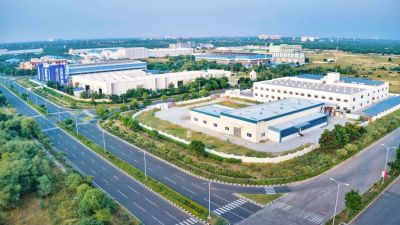
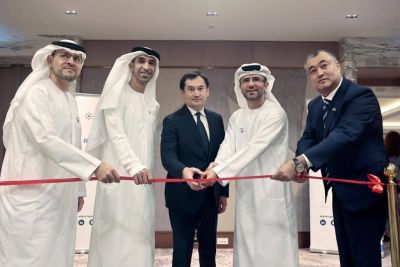
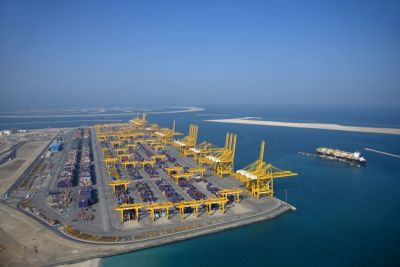
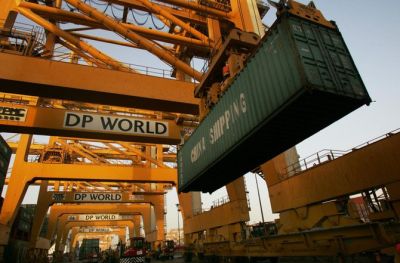
Dubai-based DP World and CDPQ, the Canadian global investment group, announced a joint investment of US$5 billion in three flagship UAE assets controlled by DP World. "CDPQ will invest US$2.5 billion in Jebel Ali Port, Jebel Ali Free Zone, and National Industries Park through a new joint venture in which it will hold a stake of approximately 22 per cent (through a sub-concession of up to 35 years) with the remainder of the transaction being financed by debt," according to an official statement from DP World. "Other long-term investors will have the opportunity to acquire an additional stake of up to US$3 billion. The transaction implies a total enterprise value of approximately US$23 billion for the three assets." "The Jebel Ali Port, Free Zone and National Industries Park together form a world-class integrated ecosystem for the supply and logistics chains of over 8,700 companies from around the world, serving more than 3.5 billion people globally. The three assets generated pro-forma 2021 revenue of US$1.9 billion, the statement said. The three assets will remain fully consolidated businesses within the DP World Group, and day-to-day operations, customers, service providers and employees will not be affected," it added. According to the DP Word statement, "Tranche 1 (US$5 billion) of the transaction is expected to close in the second or third quarter of 2022, and tranche 2 (up to US$3 billion) is expected to close during the fourth quarter of 2022." "We are delighted to announce the broadening of our partnership with CDPQ," says Sultan Ahmed Bin Sulayem, Group Chairman and CEO, DP World. "The DP World and CDPQ co-investments have been very successful, thanks to our complementary expertise and long-term investment horizon. We believe this new partnership will enhance our assets and allow us to capture the significant growth potential of the wider region. The transaction also achieves our objective of reducing DP World's net leverage to below 4x Net Debt to EBITDA and this has been achieved despite the challenges of the pandemic and recent global economic conditions." Emmanuel Jaclot, Executive Vice-President and Head of Infrastructure, CDPQ adds, "This investment in Jebel Ali is another great illustration of the partnership between CDPQ and DP World, which now spans four continents and eighteen terminals. Today, we are pleased to deepen our long-standing relationship with a world-class logistics and supply chain operator by investing in this strategic trade infrastructure, one that will play a pivotal role in the evolution of the global economy." "DP World is well positioned to provide innovative solutions to their customers worldwide, and we welcome this opportunity to invest in a best-in-class group of infrastructure that provides CDPQ with exposure to new fast-growing markets and trade routes in Africa and South Asia."