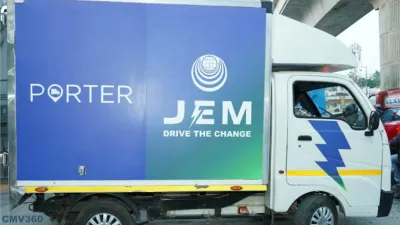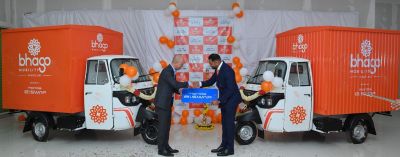
Honda Power Pack Energy India, a subsidiary of Honda Motor Company, Japan, has partnered with Bhago Mobility, an Indian innovator in sustainable transportation, to launch a green fleet management service aimed at enhancing last-mile delivery solutions for the electric vehicle (EV) segment. The collaboration introduces Honda e:Swap’s battery swap technology, enabling EV fleets to maintain maximum uptime by quickly swapping out discharged batteries with fully charged ones. Bhago Mobility will deploy electric vehicles at strategic locations in Bangalore and Delhi, supported by dedicated hubs providing electric cargo vehicles 24/7. These vehicles, equipped with swappable battery packs, will be stationed within a 10 km radius of every metro station, ensuring reliable, convenient, and sustainable mobility services. The initiative offers a green alternative for commuting and cargo transportation. Marking the launch on World EV Day, Takuya Taniguchi, President and CMD of Honda Power Pack Energy India, said, “This initiative reflects our commitment to providing sustainable, efficient, and cutting-edge solutions for urban mobility. We believe this step will significantly contribute to the city’s transition towards a greener future.” Bhago Mobility plans to roll out 100 vehicles within a few months of 2024, with a target of reaching 10,000 vehicles by 2028. Aditya Goyal, Founder of Bhago Mobility, stated, “Our shared vision for sustainable transportation aligns perfectly with our goal to revolutionise fleet management and last-mile delivery in India. With Honda e:Swap’s advanced battery swapping technology, we are confident in delivering superior service to our clients while significantly reducing our carbon footprint.” In addition to fleet operations, Bhago Mobility is developing a dedicated “solar-powered hub” for 360-degree green operations, reinforcing its commitment to eco-friendly practices.
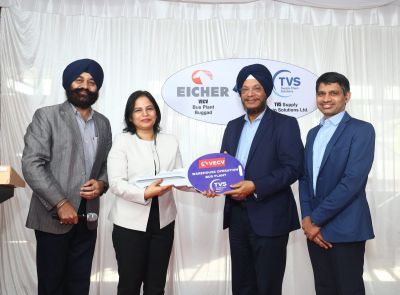
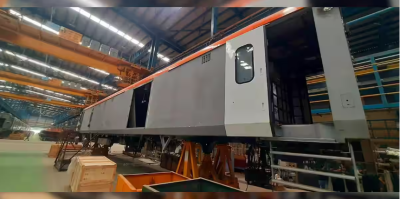
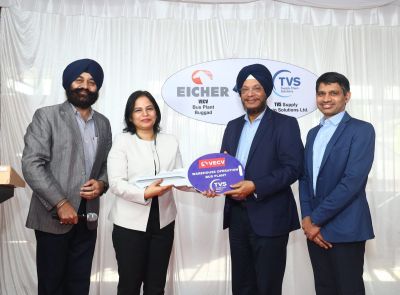
TVS Supply Chain Solutions Limited, a prominent global supply chain solutions provider, has clinched a significant business deal with VE Commercial Vehicles (VECV) to oversee in-plant warehousing and logistics operations at their Eicher bus factory in Baggad, Madhya Pradesh. This partnership reinforces their longstanding collaboration, which commenced in 2006 for in-plant logistics operations at VECV’s Truck plant in Pithampur, Madhya Pradesh. The new contract, spanning three years, signifies a deepening of the two-decade relationship between TVS SCS and VECV, which has already facilitated the creation of over 1200 job opportunities in Madhya Pradesh. Commenting on the new contract, Mr. K. Sukumar, CEO, TVS Supply Chain Solutions India, said, “We are delighted to further strengthen our partnership with VECV by extending our services to their bus plant operations. This win is a testament to our process driven approach and reflects our commitment to delivering exceptional services through tech enabled solutions. We are confident that our capability to provide end-to-end solutions will improve the production efficiency to our customer.” Mr. B Srinivas – EVP, VE Commercial Vehicles, said, “The extension of our business opportunity to TVS SCS at our VECV Baggad plant underscores the shared commitment of both companies to achieving strategic objectives and desired outcomes, further solidifying the foundation for continued growth and operational excellence.” In-plant logistics services for the Baggad bus plant comprise seamless inward operations for timely receipt of parts; efficient storage and picking of parts from defined locations based on the Production Planning Control (PPC) team; and delivering parts to designated assembly lines based on the Bill of Material (BOM), ensuring a steady flow of materials to maintain the efficiency in the production line.
TVS Supply Chain Solutions Limited, a prominent global supply chain solutions provider, has clinched a significant business deal with VE Commercial Vehicles (VECV) to oversee in-plant warehousing and logistics operations at their Eicher bus factory in Baggad, Madhya Pradesh. This partnership reinforces their longstanding collaboration, which commenced in 2006 for in-plant logistics operations at VECV’s Truck plant in Pithampur, Madhya Pradesh. The new contract, spanning three years, signifies a deepening of the two-decade relationship between TVS SCS and VECV, which has already facilitated the creation of over 1200 job opportunities in Madhya Pradesh. Commenting on the new contract, Mr. K. Sukumar, CEO, TVS Supply Chain Solutions India, said, “We are delighted to further strengthen our partnership with VECV by extending our services to their bus plant operations. This win is a testament to our process driven approach and reflects our commitment to delivering exceptional services through tech enabled solutions. We are confident that our capability to provide end-to-end solutions will improve the production efficiency to our customer.” Mr. B Srinivas – EVP, VE Commercial Vehicles, said, “The extension of our business opportunity to TVS SCS at our VECV Baggad plant underscores the shared commitment of both companies to achieving strategic objectives and desired outcomes, further solidifying the foundation for continued growth and operational excellence.” In-plant logistics services for the Baggad bus plant comprise seamless inward operations for timely receipt of parts; efficient storage and picking of parts from defined locations based on the Production Planning Control (PPC) team; and delivering parts to designated assembly lines based on the Bill of Material (BOM), ensuring a steady flow of materials to maintain the efficiency in the production line.

CJ Darcl Logistics, one of the largest logistics providers in India has partnered with SaaS leader in artificial intelligence (AI) and edge computing focussing on driver and fleet safety, Netradyne for advanced vehicle management solutions. The engagement will see Netradyne equipping the 1000-vehicles-fleet of CJ Darcl with AI-enabled embedded safety technology, helping the company improve fleet operation performance, driver behaviour, and reduce thefts. By deploying Netradyne’s Driver•i, CJ Darcl Logistics enhances their fleet management and further builds upon cost-effective services and sets new safety standards. The Driver•i system helps the company achieve its goals of improving driving behavior through automated driver coaching. It also supports in expediting driver exonerations as well as in handling insurance claims. “Our vision is to train and to make the drivers follow the best road practices to avoid accidents. CJ Darcl aims to accomplish zero accidents and to understand and address the areas of concern while driving. Partnering with Netradyne’s Driver•i with smart safety dash cams will help to control the driver’s distracted sight. We have also conducted certain trials. Hence, it is helping in maintaining the Driver’s scorecard with other promising results,” said Nikhil Agarwal, President, CJ Darcl Logistics. Durgadutt Nedungadi, Vice President- International Business, Netradyne said, “We are thrilled to partner with CJ Darcl Logistics, and we will deliver our industry-leading AI-based safety technology solutions to its fleets. The partnership paves the way for us to showcase our technology's flexibility to cater to our customers' diverse needs.” CJ Darcl Logistics, a joint venture between DARCL Logistics and CJ Group from South Korea, serves more than 2000 varied customers through its 174 offices across India. The company stays ahead of the curve when it appears to adoption of technological advancements and safety. The company remains at the forefront of adopting technological advancements and prioritising safety. To enhance road safety, the company is integrating technology and safety measures by installing AI devices on its trucks. These devices control visibility and speed, which in turn improves the overall safety and security of the road. Netradyne is an industry leader in fleet safety solutions, immediately improving driver behaviour and fleet performance and setting commercial vehicle driving standards. Netradyne collects and analyses more data points and meaningful information than any other fleet safety organisation so customers can improve retention, increase profitability, enhance safety, and enable end-to-end transparency.

RSA Global, a digital supply and freight forwarding company based in the UAE, has launched the digital freight platform ClickRF (Click for your Road Freight). ClickRF is a digital marketplace for all road freight services across the UAE and GCC region providing shippers and transporters with an aggregator service for fast, convenient, and transparent transport solutions. The platform is powered by Artificial Intelligence (AI) and RSA Global’s voice-enabled intelligent assistant RiA. Being the first of its kind in the region, RiA carries out administrative tasks on behalf of ClickRF’s users saving them time and effort. Through ClickRF shippers can inquire rates for any land lane within the UAE and GCC region, compare and negotiate offered rates, book shipments, instantly track and trace them, perform online payments, and receive e-invoices, amongst others. In turn, transport providers can bid and adjust rates for requested lanes, manage orders, manage their drivers & fleet, receive online payments, and continuously optimize their operational processes by utilizing the system’s smart data. All steps are facilitated via a transparent real time communication between the supply chain stakeholders through the single window interface WhatsApp. “We are extremely excited about the launch of ClickRF”, says Abhishek Shah, CEO & Co-Founder of RSA Global. “While ClickRF solves major pain points of shippers and transporters at the click of a button such as low supply chain efficiency, increasing costs and lacking transparency, the platform’s unique feature is RiA. A first of its kind IVA (interactive virtual assistant) that is built on a groundbreaking platform of AI, ML and NLP. UAE is just the first market; we will be taking this across our entire network soon.” “Going live with ClickRF is an important milestone of RSA Global’s digital transformation aiming at digitizing 100% of our customers’ interactions with us”, says Karthikeyan Hariharan, Chief Operating Officer at RSA Global. “ClickRF complements our digital Click Eco-System comprising ClickSC (freight management system) which will also go live soon, ClickRF and ClickWM (warehouse management system). All these systems are supported by RiA and simplify and accelerate our customers’ supply chains significantly.”

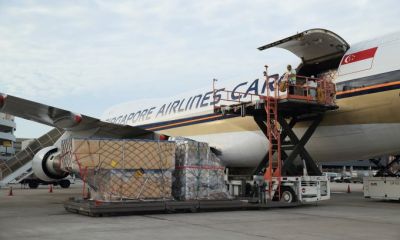
Singapore Changi Airport experienced a significant boost in air cargo volumes for the second quarter of 2024, handling 485,000 tonnes of airfreight from April to June. This represents a 16% increase compared to the same period last year. The growth is attributed to robust shipment flows between Singapore and major markets including the US and China. Changi Airport Group highlighted that the increase was seen across all cargo categories—exports, imports, and transhipments. The airport’s top five air cargo markets for the period were Australia, China, Hong Kong, India, and the United States. In the year-to-date, Changi Airport has processed a total of 960,000 tonnes of airfreight. The first quarter of 2024 also saw strong performance, with 475,000 tonnes handled, driven by high transhipment activity, particularly with China. Key sectors contributing to the cargo throughput include pharmaceuticals, perishables, e-commerce, and advanced materials like semiconductors. Notable airlines operating cargo flights at Changi include Spice Express, Tasman Cargo Airlines, Atlas Air, DHL Express, and Singapore Airlines, which collaborate on cargo operations. As of July 1, Changi Airport boasts 94 airlines operating over 6,900 weekly scheduled flights, linking Singapore to 158 cities across 50 countries and territories globally. This extensive network supports Changi’s role as a major international cargo hub. The airport’s continued growth in air cargo volumes underscores its importance as a critical logistics and transportation hub in the global supply chain.
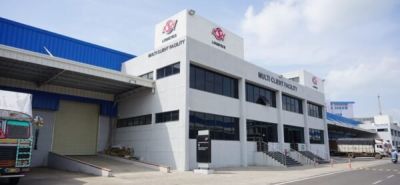
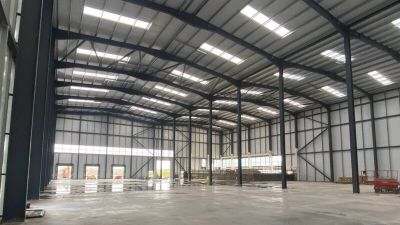
AP Moller – Maersk is strengthening its operations in Bangladesh, where it has been serving the country and its exporters connect to the global market for almost three decades. Bangladesh has been one of the most important sourcing markets for the garments and apparel industry worldwide. The garment manufacturers exporting to global markets have significantly contributed towards building the country’s economy. Despite the impressive growth of garments exports from Bangladesh, the number of warehouses in Chattogram have not increased since 2012, with the sole exception of ISATL that became operational in 2018. Optimising utilisation of available capacity assisted to an extent, however it did not scale enough to meet the trade’s requirements. The logistics ecosystem and the Chittagong Port get stretched, particularly during the peak seasons. In 2021, a fallout of this structural challenge was felt by all the stakeholders involved in EXIM trade when the Container Freight Stations (CFSs) got clogged with cargo resulting in delayed clearance, stuffing and consequently dispatch of containers to the port. Delay in offloading cargo also led to longer truck waiting time, and delay in dispatch of containers to the port, consequently resulting in lack of overall productivity. These challenges have serious consequences on the overall economy of the country given the fact that the Chittagong Port handles in excess of 90 per cent of the total containerised trade to and from Bangladesh. Recognising these challenges, Maersk Bangladesh has partnered with Ispahani Summit Alliance Terminal Limited (ISATL) to build a 200,000 sq ft custom bonded warehouse. ISATL are pioneers in constructing and operating warehouses and CFS and operate four CFS within Chattogram and the River Terminal at Dhaka. Under the scope of this partnership, ISATL will construct a brand new custom bonded warehouse within the existing premises of the facility located at Pathortoli in Chattogram. The new warehouse will double the existing capacity at ISATL and add around 8 per cent additional space to the existing ecosystem at Chattogram. The construction of the new CFS has already commenced and is expected to be completed in a phased manner by the end of 2022. Bangladesh’s exporters and their overseas buyers will be able to start using the facility from July 2022, once the first phase of construction is completed. “Maersk’s commitment to connect and simplify our customers’ supply chains means that we look at long term solutions for problems such as the longstanding congestion within the ecosystem. We tackled the situation in 2021 by deploying an additional vessel for evacuating export loaded containers,” said Angshuman Mustafi, Managing Director, Maersk Bangladesh. “The solutions provided immediate relief to the ecosystem, but there was a need for a comprehensive solution to optimise ocean shipping, port handling and inland logistics that would benefit trade in the long term. By partnering with ISALT, we are establishing a facility that has the potential to partially decongest the system from the landside and streamline the flow of cargo in and out of Bangladesh.” Apart from adding capacity, the facility will offer several other benefits to Bangladesh’s exports. Amongst others, the new facility is being built by benchmarking international best practices when it comes to safety and other compliance guidelines. It will be modern multi-storeyed facility in Chattogram which will have storage at G+2 levels, thus making optimal use of available space to maximise the capacity. There will be an option to offer pallets for all operations, thereby improving the overall operational efficiency. Maersk will also offer customers Garment on Hanger facility, sorting, product audit, labelling, bar code and RFID scanning amongst others. “We are proud to partner with Maersk on this exciting long term project where ISATL’s extensive local experience combined with Maersk’s international best practices will allow us to create a truly world-class facility that will help raise the standards for the entire industry,” said Yasser Rizvi, Managing Director, ISATL.
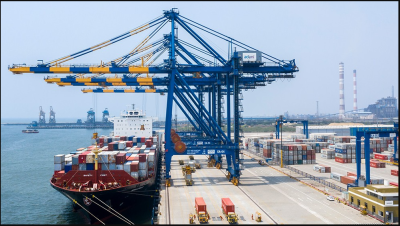
Indian importers and exporters are grappling with significant cargo delays at Mundra Port, the country’s leading container trade hub. Local trade sources have voiced serious concerns about the worsening congestion at Mundra’s container terminals in recent weeks. "The terminals at Mundra now seem to be hugely congested, and the pendency has increased to levels affecting the normal movement of boxes between CFSs and terminals," stated the Container Freight Station Association Mundra in a complaint. The association added, "All the efforts put in by CFSs are not witnessing any improvement, but are rather finding that the situation is deteriorating further." A recent change in the process of issuing port entry permits for freight vehicles by the port authority has been identified as a major source of frustration. According to freight station owners, truckers are experiencing longer waits to move containers due to difficulties in securing entry permits promptly. "Vehicles are stranded on the road for hours together because of this. A corrective measure needs to be discussed with our members and worked out so as to ensure that movement continues without any hassles," explained the CFS association. The congestion has also frustrated container rail operators, as ICD (inland container depot) volumes constitute a significant portion of Mundra’s trade. The Association of Container Train Operators (ACTO) noted in a trade advisory, "There has been increased congestion at Mundra Port due to delays in effectively evacuating import containers in FIFO [first-in, first-out] sequence on time, despite trains being provided for clearance by container train operators [CTOs]." ACTO indicated that Indian Railways has restricted double-stack loading to expedite train evacuation from the port, resulting in additional ground rent charges for traders. Mundra, Adani Ports’ flagship entity, managed 7.4 million TEUs in the fiscal year 2023-24, marking a 15% increase over Nhava Sheva Port. With volumes rapidly expanding, the Adani Group is considering further investment to enhance capacity. "We continue to invest heavily in the business to drive growth, particularly in the logistics segment," stated Adani in a recent announcement.
Lufthansa Cargo has recently expanded its offerings, providing customers with new belly capacities on several attractive routes. Since the start of June, passengers and cargo alike can benefit from direct connections to various destinations, enhancing global connectivity and trade opportunities. Direct flights to North America, including routes from Frankfurt to Minneapolis (MSP) and Raleigh-Durham (RDU) with Lufthansa Airlines, are now available for booking. Additionally, from the Lufthansa Cargo hub in Munich, new connections to Seattle (SEA) three times a week, and daily capacity to Toronto (YYZ) and Vancouver (YVR) are being offered. Austrian Airlines has also introduced a new route, connecting Vienna with Los Angeles (LAX). Discover Airlines has expanded its services from Frankfurt to Halifax (YHZ) and Anchorage (ANC), further widening the reach of cargo transportation. Moreover, Lufthansa Cargo has introduced freighter capacity to Dubai World Central (DWC), providing customers with additional options for handling larger cargo items or special freight. This new service complements the existing belly service from Dubai International Airport (DXB) and offers enhanced flexibility and efficiency in cargo transportation. With a commitment to enhancing global connectivity and trade facilitation, Lufthansa Cargo continues to innovate and expand its service offerings. These new routes and increased capacities underscore Lufthansa Cargo's dedication to meeting the evolving needs of its customers in a rapidly changing global market.
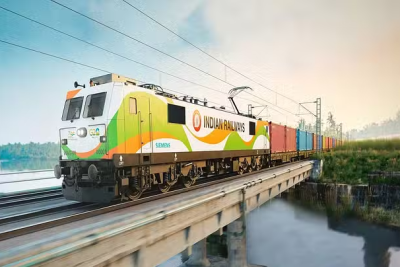
In a momentous event today, PM Modi inaugurated a 77-kilometer-long section of the Western Dedicated Freight Corridor (WDFC), marking a significant milestone in India's ambitious infrastructure development efforts. The inauguration ceremony, held in the presence of key dignitaries and government officials, showcased the country's commitment to enhancing its transportation network. The Western Dedicated Freight Corridor is a game-changing project that aims to revolutionize India's freight transportation sector. The newly inaugurated 77-kilometer section connects key industrial regions, providing a dedicated pathway for the efficient movement of goods. With this achievement, India takes a major step towards reducing logistics costs, boosting manufacturing, and improving the overall economy. PM Modi, while addressing the audience, emphasized the importance of this project in promoting economic growth, generating employment, and reducing the carbon footprint. He noted, "The Western Dedicated Freight Corridor is a testament to India's vision for a modern and efficient transportation system. It will not only enhance our connectivity but also make us a global logistics hub." The event was attended by several Union Ministers and top officials from the Ministry of Railways, underscoring the government's commitment to accelerating infrastructure development in the country.