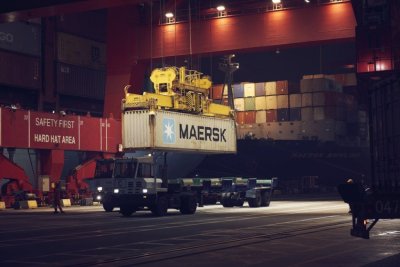
According to Maersk’s India trade update, the last quarter of the year showed growth in both imports and exports, thus making solid strides towards returning to normalcy. Demand for Indian exports across multiple categories continues to remain exceptionally strong, much of it driven by consumer demand in North America and Europe.
As societies began to find ways to coexist with COVID-19, trade started recovering in the second half. Exports ramped up sharply in Q3, not only recovering from Q2 slump, but even increased by 14% year on year, however the economic impact on consumers led to substantially lower imports, which dropped by 28% as compared to the same period of 2019.
Steve Felder, Managing Director, Maersk South Asia said, “Despite unprecedented challenging conditions, stakeholders across supply chains - from manufacturers to consumers, from Government bodies to logistics enablers - all stood up cautiously to fight the pandemic. Without the contribution from all the moving parts in the complex machinery of global trade, the path back to normalcy would not have been possible.”
Overview of trade for Q4 and full year 2020
During Q4 of 2020 (October to December), Indian containerised trade grew 13.2% as compared to the same period in 2019. This was the first time in the year when both exports and imports grew in a quarter. Exports from India had shown a V-shaped recovery since mid-Q3, whilst imports had remained subdued for a long time owing to low demand in the market. In Q4, this trend changed notably, with exports stabilising at a high level and imports bouncing back significantly by 36.3% over the previous quarter, thus moving the needle for overall trade recovery.
During the year, exports contracted in the first half and increased in the second half, consequently posting a full-year marginal growth of under 1% as compared to 2019. Imports delivered a full-year 14% contraction as compared to 2019.
Commodity trends in export and import
Exports grew through the year, riding on the rising demand for Indian textiles and apparels, especially in the North American markets. Seeds, beans, cereal & flour exports to the African and Gulf countries also contributed to the recovery. Rounding off the top three commodities being exported in containerised trade was metal, which has considerable demand in Far East Asia and Oceania regions. Amongst the refrigerated cargo, pharmaceuticals export out of India rose steeply during 2020, with Q4 alone recording 47% higher volumes as compared to the same period in 2019. Meat and shellfish exports also rose during the last quarter of 2020.
Imports of paper, metal, appliances and kitchenware topped the list of commodities that were brought into India in 2020. While paper and metal imports mainly came in from North America and North Europe, appliances and kitchenware were mostly imported from the Far East. The imports of refrigerated cargo grew in the last quarter of 2020 with fruit and nuts, chemicals and vegetables imports topping the list of commodities.
India’s trade partners
USA and China continued to be India’s top export and import trade partners respectively in 2020. While both these trade partners maintained their top positions, the trade with both dropped considerably. Over the year, the exports to USA contracted by 16% while imports from China shrunk by 41%.
Building growth in 2021
The COVID-19 pandemic created unprecedented disruptions in the market. Manufacturers lost production days in the first half of the year impacting supply, while consumers spent cautiously, impacting demand in the market. As the pandemic started getting under control and it became apparent that there was a path to vaccines, retail behaviours started returning to normalcy. However, the impact of the trade disruption caused earlier will have long lasting effects.
The imbalance in exports and imports, where exports recovered much quicker than imports resulted in an acute container shortage in various pockets of the Indian hinterland. Container manufacturing also reduced due to COVID-related shutdowns, and the pent-up consumer demand in North America and Europe ultimately resulted in a worldwide container shortage.
Commenting on the current situation and outlook, Steve Felder said, “The challenges that we face today and the extraordinary situation we are in is not going to last forever. This is a temporary phase that will pass, and we are already on our way towards normalcy. We can see overall trade improving and economies getting back on track. The vaccination drive is picking up pace worldwide, and this is going to be the single most important aspect to bring trade – and life - back to normal.”
He added, “We have also seen accelerated transformation in the last year – developments that would have otherwise taken several years took just a few months. Continued efforts to increase digitalisation, improve ease of doing business, create favourable conditions for global trade and dedicated investments in improving infrastructure will propel India’s import and export growth in the medium- to long-term.”
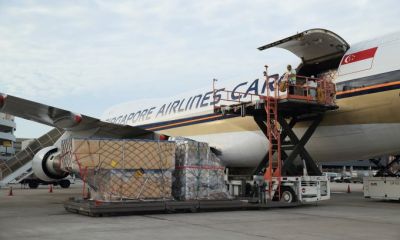
Singapore Changi Airport experienced a significant boost in air cargo volumes for the second quarter of 2024, handling 485,000 tonnes of airfreight from April to June. This represents a 16% increase compared to the same period last year. The growth is attributed to robust shipment flows between Singapore and major markets including the US and China. Changi Airport Group highlighted that the increase was seen across all cargo categories—exports, imports, and transhipments. The airport’s top five air cargo markets for the period were Australia, China, Hong Kong, India, and the United States. In the year-to-date, Changi Airport has processed a total of 960,000 tonnes of airfreight. The first quarter of 2024 also saw strong performance, with 475,000 tonnes handled, driven by high transhipment activity, particularly with China. Key sectors contributing to the cargo throughput include pharmaceuticals, perishables, e-commerce, and advanced materials like semiconductors. Notable airlines operating cargo flights at Changi include Spice Express, Tasman Cargo Airlines, Atlas Air, DHL Express, and Singapore Airlines, which collaborate on cargo operations. As of July 1, Changi Airport boasts 94 airlines operating over 6,900 weekly scheduled flights, linking Singapore to 158 cities across 50 countries and territories globally. This extensive network supports Changi’s role as a major international cargo hub. The airport’s continued growth in air cargo volumes underscores its importance as a critical logistics and transportation hub in the global supply chain.
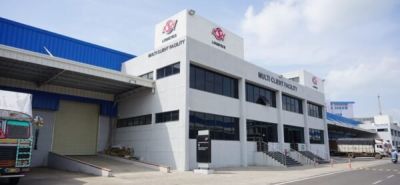
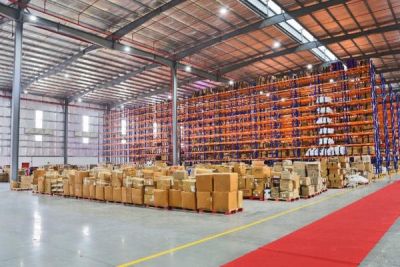
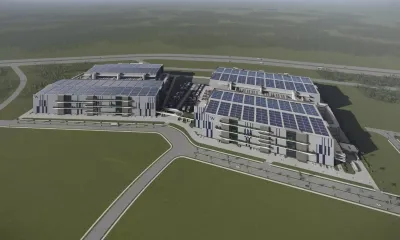
AP Moller – Maersk is strengthening its operations in Bangladesh, where it has been serving the country and its exporters connect to the global market for almost three decades. Bangladesh has been one of the most important sourcing markets for the garments and apparel industry worldwide. The garment manufacturers exporting to global markets have significantly contributed towards building the country’s economy. Despite the impressive growth of garments exports from Bangladesh, the number of warehouses in Chattogram have not increased since 2012, with the sole exception of ISATL that became operational in 2018. Optimising utilisation of available capacity assisted to an extent, however it did not scale enough to meet the trade’s requirements. The logistics ecosystem and the Chittagong Port get stretched, particularly during the peak seasons. In 2021, a fallout of this structural challenge was felt by all the stakeholders involved in EXIM trade when the Container Freight Stations (CFSs) got clogged with cargo resulting in delayed clearance, stuffing and consequently dispatch of containers to the port. Delay in offloading cargo also led to longer truck waiting time, and delay in dispatch of containers to the port, consequently resulting in lack of overall productivity. These challenges have serious consequences on the overall economy of the country given the fact that the Chittagong Port handles in excess of 90 per cent of the total containerised trade to and from Bangladesh. Recognising these challenges, Maersk Bangladesh has partnered with Ispahani Summit Alliance Terminal Limited (ISATL) to build a 200,000 sq ft custom bonded warehouse. ISATL are pioneers in constructing and operating warehouses and CFS and operate four CFS within Chattogram and the River Terminal at Dhaka. Under the scope of this partnership, ISATL will construct a brand new custom bonded warehouse within the existing premises of the facility located at Pathortoli in Chattogram. The new warehouse will double the existing capacity at ISATL and add around 8 per cent additional space to the existing ecosystem at Chattogram. The construction of the new CFS has already commenced and is expected to be completed in a phased manner by the end of 2022. Bangladesh’s exporters and their overseas buyers will be able to start using the facility from July 2022, once the first phase of construction is completed. “Maersk’s commitment to connect and simplify our customers’ supply chains means that we look at long term solutions for problems such as the longstanding congestion within the ecosystem. We tackled the situation in 2021 by deploying an additional vessel for evacuating export loaded containers,” said Angshuman Mustafi, Managing Director, Maersk Bangladesh. “The solutions provided immediate relief to the ecosystem, but there was a need for a comprehensive solution to optimise ocean shipping, port handling and inland logistics that would benefit trade in the long term. By partnering with ISALT, we are establishing a facility that has the potential to partially decongest the system from the landside and streamline the flow of cargo in and out of Bangladesh.” Apart from adding capacity, the facility will offer several other benefits to Bangladesh’s exports. Amongst others, the new facility is being built by benchmarking international best practices when it comes to safety and other compliance guidelines. It will be modern multi-storeyed facility in Chattogram which will have storage at G+2 levels, thus making optimal use of available space to maximise the capacity. There will be an option to offer pallets for all operations, thereby improving the overall operational efficiency. Maersk will also offer customers Garment on Hanger facility, sorting, product audit, labelling, bar code and RFID scanning amongst others. “We are proud to partner with Maersk on this exciting long term project where ISATL’s extensive local experience combined with Maersk’s international best practices will allow us to create a truly world-class facility that will help raise the standards for the entire industry,” said Yasser Rizvi, Managing Director, ISATL.
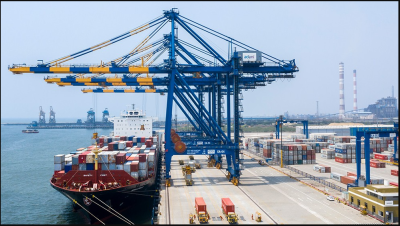
Indian importers and exporters are grappling with significant cargo delays at Mundra Port, the country’s leading container trade hub. Local trade sources have voiced serious concerns about the worsening congestion at Mundra’s container terminals in recent weeks. "The terminals at Mundra now seem to be hugely congested, and the pendency has increased to levels affecting the normal movement of boxes between CFSs and terminals," stated the Container Freight Station Association Mundra in a complaint. The association added, "All the efforts put in by CFSs are not witnessing any improvement, but are rather finding that the situation is deteriorating further." A recent change in the process of issuing port entry permits for freight vehicles by the port authority has been identified as a major source of frustration. According to freight station owners, truckers are experiencing longer waits to move containers due to difficulties in securing entry permits promptly. "Vehicles are stranded on the road for hours together because of this. A corrective measure needs to be discussed with our members and worked out so as to ensure that movement continues without any hassles," explained the CFS association. The congestion has also frustrated container rail operators, as ICD (inland container depot) volumes constitute a significant portion of Mundra’s trade. The Association of Container Train Operators (ACTO) noted in a trade advisory, "There has been increased congestion at Mundra Port due to delays in effectively evacuating import containers in FIFO [first-in, first-out] sequence on time, despite trains being provided for clearance by container train operators [CTOs]." ACTO indicated that Indian Railways has restricted double-stack loading to expedite train evacuation from the port, resulting in additional ground rent charges for traders. Mundra, Adani Ports’ flagship entity, managed 7.4 million TEUs in the fiscal year 2023-24, marking a 15% increase over Nhava Sheva Port. With volumes rapidly expanding, the Adani Group is considering further investment to enhance capacity. "We continue to invest heavily in the business to drive growth, particularly in the logistics segment," stated Adani in a recent announcement.
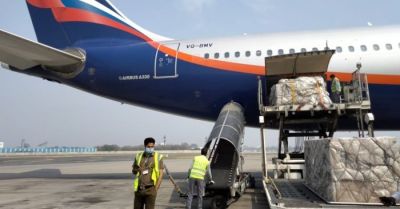
Lufthansa Cargo has recently expanded its offerings, providing customers with new belly capacities on several attractive routes. Since the start of June, passengers and cargo alike can benefit from direct connections to various destinations, enhancing global connectivity and trade opportunities. Direct flights to North America, including routes from Frankfurt to Minneapolis (MSP) and Raleigh-Durham (RDU) with Lufthansa Airlines, are now available for booking. Additionally, from the Lufthansa Cargo hub in Munich, new connections to Seattle (SEA) three times a week, and daily capacity to Toronto (YYZ) and Vancouver (YVR) are being offered. Austrian Airlines has also introduced a new route, connecting Vienna with Los Angeles (LAX). Discover Airlines has expanded its services from Frankfurt to Halifax (YHZ) and Anchorage (ANC), further widening the reach of cargo transportation. Moreover, Lufthansa Cargo has introduced freighter capacity to Dubai World Central (DWC), providing customers with additional options for handling larger cargo items or special freight. This new service complements the existing belly service from Dubai International Airport (DXB) and offers enhanced flexibility and efficiency in cargo transportation. With a commitment to enhancing global connectivity and trade facilitation, Lufthansa Cargo continues to innovate and expand its service offerings. These new routes and increased capacities underscore Lufthansa Cargo's dedication to meeting the evolving needs of its customers in a rapidly changing global market.
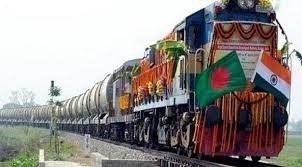
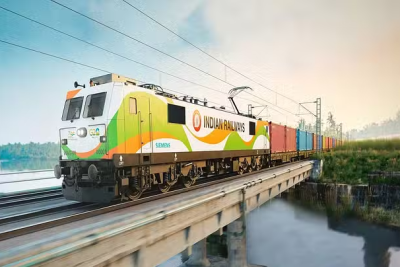
In a momentous event today, PM Modi inaugurated a 77-kilometer-long section of the Western Dedicated Freight Corridor (WDFC), marking a significant milestone in India's ambitious infrastructure development efforts. The inauguration ceremony, held in the presence of key dignitaries and government officials, showcased the country's commitment to enhancing its transportation network. The Western Dedicated Freight Corridor is a game-changing project that aims to revolutionize India's freight transportation sector. The newly inaugurated 77-kilometer section connects key industrial regions, providing a dedicated pathway for the efficient movement of goods. With this achievement, India takes a major step towards reducing logistics costs, boosting manufacturing, and improving the overall economy. PM Modi, while addressing the audience, emphasized the importance of this project in promoting economic growth, generating employment, and reducing the carbon footprint. He noted, "The Western Dedicated Freight Corridor is a testament to India's vision for a modern and efficient transportation system. It will not only enhance our connectivity but also make us a global logistics hub." The event was attended by several Union Ministers and top officials from the Ministry of Railways, underscoring the government's commitment to accelerating infrastructure development in the country.


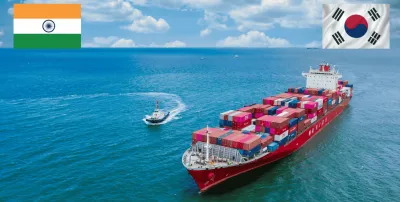
The Indian government’s ambitious push to boost the domestic shipbuilding industry, announced in the Union Budget, is already drawing international interest, with South Korea stepping forward to collaborate on key initiatives. The Korea Marine Equipment Association (KOMEA), a Seoul-based non-profit under South Korea’s Ministry of Industry, Trade and Energy, has offered its support to Indian shipyards for joint vessel design and construction, modernisation of shipyard production facilities, and technology transfer to enhance manufacturing processes, according to multiple sources. KOMEA, which represents major Korean shipbuilding and ship repair enterprises—including HD Hyundai Heavy Industries, Hanwa Ocean (formerly Daewoo Shipbuilding and Marine Engineering), and Samsung Heavy Industries—has formally pledged to provide highly qualified specialists for on-site education and training. The association also aims to develop joint educational programs, supply industrial equipment for modernising Indian shipyards, facilitate technology transfer, and support the localisation of marine equipment and spare parts. Founded in 1980, KOMEA has been instrumental in promoting South Korean marine equipment manufacturers globally and currently has a membership base of 304 entities involved in shipbuilding, design, and repair. The association operates in eight countries, including China, Japan, Singapore, the United States, Greece, Saudi Arabia, Brazil, and Russia. With plans to expand its footprint in India, KOMEA sees the country as a strategic partner in advancing shipbuilding capabilities under a bilateral cooperation framework. “Building strong cooperative relationships between South Korean entities and Indian shipyards could significantly contribute to the growth of the shipbuilding industry in both nations,” a KOMEA official stated. “With over four decades of experience, KOMEA and its members can provide effective solutions to challenges in the shipbuilding sector within a short timeframe.” The Union Budget, presented by Finance Minister Nirmala Sitharaman, earmarked ₹25,000 crore for the Maritime Development Fund (MDF) and introduced a revamped shipbuilding financial assistance policy to counter cost disadvantages. Additional measures include credit incentives for shipbreaking at Indian yards to promote a circular economy and granting infrastructure status to large ships above a specified size. The government also announced plans to develop shipbuilding clusters with enhanced infrastructure, skilling initiatives, and technological advancements to strengthen the industry’s ecosystem. A significant boost for shipbuilders came with the extension of the exemption from Basic Customs Duty (BCD) on raw materials, components, consumables, and parts used in ship manufacturing. This exemption, originally set to expire, will now be extended for another ten years from April 1, 2025. Ahead of the budget announcement, high-level delegations from the Ministry of Ports, Shipping, and Waterways, along with representatives from the private shipbuilding sector, visited leading shipyards in South Korea and Japan. These visits were aimed at forging partnerships and leveraging global expertise to strengthen India’s shipbuilding industry. With South Korea now expressing formal interest in collaboration, the stage is set for India to accelerate its shipbuilding ambitions and emerge as a formidable player in the global maritime sector. Source: ET Infra
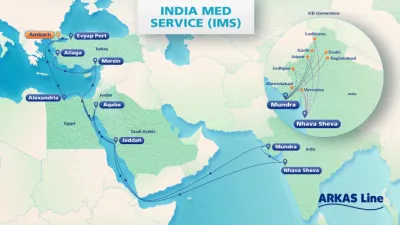
Arkas Line is expanding its international service network as part of its 2025 growth strategy. Building on its recent Red Sea expansion, the company is launching the "India Med Service (IMS)," its first direct route connecting India to the Mediterranean. From February 10, 2025, the IMS will send four vessels with a capacity of 2,500-2,800 TEU. By June 2025, the service will run weekly with five vessels. The route will cover major ports, such as Ambarli, Nhava Sheva, Mundra, and Alexandria. Customers will also benefit from rail connectivity at India's Mundra and Nhava Sheva ports to transport cargo to inland trade centers. Furthermore, Arkas Line is restructuring its Mediterranean operations by integrating its current GPS, EMS, and SEM routes into a streamlined "Blue Med Service (BMS)." This integrated service will improve efficiency in its Mediterranean network while increasing the company's coverage to 72 ports in 27 countries through 33 service routes. About its commitment to further global growth, Arkas Line CEO Can Atalay said, "With the launch of IMS and the strengthened BMS, we are firmly committed to offering efficient solutions that cater to evolving customer needs and consolidate our presence in key markets.

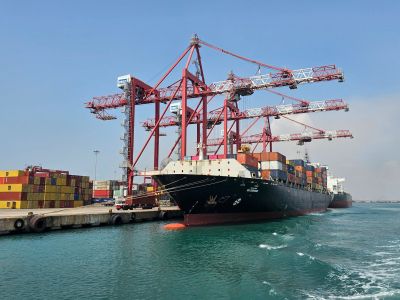
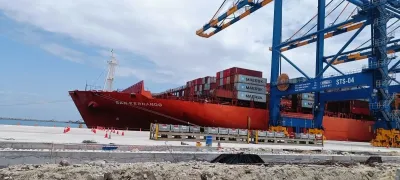
The Vizhinjam International Port was formally inaugurated after a successful five-month trial period with great fanfare and celebration last week for full-fledged commercial operation. This port's first phase has been completed due to effective team effort among Vizhinjam International Seaport Ltd, Adani Vizhinjam Port Private Ltd, and agencies like IIT Madras. All agreed procedures have been finalised and the work may begin operations. "Wednesday, an independent engineer is going to issue a provisional completion certificate for the first phase of construction after examining it," said the Minister. The remaining minor work could be done in three months without hindering the continued operations. The formal commissioning was carried out as per the supplementary concession agreement signed recently between the state government and Adani Ports. In its trial run, the port performed remarkably well by successfully handling 70 cargo ships, including ultra-large mother ships, and handling a total of 147,000 containers. By averaging one vessel every alternate day, the port confirmed its readiness to emerge as a major player in the handling of export-import (exim) containers. Vasavan underscored that "the port's operations will transform Kerala's international trade and drive substantive economic growth for the state."