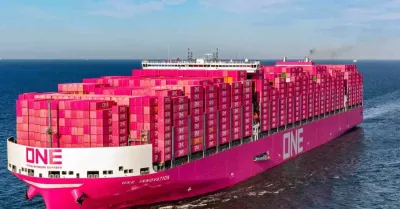
World Shipping Council (WSC), the Washington DC-based trade association representing international liner shipping, is sharing for the first time concrete regulatory and economic pathways that it believes the International Maritime Organisation (IMO) must take up in order for the shipping industry to achieve zero carbon emissions.
The WSC has identified six regulatory and economic pathways forward, which WSC says are critical for the nations of the UN to address for a successful maritime energy transition.
In June, IMO’s Marine Environment Protection Committee will meet for its 78th session (IMO MEPC 78) to consider further development of IMO’s GHG Strategy, which has been scrutinized for not aligning with the goal of the Paris Agreement to limit global warming to well below 2 Celsius compared to pre-industrial levels.
In 2018, the IMO adopted an initial strategy to reduce total GHG emissions from ships by at least 50% by 2050, compared to 2008 levels, but details are still being hammered out and a final strategy is not expected until 2023.
“There will be no single or simple fuel technology solution, no single party that can set the pace, no single regulation that will drive the necessary change,” the WSC said in press release.
“The reality will be a complex multi-technology, multi-stakeholder development process that needs to be driven and supported by an array of mutually reinforcing global regulations. Maritime actors, technology providers, fuel innovators, organisations and regulators will need to work together to decarbonise shipping in line with the Paris agreement,” it said.
The maritime shipping industry is estimated to account for nearly 3% of the world’s CO2 emissions.
WSC President and CEO, John Butler, says the liner shipping sector understands the “shared responsibility” for the maritime industry to reduce GHG emissions and “we don’t underestimate the challenge,” but he points out that the industry is currently lacking the regulatory framework needed to address key issues.
“We are committed to decarbonising shipping and have multiple ideas and projects in the pipeline. But to be able make these investments, to take the necessary risks, we – and all other maritime actors – need a regulatory framework that addresses the key strategic issues,” says Butler.
“We are now offering our perspective on the critical pathways the IMO should consider as it tackles this global challenge. Action is needed now by the governments of the IMO so as not to stall development but rather to support ambitious innovators and front runners,” he adds.
WSC has identified six regulatory and economic pathways, which it says are all critical for the IMO MEPC to successfully navigate the maritime energy transition. The pathways include:
A global price on carbon combined with dependable and broad-based “buy down” programmes that effectively level the playing field among newer low and zero GHG ships and the tens of thousands of ships that will still be burning conventional fuels. This will play a large role in making it possible for companies to put zero GHG ships on the water and to operate them competitively.
Transparent well-to-wake life cycle analysis of fuels, breaking out well-to-tank emissions and tank-to-wake emissions, combined with regulatory mechanisms to incentivize first-movers for use of alternative fuels that offer significant GHG reductions even if they are not available from fully renewable sources from the start.
Integrated development of global production and supply of zero GHG fuels through partnerships between IMO member states and energy providers, as well as regulatory provisions that allow for flexibility in the initial stages of the energy transition, given that zero GHG fuels will not be available at the same time around the globe.
A Green Corridors Programme to accelerate an equitable fuel and technology transition, introducing zero GHG ships and fuels across trade lanes where the necessary shoreside energy infrastructure is first available. This will speed development of best practices and encourage IMO member states and interested parties to focus on government-to-government initiatives and coordinated public-private investments to build the necessary production facilities and supply infrastructure.
New build standards that support the energy transition, such as requiring ships built after a certain date to be able to operate on zero GHG fuels or not allowing the construction of vessels that can only operate on fossil fuels after a certain date.
Applied R&D for shipboard and shoreside systems that allow the safe use of zero GHG fuels is necessary to put zero emission ships on the water. To avoid accidents and stranded assets, a significant increase in the level of R&D effort and investment is needed to develop the technologies necessary to use the most promising fuels onboard transoceanic ships.
The pathways are further detailed in WSC’s submission to the IMO. “Each and every one of these elements should be part of an expanded IMO GHG Strategy, and WSC looks forward to working with member states and organisations to develop and integrate these elements into explicit regulations and programmes,” the WSC said in its statement.
“We are looking to decarbonise shipping as soon as possible and will continue to lead the way in enabling shipping’s transition to zero. But we cannot do this alone,” says Butler.
“If we are to decarbonise shipping in line with the Paris agreement, the governments of the IMO must work together. For the sake of future generations and the future of shipping, our focus in the coming years must be to develop and implement innovative, concrete and equitable global regulatory frameworks."
“These are complicated matters and we do not pretend to have all the answers. What we do know is that we must develop these critical pathways together to address the climate challenge and transition the fleet to zero GHG ships,” Butler concludes.
The Federation of Freight Forwarders’ Associations in India (FFFAI) held its 6th EC Meeting for the term 2021-23 on May 27 and 28 in Bengaluru. The meeting was attended by the Office Bearers and 28 Member Association representative of FFFAI from across the country, there were many issues discussed and updates provided concerning customs, CBLR, EDI, Service Tax/GST, logistics, air cargo, sea cargo, skill development,importance of social media which FFFAI has expanded recently, technology developments, etc. The special focus of the 6th EC meeting was the updates on forthcoming 24th Biennial Convention of FFFAI to be held from August 12 to 14, 2022 in Chennai with the theme LOGISTICS RESHAPE, EMBRACE AND SURGE IN THE DIGITAL ERA. At this EC meeting, FFFAI also implemented Digital Learning platform for members and next generation for e-learning. It has been decided that FFFAI would initiate FIATA eFBL here in India to benefit the trade, which empowers customs brokers, freight forwarders and logistics service providers. In addition, updates on the recently held FIATA HQ Meet was also provided by the concerned members of FFFAI. FFFAI members present at this EC meeting stressed upon enhancing productivity on ICEGATE for trade facilitation and Ease of Doing Business. The FFFAI members also urged for creating a dedicated portal for LSP integration. As regard to skill development initiatives, IIFF’s (training arm of FFFAI) past and forthcoming training programmes (both online and classroom/physical) for the entire logistics industry were presented at the EC meeting. In addition, FFFAI’s various initiatives on capacity building through technology/IT also discussed withadequate importance. Recent activities of FFFAI Women’s Wing including organising interactive meetings with Government of India officials and industry experts were highlighted at this meeting which drew huge appreciation from the members. The members committed to expand the activities of the Women’s Wing in all the 28 member association locations to empower/encourage the women logistics practitioners. At this EC meeting FFFAI has signed an MoU with the National Institute of Industrial Engineering (NITIE) with an objective of skilling the aspiring candidates looking for opportunities in the logistics sector. Notably, a special session was organised at this 6th EC Meeting where N Sivasailam, former Special Secretary (Logistics), Ministry of Commerce, Government of India was present to address the FFFAI members and highlight the recent initiatives of the government in strengthening the logistics infrastructure, thereby leading in increase of international trade through multimodal connectivity and faster cargo clearance. He projected the ambitious growth potential of the logistics industry in India with a strong collaboration between government and industry people. Also speaking on the occasion was Bani Bhattacharya, IRS, who interacted with members of FFFAI on various initiatives of CBIC for the trade facilitation without human intervention. FFFAI Chairman Shankar Shinde thanked all the 28 associations for their support and appreciated the contribution of CBIC/DG systems trade facilitation measures. FFFAI Member Associations are: 1. Ahmedabad Custom Brokers' Association2. Aurangabad Customs House Agents Association3. Association of Custom House Agents Thiruvanthapuram4. Bangalore Custom House Agents Association5. Brihnamumbai Custom Brokers Association6. Calcutta Customs House Agents Association7. Chennai Customs House Agents Association8. Cochin Customs Brokers' Association9. Coimbatore Customs House and Steamer Agents Association10. Custom Brokers Association Hyderabad11. Delhi Customs Brokers Association12. Goa Custom Brokers Association13.Indore Customs House Agents Association14. The Kakinada Customs Brokers Association15. Kandla Custom Brokers Association16. Kanpur Customs Brokers Association17. Ludhiana Customs House Agents Association18. Mangalore Customs House Agents Association19. Mundra Customs Brokers Association20. Nagpur Customs House Agents Association21. Nashik Customs House Agents Association22. Nadia Custom Brokers Association23. Pipavav Custom Brokers Association24. Pune Customs House Agents Association25. Rajasthan Customs House Agents Association26.Tuticorin Custom Brokers Association27.Visakhapatnam Cusotms Brokers' Association28.West Bengal Custom House Agents Society FFFAI welcomes Women in Logistics/Youth in Logistics to participate on FFFAI forums and also invites membership application form logistics service providers in industry as this is a big national and international forum to network.
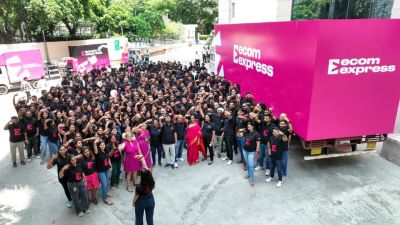
Ecom Express Limited, India’s sole pure-play B2C e-commerce logistics provider as of the Financial Year 2024, has introduced a new brand identity, underscoring its commitment to customer-centricity. This rebranding reflects a focus on addressing specific customer needs, prioritising customer-facing metrics, and integrating innovative technology across its nationwide express logistics network. The goal is to enhance speed, agility, and network reach, ensuring a customer-focused approach. The rebranding includes a dynamic logo and a refreshed visual identity, symbolising Ecom Express’s pursuit of excellence. The new logo features a forward-moving arrow within a square, representing the company’s dedication to delivery. The letter "E" in the logo stands for Expression, Innovation, and Progress, while the bold magenta colour signifies bravery, self-expression, and strength. This vibrant magenta reintroduction reflects Ecom Express's renewed commitment to customers, partners, and team members, as the company aims to simplify and democratise logistics for all. Ajay Chitkara, CEO and MD of Ecom Express, elaborated on the transformation, stating, “Our refreshed brand identity reaffirms our customer-first approach as we continue to integrate technology and innovation to provide reliable, high-speed services with the widest network reach. This transformation also underscores our commitment to our employees and delivery partners, who are essential to our business.” The new logo embodies Ecom Express’s dedication to its core values, focusing on customer welfare and fostering a diverse, inclusive environment. This rebranding signifies a promise to redefine logistics through advanced technology, making life easier for all types of customers.
Delmos Aviation has transported the second lot of 300 units of oxygen concentrators from Russia to New Delhi for the Rajasthan state government. The consignment was airborne on an Aeroflot A333 aircraft (SU 232) and reached at 10:10 AM in New Delhi. The shipments were shipped by road and sent back to Swasthya Bhawan, Jaipur, Rajasthan Medical Services Corporation (RMSCL). RMSCL obtained oxygen concentrators from Russian companies together with Delmos Aviation. Delmos Aviation is procuring, transporting and supplying COVID-relied materials to the Rajasthan Medical Services Corporation with the mandate signed with the Rajasthan Government. There will shortly be two consignments with the remaining 800 oxygen concentrators. "We are ready to assist governments in the provision and delivery of any type of essential medical supplies, oxygen concentration and equipment as quickly as possible," said Dr Naveen Rao, Director, Delmos Aviation. "At this juncture, time-based deliveries are paramount. We can handle the airlift and deliver the shipment to the last point." In four lots, 100, 300, 450 and 400 units, a total of 1250 oxygen concentrations are ordered and continue to reach New Delhi in batches of shipments. On 14 and 16 May 2021, the remaining lots will arrive. Oxygen concentrators of Single flowmeter (0.5-10LPM Adjustable) and double flowmeter (0-5LPM Adjustable) are included in the delivery. The models are JAY-10A & LFY-I-5A. "The government of Rajasthan is working hard in this raging second wave of the pandemic to provide basic medical equipment to head Minister Ashok Gehlot and Minister of Health, Raghu Sharma. The government plans to import 1250 oxygen concentrators from Moscow, Russia, in partnership with Delmos Aviation, as part of its efforts to enhance medical oxygen in the state," said a spokesperson.
Mahindra World City Jaipur (MWC Jaipur), a joint venture between Mahindra Lifespace Developers Ltd (MLDL) and Rajasthan State Industrial Development and Investment Corporation (RIICO) announced it concluded 26 new lease agreements between April 2021 and June 2022. The new signings included both new customers and expansion of facilities by existing clients, together leasing about 137 acres of land. In the same period, MWC Jaipur and its constituent units' aggregated investments crossed Rs 721 crores, and cumulative exports by MWC Jaipur exceeded Rs 15,930 crores, of which Rs 3,321 crores were in the last 15 months. Over these fifteen months, a total of 69 companies have completed their facility buildout at MWC Jaipur and become operational. The new entrants to MWC Jaipur represent a variety of sectors, like Logistics and Warehousing, IT & ITeS, Engineering, Furniture Manufacturing, Solar Energy, Gems and Jewelry manufacturing. The newly added roster of clients at MWC Jaipur includes Wipro Hydraulics, Shakti Hormann, Renew Photovoltaics, Kerakoll India, Normet, Gulmohar Lane Lifestyle, Manor & Mews, J Atelier Pink City, Kamal Coach Works, Maxop Engineering, amongst others. Rajaram Pai, Chief Business Officer – Industrial, Mahindra Lifespaces said, “MWC Jaipur today is home to prestigious domestic and international manufacturing companies from across the world, who have established a manufacturing base in India for the first time. Enabling business acceleration for customers has always been our focus. We continue to deliver the highest urbanisation standards by leveraging innovation, thoughtful design, and a deep commitment to sustainability. MWC Jaipur contributes towards generating incremental employment and income for the state while creating world-class infrastructure which would serve the nation for many years to come. We are glad to be the enablers of Make-in-India and Make-for-India.” Becoming a preferred destination of choice for over 121 global and domestic companies, MWC Jaipur is enabling business growth for customers by crafting a conducive environment, with robust infrastructure and facilities that propagate ease of doing business. Mahindra World City Jaipur is the first project in Asia to receive Climate Positive Development Stage 2 Certification from the C40 Cities Climate Leadership Group (C40), a global network of large cities taking action to address climate change. With a focus on climate-positive development, MWC Jaipur is continuing its efforts on integrating sustainability within the city. Green, integrated developments is continuously being upgraded to mitigate the impact of business operations on the environment. As of March 31, 2022, a total of 59,955 trees have been planted in government-approved forest areas and rural areas under the Mahindra Group’s flagship program – Hariyali. Around 11,100 trees have been planted within the industrial park.
A significant milestone has been achieved in the Indo-Bangla railway project with the inauguration of the inaugural freight train connecting Bangladesh's Gangasagar to Tripura's Nischintanpur. This momentous event marks a significant step forward in strengthening the rail connectivity between the two neighboring countries. The new railway connection is set to enhance trade and commerce between India and Bangladesh, providing a more efficient and cost-effective mode of transportation for goods. It will not only boost bilateral trade but also promote economic development in the region by opening up new opportunities for businesses and industries. The Indo-Bangla railway project is part of a broader effort to improve connectivity and foster closer ties between the two nations. It is expected to play a vital role in facilitating the movement of goods and passengers, ultimately contributing to the economic growth and prosperity of both countries.


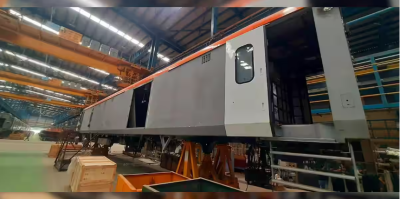
The Indian Railways has unveiled an innovative new look for the Vande Bharat goods carrier, designed to enhance efficiency in freight transport across the nation. This state-of-the-art freight train features advanced technology and modern design, aimed at reducing transit times and improving the overall supply chain network. Equipped with upgraded features, the Vande Bharat goods carrier can transport a wide variety of goods, ensuring a more reliable and faster delivery system. The initiative is part of a broader strategy to modernise India's logistics infrastructure and promote the use of railways for cargo movement, which is essential for sustainable economic growth. This new freight carrier will not only help in decongesting road transport but also contribute to reducing carbon emissions, aligning with the government's commitment to environmental sustainability. With its introduction, Indian Railways aims to enhance cargo capacity and operational efficiency, providing a significant boost to the logistics sector. As the demand for efficient logistics solutions continues to rise, the Vande Bharat goods carrier is poised to play a crucial role in shaping the future of freight transportation in India.
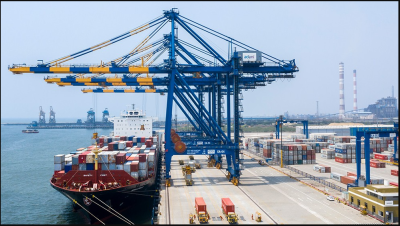

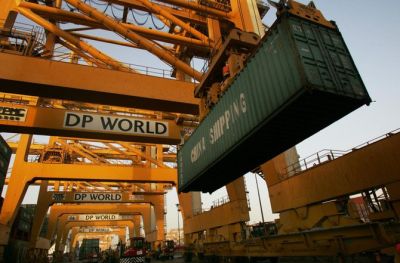
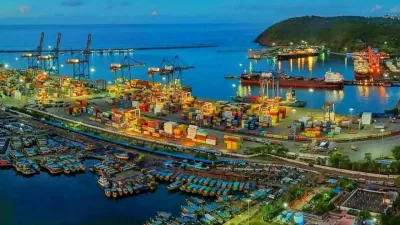
The Zero Emission Port Alliance (ZEPA) has recently announced the onboarding of 11 key organisations from the container port industry. Notable members include APM Terminals (APMT), CATL, DP World, Kempower, Patrick Terminals, Port of Aarhus, Port of Rotterdam, Rocsys, Sany, SSA Marine, and ZPMC. These members are united in their commitment to accelerate the adoption of Battery-Electric Container Handling Equipment (BE-CHE). ZEPA aims to significantly advance port decarbonisation efforts, making BE-CHE both affordable and accessible within the next decade. In recent months, ZEPA has conducted working sessions, initial analyses, and held its first formal Steering Committee during the TOC Europe conference on June 11. The Steering Committee, which met at TOC Europe in Rotterdam, emphasized the importance of their collective membership in reducing emissions and achieving Total Cost of Ownership parity for battery-electric equipment compared to diesel. Industry leaders underscored that rapid change is achievable through cross-value chain collaboration. ZEPA's initiatives are meticulously designed and implemented in compliance with anti-trust and competition laws, with oversight from external legal counsel to ensure transparency and legality. Sahar Rashidbeigi, Global Head of Decarbonisation at APMT, reflected on ZEPA’s progress: “Reflecting on our journey, it is incredible to see how far we have come since defining the problem at last year’s TOC Europe conference. From the ‘tipping point’ White Paper nine months ago to launching ZEPA with DP World in December during COP28, and now onboarding 11 key members across the value chain, our progress highlights that we are addressing a valuable problem that resonates across the industry, and it affirms our conviction that collaboration is essential to tackle it effectively.” ZEPA's collective effort marks a pivotal step in the pursuit of sustainable and zero-emission port operations, showcasing the power of industry-wide cooperation in combating climate change.
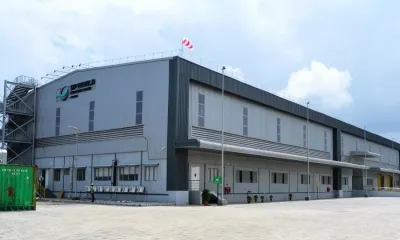

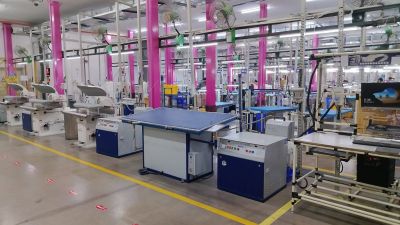
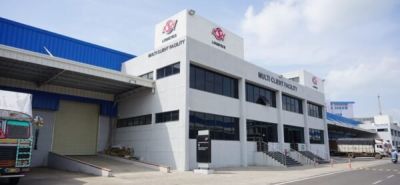
Ekart introduced a new ‘Refinish Service’ to tackle the challenges of returns management in the fashion and lifestyle sector. This innovative service enables retailers to refurbish over 90 percent of returned inventory, helping brands mitigate losses and maximise revenue potential. The Refinish Service is designed for direct-to-consumer (D2C), e-commerce, and retail players in the fashion and lifestyle segments. It also caters to other industries, including footwear, handbags, accessories, and home and decor products such as curtains, bed sheets, and blankets. With a combined processing capacity of 55,000 units daily, Ekart employs best-in-class machinery and energy-conserving technologies. The refinishing process at Ekart's facilities involves rigorous quality checks, stain removal, box replacement, ironing, stitching (if needed), and final quality control to ensure the finesse of refurbished products. Mani Bhushan, Chief Business Officer of Ekart, commented, “By harnessing cutting-edge technology and sustainable practices, the refinishing service empowers brands to optimise their supply chains and drive positive change on a broader scale. The service sets a new standard for returns management, demonstrating our commitment to innovation, efficiency, and sustainability.” Ekart operates Refinish centers across major demand clusters in India, including Gurgaon, Mumbai, Bangalore, and Kolkata. These strategically located centers facilitate swift return processing and reduce transport costs for brands. The facilities are equipped with advanced machinery, including up-steam tables, steam vacuum tables, and industry-leading foam finishers, ensuring thorough and efficient processing of returned inventory. Ekart's Refinish Service marks a significant step forward in returns management, offering a sustainable and efficient solution that benefits both retailers and the environment.