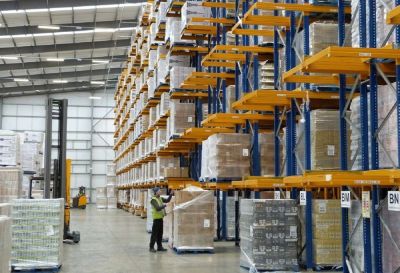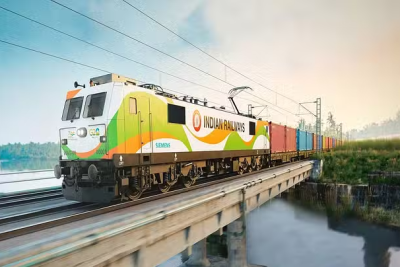
Every business works in a unique way; some benefit from contract warehousing, while others seek multi-client (shared) warehousing solutions to fulfil their requirements. Multi-client warehousing allows a company to share space with others while offering a flexible, affordable method to store products. This article is all you need to know about multi-client warehousing and distribution services, and how it differs from dedicated warehousing. Here, Upamanyu Borah explains what each of these services entails to shippers and retailers from specific supply chain domains—who are the sole beneficiaries of this phenomenon, and then examining two of India’s fast-growing 3PLs to consider how the sharing economy has shown tremendous value in delivering incremental revenue for the asset owners and improving options for customers…
“Shared warehousing” is starting to attract industry interest. The availability of on-demand flexibility and access, along with other strategies, is creating new versions of supply chain collaboration to increase efficiencies, reduce costs, and capitalise on under-used assets.
Commonly called “uberisation”, customers mainly manufacturers/shippers influenced by the “Airbnb-isation” of many business models prefer to pay for temporary access to goods and services rather than take on the ownership of assets and their long-term costs. They can use the web/mobile apps to access information and connect directly with 3PLs. Practically, with the development of e-commerce, the traditional warehousing model began to fall short. As a result, this service comes due to reduced warehouse availability in major markets.
Transport and logistics professionals know this concept is nothing new. Third-party logistics (3PL) companies have been managing outsourced warehouse space for decades now. They know how to sell out idle space under a multi-client or on-demand warehousing contract and adapt quickly to variable demand and cost conditions.
With a dedicated warehouse, a lot if not all the costs are fixed month to month regardless of the volume of orders and product moving through the facility. The rent stays the same, as do much of the labour costs and other expenses of running a facility.
With a shared warehouse the costs are spread more equally across the companies using the facility. Most importantly, many of the costs become variable and move with the volume and activity levels of the two businesses at a given time.
Shared warehousing is also an attractive option for companies that go it alone or have another warehousing arrangement for most of the year, but need space and resources during their busiest periods.
Let’s say a retailer required 10,000 sq ft of warehousing space in the months leading up to the holiday season. As the holidays approach and order volumes increase, and meanwhile, the retailer needs to grow that space to 15,000 sq ft. No problem—a 3PL can scale the space upward to accommodate the retailer’s need. And, if the space requirements go back down to 10,000 sq ft after the holidays, the 3PL can scale downward just as easily.
Shared warehousing is of real value for warehouse developers/owners as well. Building a warehouse can be expensive; any unused space has an opportunity cost.
Even if a warehouse owner has long-term contracts with 3PLs or retailers for much of its space, any remaining space can be turned into a revenue-generating asset by “registering” it on a shared warehousing, or even dynamic on-demand marketplace.
Depending on its operating costs, opportunity costs and market dynamics, a warehouse owner can choose a price that may be more, or less, than the rates it charges its existing clients.
Advantages of Shared Warehousing
Greater Flexibility: Compared to dedicated warehousing, shared warehousing offers shorter, more flexible contracts. Shared warehousing allows companies access to space that can be reduced or increased to match their personal business demands. It is a great option for businesses that require several smaller locations, offering multiple distribution points instead of one large warehouse.
Improved Service and Efficiency: By allowing a third-party service provider, retailers gain improved service and efficiency from logistic experts, access to analytics tools, and tighter control over inventory. By teaming up, retailers can maximise space management and reduce costs, allowing better service to customers.
Reduced Costs: Shared warehousing allows companies to share their space with other businesses. By sharing labour and spreading operational costs with tenants, companies can achieve significant savings. Retailers will only be paying for space that they use, which means there are no large, expensive warehouses being paid for that are standing half empty.
Other Value-adds: Shared warehousing eliminates the need for companies to hire their own staff to take care of warehousing responsibilities such as packing, storing, and distribution. If companies require specialised tools, equipment, or additional services, they can share these costs evenly amongst the tenants.
Keeping up with e-commerce
Shared warehousing can be particularly useful for e-commerce, where retailers typically face high demand uncertainty and often have significant capital constraints. Additionally, it allows e-commerce retailers to rent small units of capacity in many parts of the country, enabling quick delivery to wider pools of customers.
“In e-commerce retail, lowering down logistics cost has become the prime focus, rather than transit time which was the key differentiator earlier,” says Hemant Sood, Director- Value and Supply Chain, Raymond Consumer Care. “Traditionally, e-retailers established fulfilment centres (FCs) in locations where they enjoyed tax benefits resulting in larger number of national shipments. Now, with the implementation of GST, e-retailers no longer enjoy the same tax benefits, and are spreading their footprint of FCs pan-India. Big e-retailers are expanding their FC base to have better speed to customer which in turn is increasing local and zonal storage space demands.”
“In global terms, the emergence of this new model could have other positive long-term effects, which play into the PAL supply chain concept– Personalised, Automated, Localised services,” Hemant informs.
“There is demand for faster responses and need to manage larger number of SKUs with fewer errors. A distribution network is needed to scale up and meet the standards of an efficient warehouse solution,” explains Yogesh Sarin, Director- Supply Chain, Dell Technologies. “Retailers are cashing well on the opportunity with creation of agility in their model of replenishment and logistics infrastructure.”
“This has been largely possible owing to the improving ground infrastructure and connectivity and relaxation of inter-state transport restrictions.”
“Further, consolidation of inventory brought its merits of simplification and ease in replenishment model connecting the demand-supply link. Recent trends in fast-paced technological advancements have created a different world where having end-to-end visibility of supply chain orders is no more optional.”
“The transparency and efficiency in supply chain has hugely aided in improved level of trust with customers in their experience. Isn’t that one of the key reasons why some of great organisations exist today with sustained growth over the years backed by customer loyalty,” Sarin continues.
“This model is congruent with the growing businesses,” feels Pratap Singh Chauhan, President- Logistics & Material Management, Trident Group India. “From a supply chain view point, I feel there would be smart clusters made, where technological leveraging can be done by identifying sales volume points. If we see, substantial number of small scale and ancillary industries are located near large scale industries (consumer). This brings down inventory holding costs to the entities. When such progress can be made by cutting costs through set-up reduction, cellular manufacturing and just-in-time techniques, great potential remains in less traditional strategies such as shared economy or mass-customisation.”
According to Chauhan, logistics requirements for the e-commerce retail sector are getting reshaped by continuously evolving business demands.
“The growth of the sector continues to be on an upward trajectory and is expected to continue to do so. In addition to understanding the customer today, companies must also look to the future and stay flexible as the market rapidly changes,” Chauhan adds.
Praveen Jain, AVP- Supply Chain Management, Adani Wilmar agrees. “It’s no longer about being the fastest in the e-commerce delivery race. Instead, it is about being able to deliver an order at a time frame and price point that customers may want and for that firms have to plan distribution accordingly.”
For retailers, shipment options have been challenging indeed. Traditionally, their options have been:
Startup–drop ship: If the retailer owns its own manufacturing/assembly facility, initially it may ship directly from that facility. Many small e-commerce retailers start this way.
Self-owned network: If the retailer operates its own warehouses, it is unlikely to have the scale and financial resources to build an extensive network. As a result, the average distance to the customer is high, resulting in high shipping costs and longer delivery times.
Network outsourced to 3PLs: Although this offers a little more flexibility compared to a self-owned network, many 3PLs demand commitments of one year to three years. This effectively locks the retailer into a fixed structure for several years.
Distribution outsourced completely: Amazon.com, for instance, offers a service called Fulfilment by Amazon (FBA) wherein it distributes other retailer’s products through its network. Although this can provide speedy service to customers, the costs can be high and many retailers are wary of handing over a core part of the business to a top competitor.
Dynamically connected
The cost and complexity associated with owning and operating a network of warehouses can be quite high. Often, companies simply accept excess capacity as an overhead expense. It is time for companies to rethink how they manage excess capacity and look for ways to turn waste into profit. The sharing economy is indeed an outlet for companies to deliver incremental revenue out of their warehouse network and for shippers to leverage a modern network to better manage their needs for warehousing space.
According to Hemant, the big advantage is that, within the supply chain, the warehouse has always been the weakest link, a long-term lease commitment and a static asset, whereas everything else has been short-term and variable. “In the past, once you’ve chosen the location for your warehouse, you’re committed to that for probably five, ten, or 15 years. But if you take the warehouse out and put it into a flexible, on-demand model, you’ve turned that fixed cost into a variable one, and suddenly your whole supply chain is transformed.”
“Apart from that, in good times, it allows companies to be agile, move quickly, open a new market – or close a new market, which is equally important. It also means they can store their products in locations scattered all across the country, rather than being fixed in a single location,” Hemant explains.
“Definitely, this removes inefficiencies in the entire supply chain and reduces cost,” mentions A M Sikander, CEO of Sitics Logistic Solutions.
“Having micro warehouses + automated ones right at the heart of where the retailers are based takes away the need for having larger warehouses in faraway locations for product supply. Not only does this eliminate storing higher inventory but with the help of analytics, predicting exactly the type of inventory required by each retailer and storing those items in the exact quantity and which reaches them just in time.”
Basically, Jain says,for matching of the demand-supply gap, retail organisations will plan their delivery model aligned with the product virtue and shelf life so that they will be in a better position to keep the last-mile delivery model on an agile mode. “In the coming days, hybrid warehouse structure could become the best model to cater to the growing demand and increasing retails sales.”
Today, Airbnb, Uber, and a host of other shared-economy services have got the breakthrough in innovation and digital transformation. Other way, it’s a lesson about seizing the chance to completely reinvent old businesses.
According to Hemant, “A new breed of start-ups companies is genuinely importing the sharing economy model from the consumer world into some unexpected industrial sectors. What they provide is a technology platform that allows buyers to rent spare warehouse capacity on demand over any time period, and sellers to turn their half-empty static, money-guzzling liabilities into assets.”
“When asset owners sell out space through aggregators, they do not necessarily need to showcase or display any of their floor spaces. Now, at this juncture, this may itself lead to consolidations among players, giving rise in third-party warehousing,” says Chauhan.
“The pandemic has pushed millions of new customers from small towns and cities to switch to online platforms. This has had a cascading effect on how both big and small retailers are connecting with end customers. Pre-COVID, we were already witnessing the effects with the ‘flipkarts’ and ‘amazons’ of the world targeting a much younger demographic to digitally transformer their buying experience. In the post-COVID world, this change is only going to get exponentially accelerated,” explains Vickram Srivastava, Head of Planning - Global Supply Chain at Sun Pharma.
“New warehousing concepts like dark stores, flexi labour, automated pick and drop, etc. have come to the fore. Even in the pharma space, video consulting and tele-medicines have changed the way consumers buy medicines online. The local ‘mom-and-pop’ stores have now doubled up as micro-fulfilment centers and even big retail giants are looking to capitalise on more localisation of inventory enabling quick delivery further improving the buying ease.”
“This is going to be the new normal. Dark stores and micro fulfilment centres ably supported by technology platforms are going to transform the buying experience for consumers,” he says.
“Due to IT enablers, there is larger visibility for inward and choice routes which impacts cost reduction and enables prompt pick up. This seems viable for transport owners and consignees,” says Chauhan. “This will also lead to a major shift in terms of pricing mechanism by giving impetus to the asset owner to impose dynamic pricing with safe margins.”
Myths around the concept
Touted as one of the primary drawbacks of shared warehousing—are the fixed costs. Sharing warehouse space with other companies means tenants may have to pay for double the inventory space and handling costs. Although the amount is shared with the different clients, one company may be paying for more than it actually should.
“That’s not entirely true,” says Vivek Juneja, Founder and Managing Director, Varuna Group. “In a multi-user warehouse facility, though the space is shared by various customers, an occupant only pays for the cost of the area occupied and services used. Even for the common services/facilities, the cost is calculated on the basis of the area occupied.”
“In a built-to-suit (BTS) exclusive warehouse, the customer not only has to pay a fixed cost, but also handle the unseen challenges and risks creating disruption in services. On the other hand, a multi-user warehouse helps the customer to offer uninterrupted services due to economies of scale advantage.”
Sikander maintains the same. “They pay only for the space they use. It could be in number of pallets they use as well.”
Srivastava also briefs on the positives. “Sharing of warehousing resource brings down the cost significantly as all infra and services cost is shared on a pay-as-you-use-model. In fact, huge retailers have done contracting with 3PLs and spread their inventory across the warehouses across the country to leverage on 3PLs existing infrastructure, which in turn improves availability of inventory and overall online customer experience.”
“Sharing warehouse space generates immense opportunity for its occupants,” says Sarin. “For instance, 3PLs are able to create warehouses at strategic locations, equipped with some digitalised and sutomated technologies like automated storage and retrieval systems (AS/RS), automated guided vehicles (AGV), auto picking tools, warehouse mobility solutions, RFID tags, etc. All this is definitely a sizable initial cost for 3PL but simultaneously yields dividends entice their clients with a demonstration of unique benefits on inventory accuracy and quicker turn around in each stage of warehouse operations,” he puts across.
Another concern is said to be system incompatibility. This leads to problems in communication between a retailer and the 3PL, as well as other clients using the warehouse or FC.
“This in my opinion does not pose any issue today,” maintains Srivastava. “The current applications can easily be mounted on existing ERP systems in no time. With cloud-based applications now being the norm, the patch work and data interface between client and service provider systems is very convenient. Security issues and data loss is now a thing of past. Blockchain-based applications are in-line with all the innovation happening in the IT space making data exchange simple, safe and smooth.”
“Compatibility is not much of an issue today with majority Warehouse Management Systems (WMS) offering plug and play features to align with ERPs of clients, although with some customisation that may be required,” explains Sarin. “Most WMS are able to adapt to client needs and even scale itself towards future applications. These include though not limited to integrating demand planning, support quick replenishment, optimising inventory levels, guiding on strategic warehouse locations, providing supply chain visibility to partners and customers for accurate delivery times, integration with real-time proof of delivery, support to track financial success of inventory management performance aimed at continual improvement of warehouse operational efficiency and reducing inventory turns.”
Jain has similar views. “When you collaborate with any 3PL or service vendor, you define your KPIs and SLAs properly and the boundary for performance in operations. There will be agreements with the 3PL on all points to be covered, which will enable better service flow without any dispute. Today, in India most of the warehouses are managed by experienced and best-in-class 3PL companies, the system has matured.”
“The right technology when handled by a skilled team and adherence to processes can address this issue easily,” adds Juneja. “The onus of this lies with the logistics service provider (us) to establish appropriate channels of communication and definitive structures within the facility.”
“As a supply chain partner our key goal is to provide effective services and achieve our KPIs which in turn helps our client’s achieve the targets and increase their inventory turnover ratio,” he says.
The big room for 3PL
3PLs are remarkably adaptable to new processes. Their agility and experience while evolving alongside technology developments, assimilating and accommodating customer’s super-high volume means the factors have acted more as a supplement and growth determinants, helping to fill in the supply chain gaps.
With experience of over 20 years in the distribution services segment, Varuna Group has been driving a new era of technology-enabled logistics, warehousing, and integrated services. The company has built deep expertise and rich infrastructure to effectively address the pain points of India’s supply chain sector.
Varuna offers both dedicated and shared warehouses (Grade A facilities) and has helped companies – in very similar circumstances – find the best warehousing solution to meet their growing needs. Better still, their warehousing services are fully integrated with their drayage and asset-based transportation services to give companies a single-source supply chain solution in North, West and East India with additional resources nationwide.
The company’s flagship multi-user facility at Shambhu Naka near Ambala in Punjab that offers Grade A warehousing experience with world-class infrastructure and expertly delivered value-added services serves key markets in North India. The facility has been designed and built meticulously to address challenges faced by clients using or considering use of dedicated warehouses in this region.
“Over the years, Varuna Group has strategically invested in key locations with a vision for future logistics requirements. We have been consciously investing and building a robust IT infrastructure and a network of multi-user warehouse facilities to cater to a variety of businesses across the country,” informs Juneja. “These multi-user facilities are at par with the new age facilities in the country. They offer an asset light and flexible model to the retailers bringing significant cost benefits. It relieves them of issues like labour availability, quick ramp up and ramp down to meet seasonal peaks allowing them to focus more on customer experience in hyper-competitive market.”
Our key objective is to help customers optimise costs and increase throughput productivity. To achieve our objective, the most important KPIs we have used to drive process improvement are:
Adding capabilities in warehousing, transportation, and logistics technology, Sitics Logistic has become one of the largest companies in India offering a full-service bouquet of supply chain solutions. Recently, it acquired a majority stake in technology startup Quifers to tap opportunities amid the supply chain boom.
Sitics handles about three million deliveries per month in the first, middle and last-mile segments and deploys more than 5,000 vehicles across the country while enabling efficiencies and visibility supported by its growing capabilities in logistics tech.
Sitics operates about 1.2 million sq ft of warehousing space including 60 micro warehouses across the country, which it plans to take above 100 in the next few months. In light of the pandemic, Sitics opened up over 50 micro warehouses across 18 states to cater to the increased demand in the e-commerce vertical. All in all, the 60 micro-warehouses are spread in 20 different states of the country.
According to Sikander, the advantage of Sitics’ bespoke solution lies at the heart of its ‘direct to retail model (D2R)’. “When it’s inbound, the material reaches just in time, so the retailer does not have to invest money in stocking inventory over a longer period. If it’s outbound and when he is listed on a marketplace and wants to send out the goods to the consumer, it gets picked up through seamlessly integrated technology solutions connecting the consumer-marketplace-retailer chain.”
“Using analytics, gauging the exact requirement of the retailer and his inventory levels and triggering the orders based on the right inventory levels, we make sure his inventory is replenished just to the right levels at the right time.”
“Through an API, we connect customer’s ERP or the tech tool with our technology platform. This makes things very easy for us to manage and gives clients visibility of the entire process as well,” Sikander says.
“Adhering to turnaround times (TAT) becomes crucial for any customer in moving products to the destination and keeping visibility of the entire end-to-end process gives better control. From order and inventory accuracy, cost accuracies on transport, delivery accuracies and human costs, all are key components in our metrics to achieve high KPIs.”
Currently, Sitics is looking to expand its presence across Southeast Asia and aims to be a key player facilitating cross-border commerce in the region. Additionally, the 3PL has presence in Singapore and Thailand and also been operating in Malaysia for close to four years. The company has also recently entered the Australian market and looking to start operations there. The Middle East is going to be another focus for Sitics and then Europe and the Americas in the next few years.
Space matters
Part of the challenge of managing a network of warehousing is that there is often excess capacity and available resources that sit idle, just in case it is needed in the future. Warehousing, a tremendously capital-intensive function, has just become the next target of the sharing economy.
In the end, regardless of where inspiration comes from or which supply chain practices are borrowed from other sectors, the fundamentals will remain fundamentals.
Businesses are always changing, but the thinking still revolves around how to best use space, how to keep smaller amounts of inventory closer to customers, and how to satisfy customers through every node in the network. Everyone is looking at how to build a better mousetrap. In some areas, collaboration will help achieve that.
The Federation of Freight Forwarders’ Associations in India (FFFAI) held its 6th EC Meeting for the term 2021-23 on May 27 and 28 in Bengaluru. The meeting was attended by the Office Bearers and 28 Member Association representative of FFFAI from across the country, there were many issues discussed and updates provided concerning customs, CBLR, EDI, Service Tax/GST, logistics, air cargo, sea cargo, skill development,importance of social media which FFFAI has expanded recently, technology developments, etc. The special focus of the 6th EC meeting was the updates on forthcoming 24th Biennial Convention of FFFAI to be held from August 12 to 14, 2022 in Chennai with the theme LOGISTICS RESHAPE, EMBRACE AND SURGE IN THE DIGITAL ERA. At this EC meeting, FFFAI also implemented Digital Learning platform for members and next generation for e-learning. It has been decided that FFFAI would initiate FIATA eFBL here in India to benefit the trade, which empowers customs brokers, freight forwarders and logistics service providers. In addition, updates on the recently held FIATA HQ Meet was also provided by the concerned members of FFFAI. FFFAI members present at this EC meeting stressed upon enhancing productivity on ICEGATE for trade facilitation and Ease of Doing Business. The FFFAI members also urged for creating a dedicated portal for LSP integration. As regard to skill development initiatives, IIFF’s (training arm of FFFAI) past and forthcoming training programmes (both online and classroom/physical) for the entire logistics industry were presented at the EC meeting. In addition, FFFAI’s various initiatives on capacity building through technology/IT also discussed withadequate importance. Recent activities of FFFAI Women’s Wing including organising interactive meetings with Government of India officials and industry experts were highlighted at this meeting which drew huge appreciation from the members. The members committed to expand the activities of the Women’s Wing in all the 28 member association locations to empower/encourage the women logistics practitioners. At this EC meeting FFFAI has signed an MoU with the National Institute of Industrial Engineering (NITIE) with an objective of skilling the aspiring candidates looking for opportunities in the logistics sector. Notably, a special session was organised at this 6th EC Meeting where N Sivasailam, former Special Secretary (Logistics), Ministry of Commerce, Government of India was present to address the FFFAI members and highlight the recent initiatives of the government in strengthening the logistics infrastructure, thereby leading in increase of international trade through multimodal connectivity and faster cargo clearance. He projected the ambitious growth potential of the logistics industry in India with a strong collaboration between government and industry people. Also speaking on the occasion was Bani Bhattacharya, IRS, who interacted with members of FFFAI on various initiatives of CBIC for the trade facilitation without human intervention. FFFAI Chairman Shankar Shinde thanked all the 28 associations for their support and appreciated the contribution of CBIC/DG systems trade facilitation measures. FFFAI Member Associations are: 1. Ahmedabad Custom Brokers' Association2. Aurangabad Customs House Agents Association3. Association of Custom House Agents Thiruvanthapuram4. Bangalore Custom House Agents Association5. Brihnamumbai Custom Brokers Association6. Calcutta Customs House Agents Association7. Chennai Customs House Agents Association8. Cochin Customs Brokers' Association9. Coimbatore Customs House and Steamer Agents Association10. Custom Brokers Association Hyderabad11. Delhi Customs Brokers Association12. Goa Custom Brokers Association13.Indore Customs House Agents Association14. The Kakinada Customs Brokers Association15. Kandla Custom Brokers Association16. Kanpur Customs Brokers Association17. Ludhiana Customs House Agents Association18. Mangalore Customs House Agents Association19. Mundra Customs Brokers Association20. Nagpur Customs House Agents Association21. Nashik Customs House Agents Association22. Nadia Custom Brokers Association23. Pipavav Custom Brokers Association24. Pune Customs House Agents Association25. Rajasthan Customs House Agents Association26.Tuticorin Custom Brokers Association27.Visakhapatnam Cusotms Brokers' Association28.West Bengal Custom House Agents Society FFFAI welcomes Women in Logistics/Youth in Logistics to participate on FFFAI forums and also invites membership application form logistics service providers in industry as this is a big national and international forum to network.
Ecom Express Limited, India’s sole pure-play B2C e-commerce logistics provider as of the Financial Year 2024, has introduced a new brand identity, underscoring its commitment to customer-centricity. This rebranding reflects a focus on addressing specific customer needs, prioritising customer-facing metrics, and integrating innovative technology across its nationwide express logistics network. The goal is to enhance speed, agility, and network reach, ensuring a customer-focused approach. The rebranding includes a dynamic logo and a refreshed visual identity, symbolising Ecom Express’s pursuit of excellence. The new logo features a forward-moving arrow within a square, representing the company’s dedication to delivery. The letter "E" in the logo stands for Expression, Innovation, and Progress, while the bold magenta colour signifies bravery, self-expression, and strength. This vibrant magenta reintroduction reflects Ecom Express's renewed commitment to customers, partners, and team members, as the company aims to simplify and democratise logistics for all. Ajay Chitkara, CEO and MD of Ecom Express, elaborated on the transformation, stating, “Our refreshed brand identity reaffirms our customer-first approach as we continue to integrate technology and innovation to provide reliable, high-speed services with the widest network reach. This transformation also underscores our commitment to our employees and delivery partners, who are essential to our business.” The new logo embodies Ecom Express’s dedication to its core values, focusing on customer welfare and fostering a diverse, inclusive environment. This rebranding signifies a promise to redefine logistics through advanced technology, making life easier for all types of customers.
Delmos Aviation has transported the second lot of 300 units of oxygen concentrators from Russia to New Delhi for the Rajasthan state government. The consignment was airborne on an Aeroflot A333 aircraft (SU 232) and reached at 10:10 AM in New Delhi. The shipments were shipped by road and sent back to Swasthya Bhawan, Jaipur, Rajasthan Medical Services Corporation (RMSCL). RMSCL obtained oxygen concentrators from Russian companies together with Delmos Aviation. Delmos Aviation is procuring, transporting and supplying COVID-relied materials to the Rajasthan Medical Services Corporation with the mandate signed with the Rajasthan Government. There will shortly be two consignments with the remaining 800 oxygen concentrators. "We are ready to assist governments in the provision and delivery of any type of essential medical supplies, oxygen concentration and equipment as quickly as possible," said Dr Naveen Rao, Director, Delmos Aviation. "At this juncture, time-based deliveries are paramount. We can handle the airlift and deliver the shipment to the last point." In four lots, 100, 300, 450 and 400 units, a total of 1250 oxygen concentrations are ordered and continue to reach New Delhi in batches of shipments. On 14 and 16 May 2021, the remaining lots will arrive. Oxygen concentrators of Single flowmeter (0.5-10LPM Adjustable) and double flowmeter (0-5LPM Adjustable) are included in the delivery. The models are JAY-10A & LFY-I-5A. "The government of Rajasthan is working hard in this raging second wave of the pandemic to provide basic medical equipment to head Minister Ashok Gehlot and Minister of Health, Raghu Sharma. The government plans to import 1250 oxygen concentrators from Moscow, Russia, in partnership with Delmos Aviation, as part of its efforts to enhance medical oxygen in the state," said a spokesperson.
A significant milestone has been achieved in the Indo-Bangla railway project with the inauguration of the inaugural freight train connecting Bangladesh's Gangasagar to Tripura's Nischintanpur. This momentous event marks a significant step forward in strengthening the rail connectivity between the two neighboring countries. The new railway connection is set to enhance trade and commerce between India and Bangladesh, providing a more efficient and cost-effective mode of transportation for goods. It will not only boost bilateral trade but also promote economic development in the region by opening up new opportunities for businesses and industries. The Indo-Bangla railway project is part of a broader effort to improve connectivity and foster closer ties between the two nations. It is expected to play a vital role in facilitating the movement of goods and passengers, ultimately contributing to the economic growth and prosperity of both countries.
Omnichannel lifestyle brand The Souled Store has partnered with third-party logistics firm Emiza to manage its primary warehouse operations in Mumbai. The collaboration positions Emiza’s Mumbai warehouse as a central hub, managing orders from The Souled Store’s website, marketplaces, and offline stores across India. “This partnership marks a significant milestone in The Souled Store’s journey, enabling the brand to streamline operations and refocus on growth by partnering with Emiza as a trusted 3PL provider,” the company said. The strategic collaboration goes beyond standard logistics, providing services such as inventory management and order processing. The Souled Store has reduced its order processing time from 24 hours to just 12 hours, significantly enhancing customer satisfaction, a key factor in the competitive D2C market. Ajay Rao, Founder of Emiza, highlighted the value of the partnership, stating, “Their trust in our services underscores the value we bring, not just in warehousing and fulfilment, but in enhancing overall customer satisfaction. As India’s fashion e-commerce market is projected to reach USD 112 billion by 2030, our role is to provide the infrastructure and fulfilment expertise necessary for brands to thrive.” Aditya Sharma, Co-founder of The Souled Store, noted the impact of the partnership: “Emiza stepped in, providing exceptional warehousing and fulfilment services aligned with our commitment to delivering quality products. Their focus on optimising our fulfilment process has allowed us to cut order processing time by half, ensuring that our customers receive their orders faster.” With 27 fulfilment centres across 14 cities, Emiza is well-positioned to support The Souled Store’s expansion beyond metro cities, tapping into the growing consumer base in Bharat, the company added.



Trade shows are mission-critical, high-investment events where logistics execution directly influences marketing ROI. Exhibitors spend months preparing for a few days on the floor, since a single missed delivery window can jeopardise the entire programme. In this environment, Less-Than-Truckload (LTL) trade show logistics is no longer just transportation; it is an orchestration of timing, compliance, risk control, and venue-specific expertise. While standard LTL carriers can handle general freight, elite trade show shippers excel because they are built for the ecosystem — understanding drayage, marshalling yards, target windows, live-loading rules, equipment constraints, and the high-value nature of exhibits. This updated guide unpacks the differentiators that set the best providers apart, enhanced with additional dimensions such as KPIs, risk mitigation frameworks, technology adoption, sustainability practices, and a practical vendor-evaluation checklist. The Key Differentiators of Elite Trade Show Shippers When shipping general freight, a standard LTL carrier may be sufficient. However, event logistics demand a higher level of specialised service. The top trade show shippers possess four key differentiators that distinguish them from the rest. Proactive and Specialised Support Trade shows operate on rigid move-in schedules tied to booth size, dock flow, and decorator rules. The strongest providers deploy dedicated trade show teams who can interpret show manuals, coordinate with decorators, and time deliveries to avoid re-handling fees. Best-in-class partners also: Pre-audit documentation and labels to avoid show-site rejections Manage drayage coordination to reduce dwell and material-handling charges Offer pre-receiving and staging at regional facilities for smoother Day-1 move-ins This advisory-driven model transforms logistics from a cost center into a risk-mitigation service. Flexible Coordination and Network Access Because no two events are alike, trade show logistics demand configurable access to LTL, FTL, hot-shot, air, and international capacity. Top providers match service levels, route constraints, and budget requirements by tapping into broad asset and partner networks. A sophisticated network allows for: Expedited or guaranteed-capacity moves for high-stakes shows Cost-effective options for booth materials that can stage early Lane-specific equipment (air-ride, liftgate, climate-controlled) This flexibility becomes essential during peak show seasons when capacity is tight and timelines narrow. Guaranteed Performance and Asset Protection Event deadlines are immovable. Leading providers commit to guaranteed on-time service, narrow ETA bands, and contingency planning across linehaul and last-mile execution. They also emphasise exhibit protection through: Air-ride suspension fleets Strapping, padding, and vibration-control practices Secure transport protocols for prototypes and LED/AV assets With show participation costs rising, damage and delay prevention become competitive differentiators. End-to-End Visibility and Services Real-time visibility is no longer optional. Tocay, exhibitors rely on it to make staffing, booth-build, and drayage decisions. The best LTL partners deliver: Live tracking from pickup to booth delivery API connectivity with exhibitor dashboards Pre-emptive exception alerts and delay recovery paths For international events, leading providers integrate customs documentation, Carnet handling, temporary import permits, and venue-specific rules, ensuring frictionless handoffs across borders. What Are the Best LTL Logistics Companies for Trade Shows? Several providers exemplify these differentiators. The following firms are selected based on their demonstrated strength in specialised show support, performance-oriented service design, event fluency, flexible coordination and comprehensive offerings that cover pre-show to teardown. 1. Green River Logistics Solutions A brokerage-led model with deep carrier reach, making it ideal for exhibitors with varied lane structures. Key strengths: Highly personalised coordination and single-point-of-contact support Flexible equipment sourcing — LTL, flatbed, refrigerated, heavy haul Real-time updates and precise timing for fragile builds 2. XPO Logistics A multinational leader with a controlled linehaul network and a dedicated Trade Show Desk. Key strengths: Tight schedule integrity Venue-specific coordination and dock navigation Strong performance management systems. 3. TWI Group A global exhibition logistics specialist excelling in international customs and venue compliance. Key strengths: ATA Carnet expertise and cross-border support On-site liaisons at major venues High-touch service model for global exhibitors 4. Averitt A time-definite, reliability-driven carrier focused on window compliance. Key strengths: Guaranteed performance Expertise with marshaling yards and dock appointments Rapid recovery for last-minute constraints 5. TTI Logistics A specialist for fragile and custom builds requiring maximum protection. Key strengths: Air-ride fleets and vibration-controlled handling Precision timing for target-move-ins Advanced security protocols Comparing the Top LTL Logistics Providers for Trade Shows These providers excel in different areas. This table offers a quick comparison of their key service features to help you align their strengths with your specific needs. New Strategic Enhancements Added for a Modern Exhibitor’s Playbook Technology Advancements Worth Evaluating AI-assisted ETA predictions Digital drayage coordination tools IoT-enabled condition monitoring for AV and prototype freight Automated warehouse cut-off compliance checks Risk-Mitigation Practices That Matter Pre-show risk audits Contingency rerouting plans Venue-specific compliance checklists High-value cargo insurance design Sustainability Expectations from Today’s Exhibitors Low-emission or EV linehaul and last-mile options Carbon-neutral freight programs Reusable or recyclable crating solutions Emissions dashboards linked to booth shipments Performance Metrics That Define Best-in-Class Providers On-time delivery to target windows Damage-free shipment percentage Visibility uptime SLA Drayage handoff accuracy Exception-resolution response time How to Vet Your Trade Show Logistics Partner Applying the key differentiators includes asking potential partners the right questions. When your program includes international stops, ask about their documentation process, how they manage Carnets and how visibility will work across handoffs. The following can further validate fit and execution discipline: What is your detailed experience with my venue and decorator? Can you guarantee delivery within target-window constraints? What risk-mitigation plan is activated if my freight misses staging cutoff? What specialised equipment will you use for fragile or custom exhibits? How do you integrate with drayage contractors and marshaling yards? Which visibility tools and tracking integrations are available? Can you manage international customs documentation end-to-end? What sustainability options can be applied to my show calendar? Your Partner Is Your Most Critical Exhibit A logistics provider is more than a freight handler; they are the enabler of your presence on the show floor. The right LTL partner combines timing discipline, technical fluency, equipment strength, and venue intelligence to protect your brand and maximise your event ROI. Elite trade show shippers don’t just move freight; they orchestrate flawless show execution.
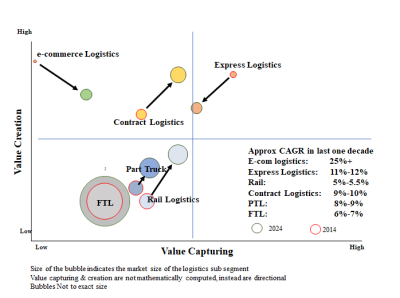
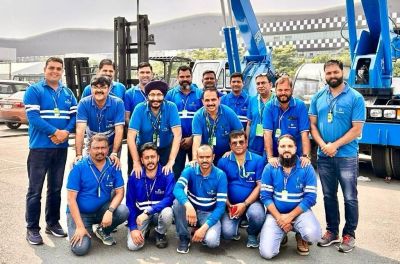


The expansion of Dammam Port in Saudi Arabia has taken a significant step towards strengthening trade relations between India and the Gulf region. The enhanced infrastructure and capacity of the port are set to benefit businesses and industries on both sides, facilitating smoother trade and commerce. The expansion of Dammam Port opens up new opportunities for Indian businesses to engage in import and export activities with the Gulf nations. It also serves as a strategic gateway for goods traveling to and from India, further improving the logistics and transportation landscape for businesses. The project showcases the commitment of both India and Saudi Arabia to enhance economic ties and boost bilateral trade. The increased port capacity will help meet the growing demand for trade between the two regions, ultimately contributing to the economic growth and prosperity of both nations.


Air India is setting its sights on a promising future as the exclusive carrier for TATA's iPhone exports. This strategic partnership between the renowned Indian airline and the tech giant TATA promises to boost India's manufacturing and export capabilities. The collaboration will enable Air India to become the sole carrier for TATA's iPhone exports, facilitating the efficient transport of these popular devices to international markets. With a reputation for reliability and global reach, Air India is poised to play a crucial role in TATA's supply chain. The move not only strengthens the relationship between two major Indian companies but also underlines India's growing importance in the global technology and manufacturing sectors. Air India's role as the exclusive carrier for iPhone exports is expected to generate significant revenue for the airline and enhance India's position as a hub for high-tech exports.