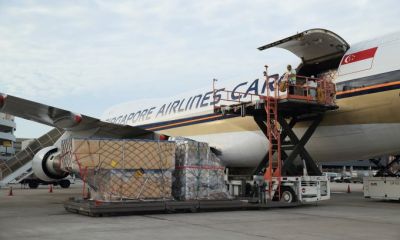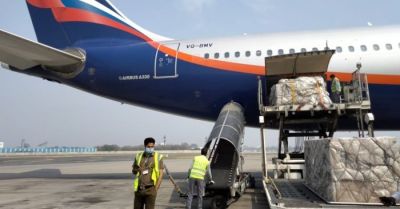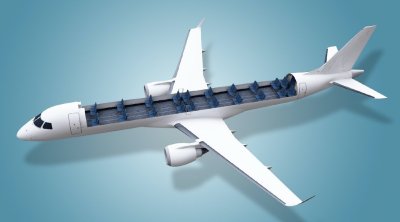
Industry findings throw light on the fact that almost 200 airlines operated well over 2,500 of the so-called “preighter” flights in 2020. Interestingly, some companies have gone even further by converting their parked passenger aircraft into freighters. Global aviation data firm Cirium found that between March and December 2020, 155 aircraft had all or most of their passenger seats removed in order to transport more cargo in their cabins. With online shopping booming and an urgent global demand for vaccinations and medical supplies, it’s hardly surprising that airlines would want to make up some lost revenue by carrying cargo rather than passengers.
Upamanyu Borah
The strong demand for converted freighters has been driven by a robust cargo market, one of the few bright spots for the airline industry over the past 12 months. Since the start of the global health pandemic, freighter aircraft usage has grown strongly, mainly due to the global disappearance of belly hold capacity as passenger aircraft were grounded. The number of freighter aircraft flights peaked at more than 145,000 in December 2020 during the holiday period.
While the global freighter fleet is growing, as is the number of passenger to freighter (P2F) conversions, there has been a corresponding increase in aircraft available for conversion driven by the accelerated retirement of passenger aircraft fleets.
According to data from IBA’s InsightIQ, the number of parked or stored aircraft has increased by a factor of 2.5 between December 2019 and June 2021. This accounted for 60 different aircraft types operating in the narrow body and wide body market. The grounding of the passenger fleet caused an expected drop in the amount of cargo space available in the hold of those passenger aircraft, and attention inevitably turned to passenger to freighter converted aircraft to cater for the increased demand for transportation of freight.
With COVID having prompted capacity alterations across the industry and as newer types are entering the passenger market, aircraft being converted are coming from a wider age range and apparently sourcing adequate feedstock should not be a significant problem for most types considering readily available supplies.
Overall, since May 2020, almost 200 narrow body and wide body aircraft have joined the worldwide freighter fleet, with the active fleet of narrow body freighters growing from 61 to 625 aircraft with newly-converted B737-800s accounting for half that growth. The B757-200 remains the pre-eminent freighter aircraft with a fleet of 298 units – converted and factory delivered – followed by the B737-400, with 148.
Meanwhile, the active mid-size widebody freighter fleet has grown steeply in the same period by 80 to 624 aircraft. The B767-300ER is the dominant aircraft in this segment, accounting for more than half the growth as many ex-passenger aircraft are converted, and in total fleet size this type now stands at 315 aircraft when one adds converted and factory delivered aircraft.
The A330 freighter fleet is also growing strongly, but from a much lower base, with six aircraft converted during this period, but with an additional pool of aircraft taking its fleet size to 74, the data reveals.
The large widebody freighter fleet has mushroomed from 55 to 601 aircraft since May 2020. The re-entry into service from storage of 29 B747-400s and seven MD-11Fs accounted for around half of the growth, with the remainder made up of factory deliveries of 22 B777Fs and three B747-8Fs.
In the News!
Singaporean firms ST Engineering and Singapore’s government-run investment company Temasek are joining forces to create a new 50-50 leasing venture for converted freighters, amid a series of ongoing announcements focussed on the booming market for P2F modifications.
The venture targets to build a portfolio valued at about US$600 million within five years, investing in passenger aircraft – primarily single-aisle types – for conversion to freighters.
Prior to the news of this partnership emerging, there had been a flurry of activity in the sector. For instance, Boeing revealed it will in 2022 set up a P2F conversion facility for 737-800s in Costa Rica – the first such operation in South America in association with Cooperativa Autogestionaria de Servicios Aeroindustriales (COOPESA), a Costa Rica-based maintenance, repair, and overhaul (MRO) provider, while Israel Aerospace Industries (IAI) will in 2024 establish a modification line in Seoul, South Korea for 777-200LRs and -300ERs.
That facility will augment IAI’s initial line in Tel Aviv, where the first aircraft under the 777-300ERSF ‘Big Twin’ conversion programme it launched in 2019 with lessor GE Capital Aviation Services (GECAS) will shortly be inducted.
Most recently, Etihad Engineering, the largest commercial aircraft maintenance, repair and overhaul (MRO) services provider in the Middle East signed a strategic partnership with IAI to provide P2F conversions on Boeing 777-300ERs.
The B777-300ERSF is based on the passenger variant of the type and is expected to offer a 25% capacity increase to the smaller 777-200LRF. With the installed GE90 engines, the Big Twin will achieve up to 21% lower fuel-burn per tonne than 747-400 freighters, and big-cargo capability that sees 25% more volume than the 777-200F production freighter.
According to IAI, with the flexibility to be more profitable than the competition at high or low utilisation models, the aircraft has “the range capability to seamlessly replace aging 747-400 and MD11 freighters.
The engines were specifically designed for long-haul operations and the Boeing 777 series, providing up to 115,000 lbs of thrust. In addition to providing the engines of the aircraft, GECAS will also provide MRO engine and power-by-the-hour services throughout the lifecycle of the freighters.
“We view the 777-300ERSF as the next generation of long-haul, large-capacity widebody freighters,” said Rich Greener, Senior Vice President and Manager of GECAS Cargo had said in a statement.
“GECAS Cargo has developed a new standard for aviation lessors, leveraging our fleet of passenger aircraft to provide freighter conversion feedstock — for this 777-300ERSF program as well as converting 737-800NGs. This approach extends the useful life of our aircraft and GE/CFM engines while meeting the need for replacements of retiring freighters and increased demand for dedicated cargo capacity.”
Reportedly, US-based cargo airline Kalitta Air is set to be the launch operator of the largest-ever twin-engine Boeing 777-300ERSF freighter. Originally a 747 operator, Kalitta Air’s fleet has grown to a total of four 777F, 24 B747-400F and nine B767-300BDSF aircraft.
GECAS has also recently announced a deal to lease out six of its B737-800BCFs — two to Russian carrier ATRAN and four to an unidentified customer. ATRAN recently took delivery of two of the aircraft from GECAS and will add two more of the P2F narrow bodies to its operations in September.
GECAS will also lease two 737-800BCFs to Malaysia-based carrier Kargo Xpress, subsidiary of M Jets International. The first aircraft is set to be delivered to the Malaysia-based carrier in October this year, followed by the second one in December.
Between 737-800BCFs and 777-300ERSFs, GECAS currently holds orders and options exceeding 100 P2F conversions. Meanwhile, July Boeing market data reflected that the 737-800BCF has won more than 200 orders and commitments from 16 customers, with that number having gone up by 33% (up from 150) alone since January.
Since entering into service in 2018, the B737-800 converted freighter has consistently delivered the reliability and efficiency our customers need.
“As we reach this milestone less than three years after the first 737-800 Boeing Converted Freighter took to the skies, we at Boeing thank our customers for making the 737-800BCF the narrow body freighter of choice for meeting cargo needs around the globe,” Jens Steinhagen, Director of Boeing Freighter Conversions said in a statement.
“The success and market leadership of the 737-800BCF is a testament to superior design, as well as to the hard work and dedication of Boeing’s global team that includes our parts and MRO suppliers. As demand for Boeing Converted Freighters soars, we continue to increase our capacity to meet our customers’ needs,” he noted.
Steinhagen had previously noted that Boeing is focussed on working with its MRO partners to ensure we meet the growing market demand, which is why it added additional lines to support future capacity for both the 737-800BCF and 767-300BCF. “Any future conversion line decisions, whether with existing or potentially new partners, will be driven by a variety of factors, including the business environment and market demand.”
Whilst reports say 90 per cent of freighters around the globe are Boeing jets, Airbus thinks its conversion programme for the widebody A330 and narrow body jets like the A321 and A320 is set to take a piece of the former’s share in freighter operations worldwide.
In particular, the company is looking at the prospects of the A321P2F conversion programme which could easily rival its nearest freighter platforms.
Compared to similar class freighter models, the A321 freighter is regarded as a better option for the environment and lowering CO2 emissions, with a 20% reduction in fuel burn and its enhanced performance in range, payload, and volume capacity. The aircraft type is also acknowledged as being one of the most technologically advanced narrow body fleet types in its class.
It was reported that in May Oregon-based 321 Precision Conversions, a joint venture of Air Transport Services Group (ATSG) and Precision Aircraft Solutions was close to delivering its first Airbus A321 converted freighter. The imminent handover followed the US Federal Aviation Administration (FAA)’s issuing of a supplemental type certificate for the A321-200P2F variant in late April, paving the way for delivery to launch operator SmartLynx Airlines Malta and the ramp-up of conversions.
A similar programme is also being developed by Sine Draco Aviation Development.
On the other side of the Atlantic, Dublin-based lessor GTLK Europe is set to acquire four A321 converted freighters, induction for which will commence this year with the last conversion to be carried out in 2022. The aircraft will undergo modification by the Elbe Flugzeugwerke (EFW) joint venture which is run by ST Engineering and Airbus.
In October of 2020, EFW re-delivered the first converted freighter to aircraft lessor Vallair, its launch operator for the A321P2F programme. The aircraft has since then entered service with Qantas who will be flying the aircraft for Australia Post.
Since then, the group has delivered a second aircraft to lessor BBAM and secured orders for GTLK Europe.
In the latest of developments, BBAM is said to have placed the largest order to date for the A321 converted freighter, which is attracting growing attention from express delivery companies and airlines supporting parcel networks that are experiencing rapid growth in e-commerce business.
The deal essentially locks up a full production line for BBAM through 2025 and comes with the option to add new conversion slots every year starting in 2026.
BBAM, which manages leases for investors that own aircraft, has already converted and redelivered two A321 converted freighters to Titan Airways, a U.K. charter airline, for a total of 20 orders so far.
EFW CEO Andreas Sperl expressed, “Interest in our A321P2F conversion solution has been on a significant rise over the past year or so, and we are committed to satisfying the growing market demand with on-time redeliveries by ramping up conversion lines with our parent company, ST Engineering.”
To meet the rising global demand for dedicated freighter aircraft, ST Engineering and EFW introduced a conversion site in Guangzhou, China in the end of 2020, and will be setting up another in the US in 2021, which will ramp up world-wide conversion capacity for the type to 25 slots per year by 2023.
Expansion plans are also in the works to support the rising demand for the widebody A330P2F programme, which is currently carried out at EFW’s facility in Dresden, Germany. For instance, Mexico-based MasAir Cargo Airline has reached an agreement with Irish leasing services company CDB Aviation for the lease of two Airbus A330-300P2Fs. The aircraft are scheduled to be delivered to MasAir during the first half of 2022.
“The A330 P2F is considered as very popular especially for the express cargo market, as it is a wide body program with great capacity offering more cargo volume and lower cost-per-ton than other available freighter aircraft types with a similar range,” Sperl said.
Airbus predicts that around 1,000 small freighter conversions will be required over the next 20 years to replace ageing fleets and cater for growth, which will make a solid market potential for the A321P2F programme.
Several airline companies including new ones are already in the process of launching A321 converted freighters, which will compete with B757s and B737s. Miami-based Global Crossing or GlobalX Airlines, the new entrant airline currently undergoing FAA certification using the Airbus A320 series, announced it has signed a LoI with ST Engineering and the latter’s in-house leasing arm Aviation Asset Management to lease five incremental converted A321-200P2F aircraft. ST Engineering said it would acquire the A321-200s for conversion either on its own or through its joint venture firms. The first of the quintet is set to enter conversion in April 2022 and deliver to GlobalX in the fourth quarter of the year. The other four units will be converted and delivered progressively.
In October 2020, GlobalX signed a LoI with Vallair for ten A321-200 P2Fs of which five were confirmed for conversion by ST Engineering. GlobalX confirmed that the five newly ordered aircraft are on top of the ten previously signed, increasing the start-up’s freighter fleet to fifteen A321-200P2Fs.
Future tense but unlikely
The P2F market is expected to remain strong in the short-term but most industry experts think it will naturally level off at some point. The risk for operators who invest in P2F conversions is that if passenger traffic quickly bounces back to pre-crisis levels, the return of belly-hold capacity could be enough to accommodate much of the air cargo demand, which analysts predict will remain stifled as a result of the recession.
In fact, when viewed in relation to the bigger picture, passenger to freighter conversions will likely have a minimal impact on capacity and Available Freight Tonne Kilometres (AFTKs). Practically, the issue of lack of capacity has been compounded by the increased volume of global e-commerce trade and demand for PPE supplies brought about by the coronavirus pandemic.
IATA data for March 2021 shows a record for air cargo, with cargo tonne kilometres (CTKs) up 4.4% above the same month in 2019 – well before COVID-19 appeared. CTKs have climbed consistently over the last 12 months, save for the annual post-Christmas slump.
In the long-term, global air cargo traffic is forecast to grow by four per cent a year over the next two decades. In Boeing’s World Air Cargo Report from last October, the airframe manufacturer predicted that the world’s dedicated freighter fleet will grow by more than 60 per cent over that time, and that nearly two-thirds of the deliveries will be conversions from passenger aircraft.
Singapore Changi Airport experienced a significant boost in air cargo volumes for the second quarter of 2024, handling 485,000 tonnes of airfreight from April to June. This represents a 16% increase compared to the same period last year. The growth is attributed to robust shipment flows between Singapore and major markets including the US and China. Changi Airport Group highlighted that the increase was seen across all cargo categories—exports, imports, and transhipments. The airport’s top five air cargo markets for the period were Australia, China, Hong Kong, India, and the United States. In the year-to-date, Changi Airport has processed a total of 960,000 tonnes of airfreight. The first quarter of 2024 also saw strong performance, with 475,000 tonnes handled, driven by high transhipment activity, particularly with China. Key sectors contributing to the cargo throughput include pharmaceuticals, perishables, e-commerce, and advanced materials like semiconductors. Notable airlines operating cargo flights at Changi include Spice Express, Tasman Cargo Airlines, Atlas Air, DHL Express, and Singapore Airlines, which collaborate on cargo operations. As of July 1, Changi Airport boasts 94 airlines operating over 6,900 weekly scheduled flights, linking Singapore to 158 cities across 50 countries and territories globally. This extensive network supports Changi’s role as a major international cargo hub. The airport’s continued growth in air cargo volumes underscores its importance as a critical logistics and transportation hub in the global supply chain.
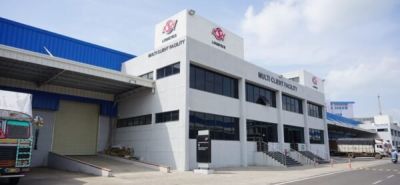
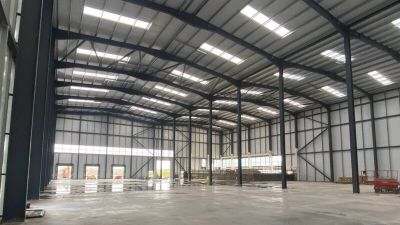
AP Moller – Maersk is strengthening its operations in Bangladesh, where it has been serving the country and its exporters connect to the global market for almost three decades. Bangladesh has been one of the most important sourcing markets for the garments and apparel industry worldwide. The garment manufacturers exporting to global markets have significantly contributed towards building the country’s economy. Despite the impressive growth of garments exports from Bangladesh, the number of warehouses in Chattogram have not increased since 2012, with the sole exception of ISATL that became operational in 2018. Optimising utilisation of available capacity assisted to an extent, however it did not scale enough to meet the trade’s requirements. The logistics ecosystem and the Chittagong Port get stretched, particularly during the peak seasons. In 2021, a fallout of this structural challenge was felt by all the stakeholders involved in EXIM trade when the Container Freight Stations (CFSs) got clogged with cargo resulting in delayed clearance, stuffing and consequently dispatch of containers to the port. Delay in offloading cargo also led to longer truck waiting time, and delay in dispatch of containers to the port, consequently resulting in lack of overall productivity. These challenges have serious consequences on the overall economy of the country given the fact that the Chittagong Port handles in excess of 90 per cent of the total containerised trade to and from Bangladesh. Recognising these challenges, Maersk Bangladesh has partnered with Ispahani Summit Alliance Terminal Limited (ISATL) to build a 200,000 sq ft custom bonded warehouse. ISATL are pioneers in constructing and operating warehouses and CFS and operate four CFS within Chattogram and the River Terminal at Dhaka. Under the scope of this partnership, ISATL will construct a brand new custom bonded warehouse within the existing premises of the facility located at Pathortoli in Chattogram. The new warehouse will double the existing capacity at ISATL and add around 8 per cent additional space to the existing ecosystem at Chattogram. The construction of the new CFS has already commenced and is expected to be completed in a phased manner by the end of 2022. Bangladesh’s exporters and their overseas buyers will be able to start using the facility from July 2022, once the first phase of construction is completed. “Maersk’s commitment to connect and simplify our customers’ supply chains means that we look at long term solutions for problems such as the longstanding congestion within the ecosystem. We tackled the situation in 2021 by deploying an additional vessel for evacuating export loaded containers,” said Angshuman Mustafi, Managing Director, Maersk Bangladesh. “The solutions provided immediate relief to the ecosystem, but there was a need for a comprehensive solution to optimise ocean shipping, port handling and inland logistics that would benefit trade in the long term. By partnering with ISALT, we are establishing a facility that has the potential to partially decongest the system from the landside and streamline the flow of cargo in and out of Bangladesh.” Apart from adding capacity, the facility will offer several other benefits to Bangladesh’s exports. Amongst others, the new facility is being built by benchmarking international best practices when it comes to safety and other compliance guidelines. It will be modern multi-storeyed facility in Chattogram which will have storage at G+2 levels, thus making optimal use of available space to maximise the capacity. There will be an option to offer pallets for all operations, thereby improving the overall operational efficiency. Maersk will also offer customers Garment on Hanger facility, sorting, product audit, labelling, bar code and RFID scanning amongst others. “We are proud to partner with Maersk on this exciting long term project where ISATL’s extensive local experience combined with Maersk’s international best practices will allow us to create a truly world-class facility that will help raise the standards for the entire industry,” said Yasser Rizvi, Managing Director, ISATL.
Indian importers and exporters are grappling with significant cargo delays at Mundra Port, the country’s leading container trade hub. Local trade sources have voiced serious concerns about the worsening congestion at Mundra’s container terminals in recent weeks. "The terminals at Mundra now seem to be hugely congested, and the pendency has increased to levels affecting the normal movement of boxes between CFSs and terminals," stated the Container Freight Station Association Mundra in a complaint. The association added, "All the efforts put in by CFSs are not witnessing any improvement, but are rather finding that the situation is deteriorating further." A recent change in the process of issuing port entry permits for freight vehicles by the port authority has been identified as a major source of frustration. According to freight station owners, truckers are experiencing longer waits to move containers due to difficulties in securing entry permits promptly. "Vehicles are stranded on the road for hours together because of this. A corrective measure needs to be discussed with our members and worked out so as to ensure that movement continues without any hassles," explained the CFS association. The congestion has also frustrated container rail operators, as ICD (inland container depot) volumes constitute a significant portion of Mundra’s trade. The Association of Container Train Operators (ACTO) noted in a trade advisory, "There has been increased congestion at Mundra Port due to delays in effectively evacuating import containers in FIFO [first-in, first-out] sequence on time, despite trains being provided for clearance by container train operators [CTOs]." ACTO indicated that Indian Railways has restricted double-stack loading to expedite train evacuation from the port, resulting in additional ground rent charges for traders. Mundra, Adani Ports’ flagship entity, managed 7.4 million TEUs in the fiscal year 2023-24, marking a 15% increase over Nhava Sheva Port. With volumes rapidly expanding, the Adani Group is considering further investment to enhance capacity. "We continue to invest heavily in the business to drive growth, particularly in the logistics segment," stated Adani in a recent announcement.
Lufthansa Cargo has recently expanded its offerings, providing customers with new belly capacities on several attractive routes. Since the start of June, passengers and cargo alike can benefit from direct connections to various destinations, enhancing global connectivity and trade opportunities. Direct flights to North America, including routes from Frankfurt to Minneapolis (MSP) and Raleigh-Durham (RDU) with Lufthansa Airlines, are now available for booking. Additionally, from the Lufthansa Cargo hub in Munich, new connections to Seattle (SEA) three times a week, and daily capacity to Toronto (YYZ) and Vancouver (YVR) are being offered. Austrian Airlines has also introduced a new route, connecting Vienna with Los Angeles (LAX). Discover Airlines has expanded its services from Frankfurt to Halifax (YHZ) and Anchorage (ANC), further widening the reach of cargo transportation. Moreover, Lufthansa Cargo has introduced freighter capacity to Dubai World Central (DWC), providing customers with additional options for handling larger cargo items or special freight. This new service complements the existing belly service from Dubai International Airport (DXB) and offers enhanced flexibility and efficiency in cargo transportation. With a commitment to enhancing global connectivity and trade facilitation, Lufthansa Cargo continues to innovate and expand its service offerings. These new routes and increased capacities underscore Lufthansa Cargo's dedication to meeting the evolving needs of its customers in a rapidly changing global market.
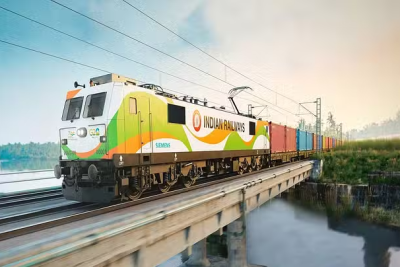
In a momentous event today, PM Modi inaugurated a 77-kilometer-long section of the Western Dedicated Freight Corridor (WDFC), marking a significant milestone in India's ambitious infrastructure development efforts. The inauguration ceremony, held in the presence of key dignitaries and government officials, showcased the country's commitment to enhancing its transportation network. The Western Dedicated Freight Corridor is a game-changing project that aims to revolutionize India's freight transportation sector. The newly inaugurated 77-kilometer section connects key industrial regions, providing a dedicated pathway for the efficient movement of goods. With this achievement, India takes a major step towards reducing logistics costs, boosting manufacturing, and improving the overall economy. PM Modi, while addressing the audience, emphasized the importance of this project in promoting economic growth, generating employment, and reducing the carbon footprint. He noted, "The Western Dedicated Freight Corridor is a testament to India's vision for a modern and efficient transportation system. It will not only enhance our connectivity but also make us a global logistics hub." The event was attended by several Union Ministers and top officials from the Ministry of Railways, underscoring the government's commitment to accelerating infrastructure development in the country.



Trade shows are mission-critical, high-investment events where logistics execution directly influences marketing ROI. Exhibitors spend months preparing for a few days on the floor, since a single missed delivery window can jeopardise the entire programme. In this environment, Less-Than-Truckload (LTL) trade show logistics is no longer just transportation; it is an orchestration of timing, compliance, risk control, and venue-specific expertise. While standard LTL carriers can handle general freight, elite trade show shippers excel because they are built for the ecosystem — understanding drayage, marshalling yards, target windows, live-loading rules, equipment constraints, and the high-value nature of exhibits. This updated guide unpacks the differentiators that set the best providers apart, enhanced with additional dimensions such as KPIs, risk mitigation frameworks, technology adoption, sustainability practices, and a practical vendor-evaluation checklist. The Key Differentiators of Elite Trade Show Shippers When shipping general freight, a standard LTL carrier may be sufficient. However, event logistics demand a higher level of specialised service. The top trade show shippers possess four key differentiators that distinguish them from the rest. Proactive and Specialised Support Trade shows operate on rigid move-in schedules tied to booth size, dock flow, and decorator rules. The strongest providers deploy dedicated trade show teams who can interpret show manuals, coordinate with decorators, and time deliveries to avoid re-handling fees. Best-in-class partners also: Pre-audit documentation and labels to avoid show-site rejections Manage drayage coordination to reduce dwell and material-handling charges Offer pre-receiving and staging at regional facilities for smoother Day-1 move-ins This advisory-driven model transforms logistics from a cost center into a risk-mitigation service. Flexible Coordination and Network Access Because no two events are alike, trade show logistics demand configurable access to LTL, FTL, hot-shot, air, and international capacity. Top providers match service levels, route constraints, and budget requirements by tapping into broad asset and partner networks. A sophisticated network allows for: Expedited or guaranteed-capacity moves for high-stakes shows Cost-effective options for booth materials that can stage early Lane-specific equipment (air-ride, liftgate, climate-controlled) This flexibility becomes essential during peak show seasons when capacity is tight and timelines narrow. Guaranteed Performance and Asset Protection Event deadlines are immovable. Leading providers commit to guaranteed on-time service, narrow ETA bands, and contingency planning across linehaul and last-mile execution. They also emphasise exhibit protection through: Air-ride suspension fleets Strapping, padding, and vibration-control practices Secure transport protocols for prototypes and LED/AV assets With show participation costs rising, damage and delay prevention become competitive differentiators. End-to-End Visibility and Services Real-time visibility is no longer optional. Tocay, exhibitors rely on it to make staffing, booth-build, and drayage decisions. The best LTL partners deliver: Live tracking from pickup to booth delivery API connectivity with exhibitor dashboards Pre-emptive exception alerts and delay recovery paths For international events, leading providers integrate customs documentation, Carnet handling, temporary import permits, and venue-specific rules, ensuring frictionless handoffs across borders. What Are the Best LTL Logistics Companies for Trade Shows? Several providers exemplify these differentiators. The following firms are selected based on their demonstrated strength in specialised show support, performance-oriented service design, event fluency, flexible coordination and comprehensive offerings that cover pre-show to teardown. 1. Green River Logistics Solutions A brokerage-led model with deep carrier reach, making it ideal for exhibitors with varied lane structures. Key strengths: Highly personalised coordination and single-point-of-contact support Flexible equipment sourcing — LTL, flatbed, refrigerated, heavy haul Real-time updates and precise timing for fragile builds 2. XPO Logistics A multinational leader with a controlled linehaul network and a dedicated Trade Show Desk. Key strengths: Tight schedule integrity Venue-specific coordination and dock navigation Strong performance management systems. 3. TWI Group A global exhibition logistics specialist excelling in international customs and venue compliance. Key strengths: ATA Carnet expertise and cross-border support On-site liaisons at major venues High-touch service model for global exhibitors 4. Averitt A time-definite, reliability-driven carrier focused on window compliance. Key strengths: Guaranteed performance Expertise with marshaling yards and dock appointments Rapid recovery for last-minute constraints 5. TTI Logistics A specialist for fragile and custom builds requiring maximum protection. Key strengths: Air-ride fleets and vibration-controlled handling Precision timing for target-move-ins Advanced security protocols Comparing the Top LTL Logistics Providers for Trade Shows These providers excel in different areas. This table offers a quick comparison of their key service features to help you align their strengths with your specific needs. New Strategic Enhancements Added for a Modern Exhibitor’s Playbook Technology Advancements Worth Evaluating AI-assisted ETA predictions Digital drayage coordination tools IoT-enabled condition monitoring for AV and prototype freight Automated warehouse cut-off compliance checks Risk-Mitigation Practices That Matter Pre-show risk audits Contingency rerouting plans Venue-specific compliance checklists High-value cargo insurance design Sustainability Expectations from Today’s Exhibitors Low-emission or EV linehaul and last-mile options Carbon-neutral freight programs Reusable or recyclable crating solutions Emissions dashboards linked to booth shipments Performance Metrics That Define Best-in-Class Providers On-time delivery to target windows Damage-free shipment percentage Visibility uptime SLA Drayage handoff accuracy Exception-resolution response time How to Vet Your Trade Show Logistics Partner Applying the key differentiators includes asking potential partners the right questions. When your program includes international stops, ask about their documentation process, how they manage Carnets and how visibility will work across handoffs. The following can further validate fit and execution discipline: What is your detailed experience with my venue and decorator? Can you guarantee delivery within target-window constraints? What risk-mitigation plan is activated if my freight misses staging cutoff? What specialised equipment will you use for fragile or custom exhibits? How do you integrate with drayage contractors and marshaling yards? Which visibility tools and tracking integrations are available? Can you manage international customs documentation end-to-end? What sustainability options can be applied to my show calendar? Your Partner Is Your Most Critical Exhibit A logistics provider is more than a freight handler; they are the enabler of your presence on the show floor. The right LTL partner combines timing discipline, technical fluency, equipment strength, and venue intelligence to protect your brand and maximise your event ROI. Elite trade show shippers don’t just move freight; they orchestrate flawless show execution.
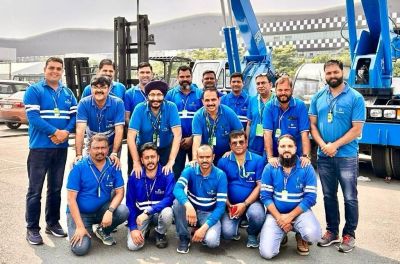


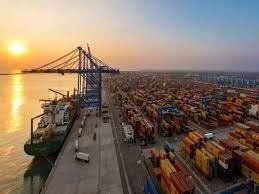
The expansion of Dammam Port in Saudi Arabia has taken a significant step towards strengthening trade relations between India and the Gulf region. The enhanced infrastructure and capacity of the port are set to benefit businesses and industries on both sides, facilitating smoother trade and commerce. The expansion of Dammam Port opens up new opportunities for Indian businesses to engage in import and export activities with the Gulf nations. It also serves as a strategic gateway for goods traveling to and from India, further improving the logistics and transportation landscape for businesses. The project showcases the commitment of both India and Saudi Arabia to enhance economic ties and boost bilateral trade. The increased port capacity will help meet the growing demand for trade between the two regions, ultimately contributing to the economic growth and prosperity of both nations.


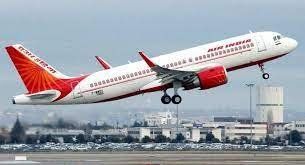
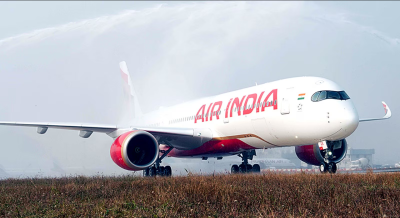
Air India is setting its sights on a promising future as the exclusive carrier for TATA's iPhone exports. This strategic partnership between the renowned Indian airline and the tech giant TATA promises to boost India's manufacturing and export capabilities. The collaboration will enable Air India to become the sole carrier for TATA's iPhone exports, facilitating the efficient transport of these popular devices to international markets. With a reputation for reliability and global reach, Air India is poised to play a crucial role in TATA's supply chain. The move not only strengthens the relationship between two major Indian companies but also underlines India's growing importance in the global technology and manufacturing sectors. Air India's role as the exclusive carrier for iPhone exports is expected to generate significant revenue for the airline and enhance India's position as a hub for high-tech exports.