Indeed, the finely orchestrated symphony of supply chain efficiency over the past 30 years or so across the production, delivery, and distribution of apparel is sputtering and may require a tune-up. At least, recent events seem to suggest that. Firstly, apparel companies have become too internationally expansive in scope which necessitates that they implement new and advanced methods of supply chain management. Secondly, the apparel industry more than any other industry must be able to react quickly to seasonal changes and tweak product characteristics. And finally, intense competition in the apparel industry means only those who can respond fast and accurate to new consumer requirements will survive and succeed. This means maximising efficiency by concentrating on building competences which ultimately works for the company and its consumers as both thrive amidst a cacophony of socio-economic changes.
Upamanyu Borah
The fashion industry is characterised by highly integrated global supply chains. And given the globalised nature, fashion companies face significant risks across their supply chain as suppliers and retailers need to transport their raw materials and final goods within and across continents. Additionally, global trade wars, uncertainty over Brexit, and tougher environmental regulations have all become driving factors in bringing insolvencies to the forefront of supply chain risk management, particularly in this space.
With above, in times of COVID-19, companies faced the immediate risk of increased costs and border crossing wait times, all the while customs agents were adapting to new processes and companies indulged in business contingency planning.
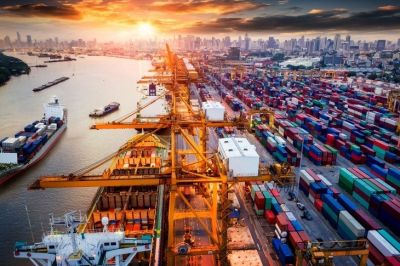
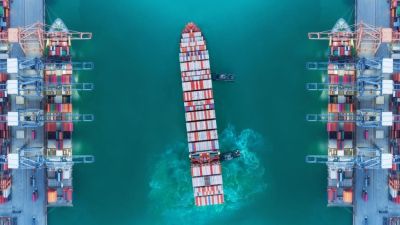
From a logistics point of view, textile, apparel and garments are considered time-sensitive products. Irregularities in making goods reach a particular place at a specified location on time can lead to reduced or no profits for the textile owner. Usually, the goods and raw materials are transported using a combination of land, sea, and air. Strong multimodal interlinkages are therefore the key to ensuring just-in-time (JIT) delivery to maintain the good balance between client's orders, raw materials, and production needs.
Additionally, fashion choices or clothing collections change quickly, their lifecycle is short (as perishable products) and commercialisation is characterised by strong seasonal peaks. In this sense, textile logistics are characterised by small stocks and short delivery times. That way, when disruptions occur in the supply chain that demand an immediate response, the company and its supplier partners will need to think about their strategies well beforehand so that they won’t be caught off-guard when their overall survival and existence matters.
Factors like rapid e-commerce growth today have further accentuated time-related logistics requirements, such as next-day delivery, as well as the capacity of handling large volume of returns and offering the possibility for manufacturers and dealers to check the location of their articles at any time. All this implies getting information out on time, giving oneself and one’s supplier time to respond accordingly to any disruption, ultimately helping develop company—vendor and most importantly, market and customer relationships. If companies do it better than others in competition, they are sure to gain market share because when “it’s only in tough situations that the strongest companies thrive”.
The fashion industry is undoubtedly under pressure in these uncertain times. Depending on the role that countries play in the supply chain, building resilience could entail different needs and approaches.
In the short-term, lockdowns around the world have thrown a spotlight on risks associated with high supply chain interconnectedness and challenges associated with global sourcing. This has also had an impact on trade logistics, as the glue that holds global value chains together. Observable changes introduced in air and maritime transport services to cope with reduced demand and cargo imbalances illustrate this.
The key question however is: what will all this mean in the longer term, after surviving this unplanned humanitarian and financial crisis, particularly for the weakest links of the chain? Or, has it already induced structural changes to the industry supply chains?
For example, has it led to generalising new models such as ‘seasonless designs’ or shorter value chains through increased local or regional sourcing. Certainly, moving away from the just-in-time and made- to- order business models will have a profound yet positive impact on trading and transport patterns.
One of the concerns in this respect is that production of fashion goods could be moved away to other sourcing countries that are resuming activities faster in the Asian region or that are closer to retailers to diversify their supply chain risk.
Most developing countries considered as hubs for apparel sourcing do not have similar financial means, health systems or social safety nets to respond to the COVID-19 pandemic crisis and its economic impacts like developed nations where governments swiftly implemented unprecedented actions to ease the effect on their economies via measures put in place to limit the spread of the pandemic.
In this context, various assistance packages were also announced by IMF, the World Bank and others with a view to supporting economies, including emerging market economies.
Strategic Realignment Moves
Apparel companies benefit financially from sourcing production in low-cost developing countries, but this strategy is not without its drawbacks. Key considerations include:
Faster lead times: A McKinsey & Company report describes the “typical” process followed by most apparel companies in developed countries—“A shirt is manufactured in a faraway country based on a months-old design and then shipped for weeks across the ocean before reaching a retailer. A consumer might eventually buy it at half price in an end-of-season sale—a routine event in an industry whose long lead times and big batches give it little flexibility to adapt production to shifting consumer demand”. Given the complexity of the process, it’s not surprising that the typical retailer needs six months to bring a conceptualised product to market.
Ralph Lauren recently announced it had exceeded lead time targets with approximately two thirds of their products on lead times of 6 months or less. But, the emergence of “fast fashion” and e-commerce has threatened the validity of this achievement, with Zara able to bring a product to market in just three weeks. Zara’s drastically shortened lead time is possible because of multiple factors, including:
While traditional apparel companies can certainly take note of the Zara model, few are in a position to uproot their globally based supply chains and start over. Companies are looking to reduce lead times by integrating any number of innovative approaches and using technology to help weed out inefficiencies.
Product Life Cycle Management (PLM): Technology solutions can be quite effective at helping companies reduce lead times—by an average of 25 to 30 per cent. PLM has been referred to as a “cradle-to-grave” approach since every stage of a product’s life cycle is monitored and linked. According to reports, PLM technology was originally developed as a tool for the automotive and aerospace industries. But its benefits quickly became apparent to other industries, including apparel.
If a subject expert were to explain the benefits of a PLM system for an apparel company, he would put it across as “Internal teams, design development, suppliers—they know what fabrics are being used, what colours were approved, the status of production and the exact location of containers that are in shipment.”
A 2017 survey conducted by Gartner found PLM solutions are having a significant impact among apparel companies:
Tommy Hilfiger, for example announced a partnership with IBM and the Fashion Institute of Technology (FIT) to develop an artificial intelligence (AI) powered system to determine the kind of data to optimise production, sales and also reduce cost and waste. The students at FIT accesses IBM Research’s AI capabilities including computer vision to look into the company’s data like real-time fashion industry trends, customer sentiment around every Tommy Hilfiger sent back—for the student designers to make informed decisions for new product development.
Visibility/Supplier Collaboration: Former Ralph Lauren CEO Stefan Larsson, in citing his company’s goal of reducing lead times from 15 months to nine months, stressed the need to strengthen the collaboration with its supplier base in Asia.
“The suppliers are really advanced and have a lot of knowledge. We have to get even closer to them and leverage that knowledge,” Larsson said in a discussion with analysts.
But how can a business accomplish this with dozens of suppliers located in as many as 15 different countries? Well, the short answer is—to establish visibility across the entire organisation so that managers have insight into all parts of the design, production, and distribution processes. But for most companies, this is easier said than done. This is where technology comes in. By adopting “the right” technology solution—selected from the dozens of apparel industry-specific solutions currently on the market—a company can have a bird’s-eye view into parts of its business that may be underperforming, anticipate potential production or shipping delays, and establish critical communication links between different parts of its organisation. The more stakeholders put “in the loop”, the greater the likelihood for collaboration and efficiency. However, that collaboration will come with increased exposure to risk. Finding the right balance is the key.
Experienced logistics provider like Kuehne + Nagel, CEVA, or sector specific experts like Li & Fung, can help determined businesses identify the right solutions for adding visibility to their unique supply chains.
Pre-production Efficiency: In 2016, Kohl’s challenged its suppliers to dramatically improve production times and indicate openness to new ideas and processes. Specialists Li & Fung has been able to cut lead times in half by focussing on product pre-production. As reported by the media, Kohl’s had traditionally followed a process in which its home-based designers would wait for samples to arrive from Asia. After modifications were made and transmitted back to Asia, a final run of products would eventually be shipped by sea.
Li & Fung was able to overhaul that process by introducing three-dimensional digital designs instead of physical samples. Now designers in its home country can “see” modifications throughout the product development process and collaborate through an integrated system with the Asian production team. This has trimmed a process that routinely took six months down to a few days.
Fabric Platforming: Fortune reports that some manufacturers, including Gap Inc are taking advantage of efficiencies achieved by purchasing large amounts of particular fabrics and then creating designs for that fabric, rather than the other way around.
Additionally, this is a practice that has been instrumental to Zara’s fast-fashion modelled dynamics.
The BOLD show
In addition to location diversification, businesses must also come to terms with various notional definitions of 'capacity'. In a business-as-usual (BAU) scenario, capacity would be defined as the (theoretical) maximum of some performance metric that can be achieved by the system. However, given the seasonal nature of products and consumer behaviour, businesses have to expand their understanding to accommodate for 'surge capacity'.
Here, surge capacity refers to a requirement from the system to produce higher output as compared to its BAU capacity, but such stretched output levels are expected to be sustained for relatively short periods of time.
Continuing in the same vein, under a pandemic situation, companies can arrive at the notion of 'crisis capacity'. In crisis mode, organisations must be able to leverage their broader network of suppliers/sub-contractors, etc. and sustain a significantly increased level of output (as compared to even surge capacity) as necessitated by their customers for extended periods of time.
Moreover, transitions to increased capacity levels are recommended to be done in a phased manner. Despite this, when the capacity level reaches crisis capacity mode, it is often accompanied by a commensurate loss in related performance metrics, typically product quality or customer service levels. This flexible understanding of capacity under various operating scenarios and the corresponding ability of an organisation to manage upstream and downstream supply chain operations is a key factor in ensuring the survivability of an enterprise in the COVID world.
When addressing an important yet often neglected aspect of supply chains, namely order fulfilment, it is imperative to look at advancements in robotics and automation, which have grown to become an integral part of warehouse management systems.
Warehouses, which involve repetitive and labour-intensive tasks, are at the forefront of man-machine interactions and are often a testing ground for new automation ideas. Both resources—man and machine—will need to be orchestrated through efficient workflows to maximise performance, and to further accelerate such transformations, a people-centric approach that includes strong employee engagement as well as labour efficiency is critical in these times. Warehouse managers will need to have employee performance data and related analytics at their fingertips, while making them readily accessible for agile decisions by management.
Modeling and algorithmic solutions that help conduct 'what-if' analysis to determine optimal staffing requirements will also be essential in a fast-paced, rapidly evolving world.
In fact, digitalisation as a big opportunity for the apparel industry not only in 2021 but also in the years to come. Fashion brands and retailers will increasingly find digitalisation ubiquitous to their businesses—like air and electricity. Fashion companies should start making more efforts to creatively use digital technologies to interact with consumers, make transactions, develop products, and improve consumers’ online shopping experiences. With the adoption of more advanced digital tools, apparel companies may also find new opportunities to improve sustainability, better understand their customers through leveraging data science, and develop a more agile and nimble supply chain.
For instance, San Francisco based Stitch Fix which delivers clothing to customers with the help of online stylists, is working with AI. They are now designing garments created by algorithms that identify trends and styles missing from the Stitch Fix inventory. These are based on combinations of consumers’ selections of favorite colorus, patterns, and textiles which are picked by AI system which then suggests a new design. These new designs are then reviewed by a human design team.
Going ahead, brands should gradually start exploring how 3D printing can help them produce goods on-demand and create new avenues for customisation. This has become an increasing need as competitiveness lies more and more in delivering products tailored to the customer’s tastes and needs in a speedy and timely manner.
As lockdown restrictions get eased worldwide, social distancing has already been mandated in retail stores and as a result, in-store checkout systems and POS terminals seem to undergo a radical change to reflect the new normal. Customers have always avoided queuing up in stores, and this behaviour is further exacerbated by social distancing norms.
Having a mobile point-of-sales mechanism that gives store associates the freedom to walk the shop floor and deliver personalised experiences and recommendations, while simultaneously educating, upselling, and cross-selling products before seamlessly accepting payments on their mobile devices significantly reduces check-out lines or use of self-service devices, and yet provide an enriching and transformative shopping experience.
While switching gears, it is ever important to recall the fact that at the far end downstream of any supply chain remains the all-important customer. As e-commerce orders begin to proliferate, customer order fulfilment directly from stores is bound to grow along with fulfilment from warehouses and distribution centers. But important considerations need to be carefully thought out through before scaling fulfilment operations.
Conversations around sustainability, another key component of supply chains, will also increase as things stabilise in the near future. Most companies begin their sustainability efforts by focusing on their transportation operations.
While organisations will need advanced transport management systems that optimise and execute logistics operations, helping to reduce the overall carbon footprint of supply chains is a much broader task. To that end, organisations will need dashboards that provide visibility into all sustainability metrics—for example, manufacturing facility operations using Internet of Things (IoT) compatible sensors that enable to understand tradeoffs, not only between logistics costs and service operations but rather from a more comprehensive greenhouse gas emissions and carbon footprints standpoint.
Lately, an increasing amount of global fashion brands have been making agreements to work with suppliers, governments and NGOs to ensure a fair living wage and better working conditions for workers.
The fragmented production model, pressures on prices and lack of critical insights have allowed a severe exploitation of workers. Some big companies like Nike, Levis, Esprit, Adidas and PVH signed an open letter to the Cambodian government asking them to improve their labour standards.
The use of new internet-based technologies can have the potential to identify and track the previously obscure information. They can also connect individuals and groups to organise and act using this information. Although there are laws in place to protect workers and their rights, but governments routinely fail to enforce these laws. Also workers rarely fully know their rights.
What’s in this episode?
In the Apparel Supply Chain: Need Speed to Shelf feature, we try to assess the impact of the COVID-19 pandemic on India’s textile, apparel and garment supply chain and logistical operations through the analysis of short and long-term responses to disruption, as we question the supply chain managers about how they are ensuring business stability and adopting holistic analytics-backed business solutions, in a way navigating through the crisis. We dive into significant trends within consumer fashion sector and explore the strategies through which supply chain leadership together with its value chain partners look to reinvent and evolve.
COVID-19 is a reminder to the fibre production, textile manufacturing, garment manufacturing industry about the fragility in ways of doing business. It will be a game changer for companies that will focus on evolving business continuity models and transformational change with new and emerging technology.
With creative, resourceful responses to the pandemic, apparel supply chain leaders are ensuring that consumers are able to buy the goods they need, while also maintaining the health and safety of both consumers and their supply chain network.
Moreover, the lessons from these challenging times are helping manufacturers and retailers to make their supply chains more resilient. The second wave might be no less surprising, but the right plans are keeping it from causing as much disruption.
Our interactions as part of this feature are a classic example of—how adopting new processes for managing customer relationships and improving product sales all in one place, along with effective prioritisation of data and utilisation of channel partners—is helping fashion companies increase market share following demand surge.
Fashion on demand is a new trend to watch and executives say they are already switching to made-to-order production cycles. The result is a reduced level of overstock and less clothing that ends in landfill. In fact, lately, executives have noticed an increase in the importance of the small-batch production cycles. New technologies, analytics are becoming a solution for companies to quickly source and develop products, shorten production timelines and streamline distribution.
As people become increasingly “impatient”, shortening lead times is the key to ensure delivery with optimum timing. Managers say their companies have taken a step further to develop the entire process “in-house” to increase speed and supply chain efficiency. Things like materials sourcing, creative and technical design, samples, production and shipping are happening under the same roof. And enabling everything to run smoothly, all the teams have real-time flow of information to ensure everyone has access to the same data and the same version of the latest products.
End Remarks
Our society has never had a bigger need for effective supply chains, transformative technologies, and the people that make these complex systems work seamlessly. In such critical times, continuity and resiliency of supply chains become essential towards maintaining some semblance of normalcy for people and businesses alike.
Organisations must therefore strive to strike the right balance between efficiency and resiliency to satisfy customer requirements. 'COVIDity', which we may define as the unease that we all feel living in the new normal, is here to stay but leading companies that demonstrate agility and embrace innovation in this ever-changing world are going to pave the way towards a new future.
The coronavirus might linger on for many years, but effective e-commerce and hybrid fulfilment methods will help propel the retail industry forward and help retailers weather such storms now and in the future.
The Federation of Freight Forwarders’ Associations in India (FFFAI) held its 6th EC Meeting for the term 2021-23 on May 27 and 28 in Bengaluru. The meeting was attended by the Office Bearers and 28 Member Association representative of FFFAI from across the country, there were many issues discussed and updates provided concerning customs, CBLR, EDI, Service Tax/GST, logistics, air cargo, sea cargo, skill development,importance of social media which FFFAI has expanded recently, technology developments, etc. The special focus of the 6th EC meeting was the updates on forthcoming 24th Biennial Convention of FFFAI to be held from August 12 to 14, 2022 in Chennai with the theme LOGISTICS RESHAPE, EMBRACE AND SURGE IN THE DIGITAL ERA. At this EC meeting, FFFAI also implemented Digital Learning platform for members and next generation for e-learning. It has been decided that FFFAI would initiate FIATA eFBL here in India to benefit the trade, which empowers customs brokers, freight forwarders and logistics service providers. In addition, updates on the recently held FIATA HQ Meet was also provided by the concerned members of FFFAI. FFFAI members present at this EC meeting stressed upon enhancing productivity on ICEGATE for trade facilitation and Ease of Doing Business. The FFFAI members also urged for creating a dedicated portal for LSP integration. As regard to skill development initiatives, IIFF’s (training arm of FFFAI) past and forthcoming training programmes (both online and classroom/physical) for the entire logistics industry were presented at the EC meeting. In addition, FFFAI’s various initiatives on capacity building through technology/IT also discussed withadequate importance. Recent activities of FFFAI Women’s Wing including organising interactive meetings with Government of India officials and industry experts were highlighted at this meeting which drew huge appreciation from the members. The members committed to expand the activities of the Women’s Wing in all the 28 member association locations to empower/encourage the women logistics practitioners. At this EC meeting FFFAI has signed an MoU with the National Institute of Industrial Engineering (NITIE) with an objective of skilling the aspiring candidates looking for opportunities in the logistics sector. Notably, a special session was organised at this 6th EC Meeting where N Sivasailam, former Special Secretary (Logistics), Ministry of Commerce, Government of India was present to address the FFFAI members and highlight the recent initiatives of the government in strengthening the logistics infrastructure, thereby leading in increase of international trade through multimodal connectivity and faster cargo clearance. He projected the ambitious growth potential of the logistics industry in India with a strong collaboration between government and industry people. Also speaking on the occasion was Bani Bhattacharya, IRS, who interacted with members of FFFAI on various initiatives of CBIC for the trade facilitation without human intervention. FFFAI Chairman Shankar Shinde thanked all the 28 associations for their support and appreciated the contribution of CBIC/DG systems trade facilitation measures. FFFAI Member Associations are: 1. Ahmedabad Custom Brokers' Association2. Aurangabad Customs House Agents Association3. Association of Custom House Agents Thiruvanthapuram4. Bangalore Custom House Agents Association5. Brihnamumbai Custom Brokers Association6. Calcutta Customs House Agents Association7. Chennai Customs House Agents Association8. Cochin Customs Brokers' Association9. Coimbatore Customs House and Steamer Agents Association10. Custom Brokers Association Hyderabad11. Delhi Customs Brokers Association12. Goa Custom Brokers Association13.Indore Customs House Agents Association14. The Kakinada Customs Brokers Association15. Kandla Custom Brokers Association16. Kanpur Customs Brokers Association17. Ludhiana Customs House Agents Association18. Mangalore Customs House Agents Association19. Mundra Customs Brokers Association20. Nagpur Customs House Agents Association21. Nashik Customs House Agents Association22. Nadia Custom Brokers Association23. Pipavav Custom Brokers Association24. Pune Customs House Agents Association25. Rajasthan Customs House Agents Association26.Tuticorin Custom Brokers Association27.Visakhapatnam Cusotms Brokers' Association28.West Bengal Custom House Agents Society FFFAI welcomes Women in Logistics/Youth in Logistics to participate on FFFAI forums and also invites membership application form logistics service providers in industry as this is a big national and international forum to network.
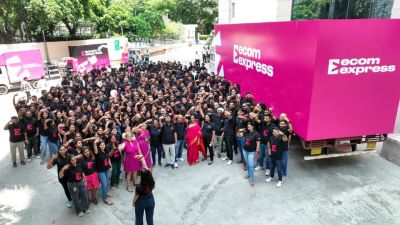
Ecom Express Limited, India’s sole pure-play B2C e-commerce logistics provider as of the Financial Year 2024, has introduced a new brand identity, underscoring its commitment to customer-centricity. This rebranding reflects a focus on addressing specific customer needs, prioritising customer-facing metrics, and integrating innovative technology across its nationwide express logistics network. The goal is to enhance speed, agility, and network reach, ensuring a customer-focused approach. The rebranding includes a dynamic logo and a refreshed visual identity, symbolising Ecom Express’s pursuit of excellence. The new logo features a forward-moving arrow within a square, representing the company’s dedication to delivery. The letter "E" in the logo stands for Expression, Innovation, and Progress, while the bold magenta colour signifies bravery, self-expression, and strength. This vibrant magenta reintroduction reflects Ecom Express's renewed commitment to customers, partners, and team members, as the company aims to simplify and democratise logistics for all. Ajay Chitkara, CEO and MD of Ecom Express, elaborated on the transformation, stating, “Our refreshed brand identity reaffirms our customer-first approach as we continue to integrate technology and innovation to provide reliable, high-speed services with the widest network reach. This transformation also underscores our commitment to our employees and delivery partners, who are essential to our business.” The new logo embodies Ecom Express’s dedication to its core values, focusing on customer welfare and fostering a diverse, inclusive environment. This rebranding signifies a promise to redefine logistics through advanced technology, making life easier for all types of customers.
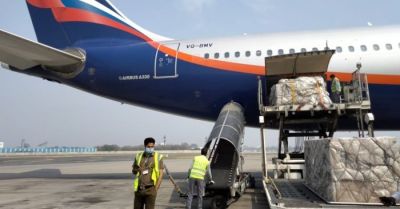
Delmos Aviation has transported the second lot of 300 units of oxygen concentrators from Russia to New Delhi for the Rajasthan state government. The consignment was airborne on an Aeroflot A333 aircraft (SU 232) and reached at 10:10 AM in New Delhi. The shipments were shipped by road and sent back to Swasthya Bhawan, Jaipur, Rajasthan Medical Services Corporation (RMSCL). RMSCL obtained oxygen concentrators from Russian companies together with Delmos Aviation. Delmos Aviation is procuring, transporting and supplying COVID-relied materials to the Rajasthan Medical Services Corporation with the mandate signed with the Rajasthan Government. There will shortly be two consignments with the remaining 800 oxygen concentrators. "We are ready to assist governments in the provision and delivery of any type of essential medical supplies, oxygen concentration and equipment as quickly as possible," said Dr Naveen Rao, Director, Delmos Aviation. "At this juncture, time-based deliveries are paramount. We can handle the airlift and deliver the shipment to the last point." In four lots, 100, 300, 450 and 400 units, a total of 1250 oxygen concentrations are ordered and continue to reach New Delhi in batches of shipments. On 14 and 16 May 2021, the remaining lots will arrive. Oxygen concentrators of Single flowmeter (0.5-10LPM Adjustable) and double flowmeter (0-5LPM Adjustable) are included in the delivery. The models are JAY-10A & LFY-I-5A. "The government of Rajasthan is working hard in this raging second wave of the pandemic to provide basic medical equipment to head Minister Ashok Gehlot and Minister of Health, Raghu Sharma. The government plans to import 1250 oxygen concentrators from Moscow, Russia, in partnership with Delmos Aviation, as part of its efforts to enhance medical oxygen in the state," said a spokesperson.
Omnichannel lifestyle brand The Souled Store has partnered with third-party logistics firm Emiza to manage its primary warehouse operations in Mumbai. The collaboration positions Emiza’s Mumbai warehouse as a central hub, managing orders from The Souled Store’s website, marketplaces, and offline stores across India. “This partnership marks a significant milestone in The Souled Store’s journey, enabling the brand to streamline operations and refocus on growth by partnering with Emiza as a trusted 3PL provider,” the company said. The strategic collaboration goes beyond standard logistics, providing services such as inventory management and order processing. The Souled Store has reduced its order processing time from 24 hours to just 12 hours, significantly enhancing customer satisfaction, a key factor in the competitive D2C market. Ajay Rao, Founder of Emiza, highlighted the value of the partnership, stating, “Their trust in our services underscores the value we bring, not just in warehousing and fulfilment, but in enhancing overall customer satisfaction. As India’s fashion e-commerce market is projected to reach USD 112 billion by 2030, our role is to provide the infrastructure and fulfilment expertise necessary for brands to thrive.” Aditya Sharma, Co-founder of The Souled Store, noted the impact of the partnership: “Emiza stepped in, providing exceptional warehousing and fulfilment services aligned with our commitment to delivering quality products. Their focus on optimising our fulfilment process has allowed us to cut order processing time by half, ensuring that our customers receive their orders faster.” With 27 fulfilment centres across 14 cities, Emiza is well-positioned to support The Souled Store’s expansion beyond metro cities, tapping into the growing consumer base in Bharat, the company added.
Mahindra World City Jaipur (MWC Jaipur), a joint venture between Mahindra Lifespace Developers Ltd (MLDL) and Rajasthan State Industrial Development and Investment Corporation (RIICO) announced it concluded 26 new lease agreements between April 2021 and June 2022. The new signings included both new customers and expansion of facilities by existing clients, together leasing about 137 acres of land. In the same period, MWC Jaipur and its constituent units' aggregated investments crossed Rs 721 crores, and cumulative exports by MWC Jaipur exceeded Rs 15,930 crores, of which Rs 3,321 crores were in the last 15 months. Over these fifteen months, a total of 69 companies have completed their facility buildout at MWC Jaipur and become operational. The new entrants to MWC Jaipur represent a variety of sectors, like Logistics and Warehousing, IT & ITeS, Engineering, Furniture Manufacturing, Solar Energy, Gems and Jewelry manufacturing. The newly added roster of clients at MWC Jaipur includes Wipro Hydraulics, Shakti Hormann, Renew Photovoltaics, Kerakoll India, Normet, Gulmohar Lane Lifestyle, Manor & Mews, J Atelier Pink City, Kamal Coach Works, Maxop Engineering, amongst others. Rajaram Pai, Chief Business Officer – Industrial, Mahindra Lifespaces said, “MWC Jaipur today is home to prestigious domestic and international manufacturing companies from across the world, who have established a manufacturing base in India for the first time. Enabling business acceleration for customers has always been our focus. We continue to deliver the highest urbanisation standards by leveraging innovation, thoughtful design, and a deep commitment to sustainability. MWC Jaipur contributes towards generating incremental employment and income for the state while creating world-class infrastructure which would serve the nation for many years to come. We are glad to be the enablers of Make-in-India and Make-for-India.” Becoming a preferred destination of choice for over 121 global and domestic companies, MWC Jaipur is enabling business growth for customers by crafting a conducive environment, with robust infrastructure and facilities that propagate ease of doing business. Mahindra World City Jaipur is the first project in Asia to receive Climate Positive Development Stage 2 Certification from the C40 Cities Climate Leadership Group (C40), a global network of large cities taking action to address climate change. With a focus on climate-positive development, MWC Jaipur is continuing its efforts on integrating sustainability within the city. Green, integrated developments is continuously being upgraded to mitigate the impact of business operations on the environment. As of March 31, 2022, a total of 59,955 trees have been planted in government-approved forest areas and rural areas under the Mahindra Group’s flagship program – Hariyali. Around 11,100 trees have been planted within the industrial park.



Trade shows are mission-critical, high-investment events where logistics execution directly influences marketing ROI. Exhibitors spend months preparing for a few days on the floor, since a single missed delivery window can jeopardise the entire programme. In this environment, Less-Than-Truckload (LTL) trade show logistics is no longer just transportation; it is an orchestration of timing, compliance, risk control, and venue-specific expertise. While standard LTL carriers can handle general freight, elite trade show shippers excel because they are built for the ecosystem — understanding drayage, marshalling yards, target windows, live-loading rules, equipment constraints, and the high-value nature of exhibits. This updated guide unpacks the differentiators that set the best providers apart, enhanced with additional dimensions such as KPIs, risk mitigation frameworks, technology adoption, sustainability practices, and a practical vendor-evaluation checklist. The Key Differentiators of Elite Trade Show Shippers When shipping general freight, a standard LTL carrier may be sufficient. However, event logistics demand a higher level of specialised service. The top trade show shippers possess four key differentiators that distinguish them from the rest. Proactive and Specialised Support Trade shows operate on rigid move-in schedules tied to booth size, dock flow, and decorator rules. The strongest providers deploy dedicated trade show teams who can interpret show manuals, coordinate with decorators, and time deliveries to avoid re-handling fees. Best-in-class partners also: Pre-audit documentation and labels to avoid show-site rejections Manage drayage coordination to reduce dwell and material-handling charges Offer pre-receiving and staging at regional facilities for smoother Day-1 move-ins This advisory-driven model transforms logistics from a cost center into a risk-mitigation service. Flexible Coordination and Network Access Because no two events are alike, trade show logistics demand configurable access to LTL, FTL, hot-shot, air, and international capacity. Top providers match service levels, route constraints, and budget requirements by tapping into broad asset and partner networks. A sophisticated network allows for: Expedited or guaranteed-capacity moves for high-stakes shows Cost-effective options for booth materials that can stage early Lane-specific equipment (air-ride, liftgate, climate-controlled) This flexibility becomes essential during peak show seasons when capacity is tight and timelines narrow. Guaranteed Performance and Asset Protection Event deadlines are immovable. Leading providers commit to guaranteed on-time service, narrow ETA bands, and contingency planning across linehaul and last-mile execution. They also emphasise exhibit protection through: Air-ride suspension fleets Strapping, padding, and vibration-control practices Secure transport protocols for prototypes and LED/AV assets With show participation costs rising, damage and delay prevention become competitive differentiators. End-to-End Visibility and Services Real-time visibility is no longer optional. Tocay, exhibitors rely on it to make staffing, booth-build, and drayage decisions. The best LTL partners deliver: Live tracking from pickup to booth delivery API connectivity with exhibitor dashboards Pre-emptive exception alerts and delay recovery paths For international events, leading providers integrate customs documentation, Carnet handling, temporary import permits, and venue-specific rules, ensuring frictionless handoffs across borders. What Are the Best LTL Logistics Companies for Trade Shows? Several providers exemplify these differentiators. The following firms are selected based on their demonstrated strength in specialised show support, performance-oriented service design, event fluency, flexible coordination and comprehensive offerings that cover pre-show to teardown. 1. Green River Logistics Solutions A brokerage-led model with deep carrier reach, making it ideal for exhibitors with varied lane structures. Key strengths: Highly personalised coordination and single-point-of-contact support Flexible equipment sourcing — LTL, flatbed, refrigerated, heavy haul Real-time updates and precise timing for fragile builds 2. XPO Logistics A multinational leader with a controlled linehaul network and a dedicated Trade Show Desk. Key strengths: Tight schedule integrity Venue-specific coordination and dock navigation Strong performance management systems. 3. TWI Group A global exhibition logistics specialist excelling in international customs and venue compliance. Key strengths: ATA Carnet expertise and cross-border support On-site liaisons at major venues High-touch service model for global exhibitors 4. Averitt A time-definite, reliability-driven carrier focused on window compliance. Key strengths: Guaranteed performance Expertise with marshaling yards and dock appointments Rapid recovery for last-minute constraints 5. TTI Logistics A specialist for fragile and custom builds requiring maximum protection. Key strengths: Air-ride fleets and vibration-controlled handling Precision timing for target-move-ins Advanced security protocols Comparing the Top LTL Logistics Providers for Trade Shows These providers excel in different areas. This table offers a quick comparison of their key service features to help you align their strengths with your specific needs. New Strategic Enhancements Added for a Modern Exhibitor’s Playbook Technology Advancements Worth Evaluating AI-assisted ETA predictions Digital drayage coordination tools IoT-enabled condition monitoring for AV and prototype freight Automated warehouse cut-off compliance checks Risk-Mitigation Practices That Matter Pre-show risk audits Contingency rerouting plans Venue-specific compliance checklists High-value cargo insurance design Sustainability Expectations from Today’s Exhibitors Low-emission or EV linehaul and last-mile options Carbon-neutral freight programs Reusable or recyclable crating solutions Emissions dashboards linked to booth shipments Performance Metrics That Define Best-in-Class Providers On-time delivery to target windows Damage-free shipment percentage Visibility uptime SLA Drayage handoff accuracy Exception-resolution response time How to Vet Your Trade Show Logistics Partner Applying the key differentiators includes asking potential partners the right questions. When your program includes international stops, ask about their documentation process, how they manage Carnets and how visibility will work across handoffs. The following can further validate fit and execution discipline: What is your detailed experience with my venue and decorator? Can you guarantee delivery within target-window constraints? What risk-mitigation plan is activated if my freight misses staging cutoff? What specialised equipment will you use for fragile or custom exhibits? How do you integrate with drayage contractors and marshaling yards? Which visibility tools and tracking integrations are available? Can you manage international customs documentation end-to-end? What sustainability options can be applied to my show calendar? Your Partner Is Your Most Critical Exhibit A logistics provider is more than a freight handler; they are the enabler of your presence on the show floor. The right LTL partner combines timing discipline, technical fluency, equipment strength, and venue intelligence to protect your brand and maximise your event ROI. Elite trade show shippers don’t just move freight; they orchestrate flawless show execution.

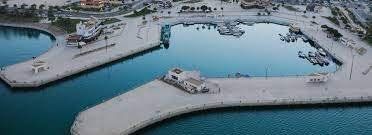
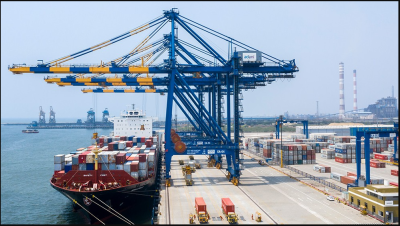
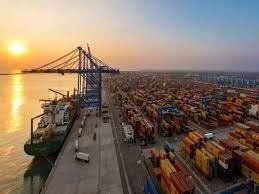
The expansion of Dammam Port in Saudi Arabia has taken a significant step towards strengthening trade relations between India and the Gulf region. The enhanced infrastructure and capacity of the port are set to benefit businesses and industries on both sides, facilitating smoother trade and commerce. The expansion of Dammam Port opens up new opportunities for Indian businesses to engage in import and export activities with the Gulf nations. It also serves as a strategic gateway for goods traveling to and from India, further improving the logistics and transportation landscape for businesses. The project showcases the commitment of both India and Saudi Arabia to enhance economic ties and boost bilateral trade. The increased port capacity will help meet the growing demand for trade between the two regions, ultimately contributing to the economic growth and prosperity of both nations.


Air India is setting its sights on a promising future as the exclusive carrier for TATA's iPhone exports. This strategic partnership between the renowned Indian airline and the tech giant TATA promises to boost India's manufacturing and export capabilities. The collaboration will enable Air India to become the sole carrier for TATA's iPhone exports, facilitating the efficient transport of these popular devices to international markets. With a reputation for reliability and global reach, Air India is poised to play a crucial role in TATA's supply chain. The move not only strengthens the relationship between two major Indian companies but also underlines India's growing importance in the global technology and manufacturing sectors. Air India's role as the exclusive carrier for iPhone exports is expected to generate significant revenue for the airline and enhance India's position as a hub for high-tech exports.